Discovering more beautiful places …..

I’m back and my poor little blog has seriously been ignored. I have do not have a good excuse! I wrote this back in August and now in November, I finally publish it! I also can’t believe we have lived in France for over four years. Of course, I’m still out and about discovering lovely places.

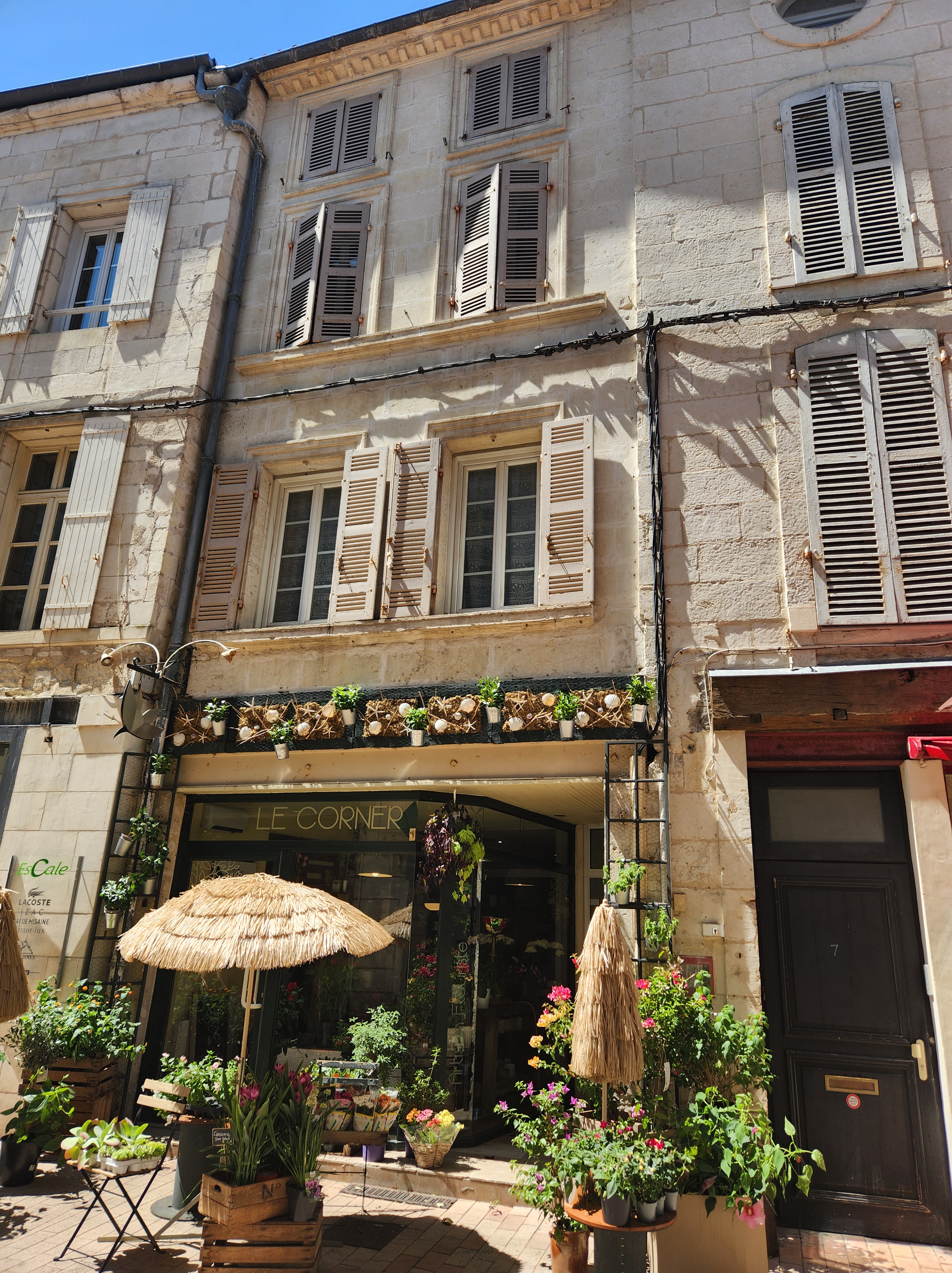
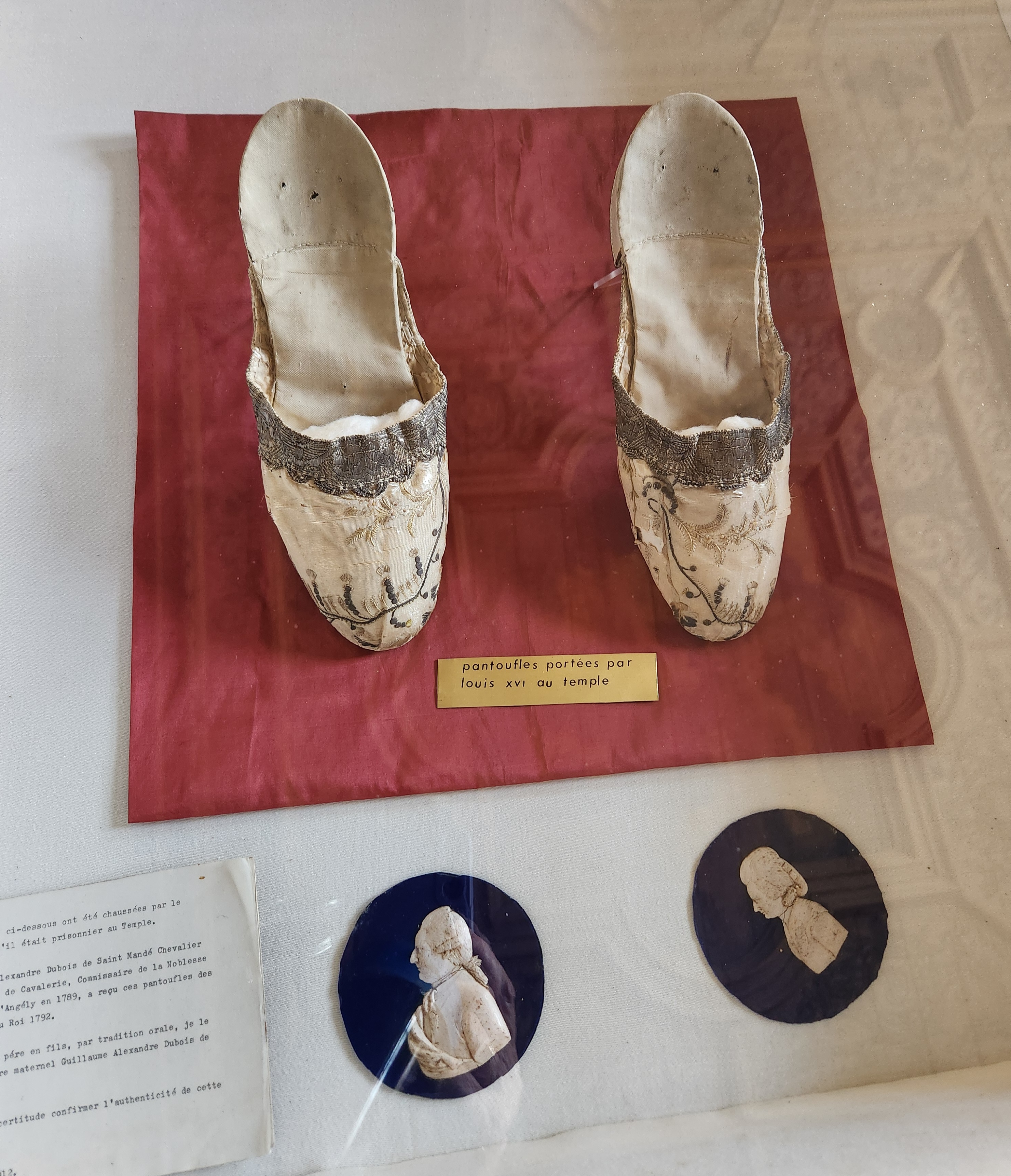
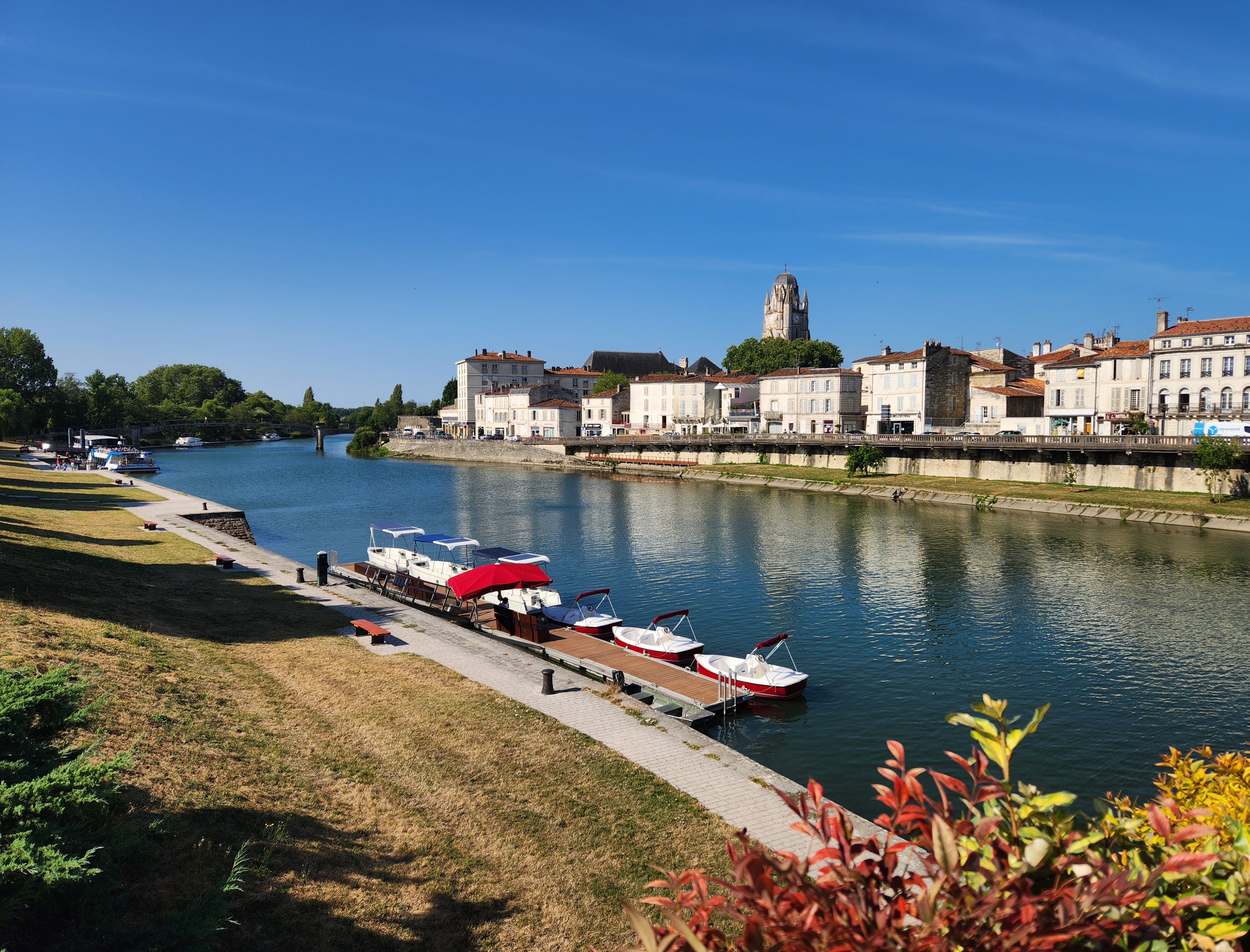
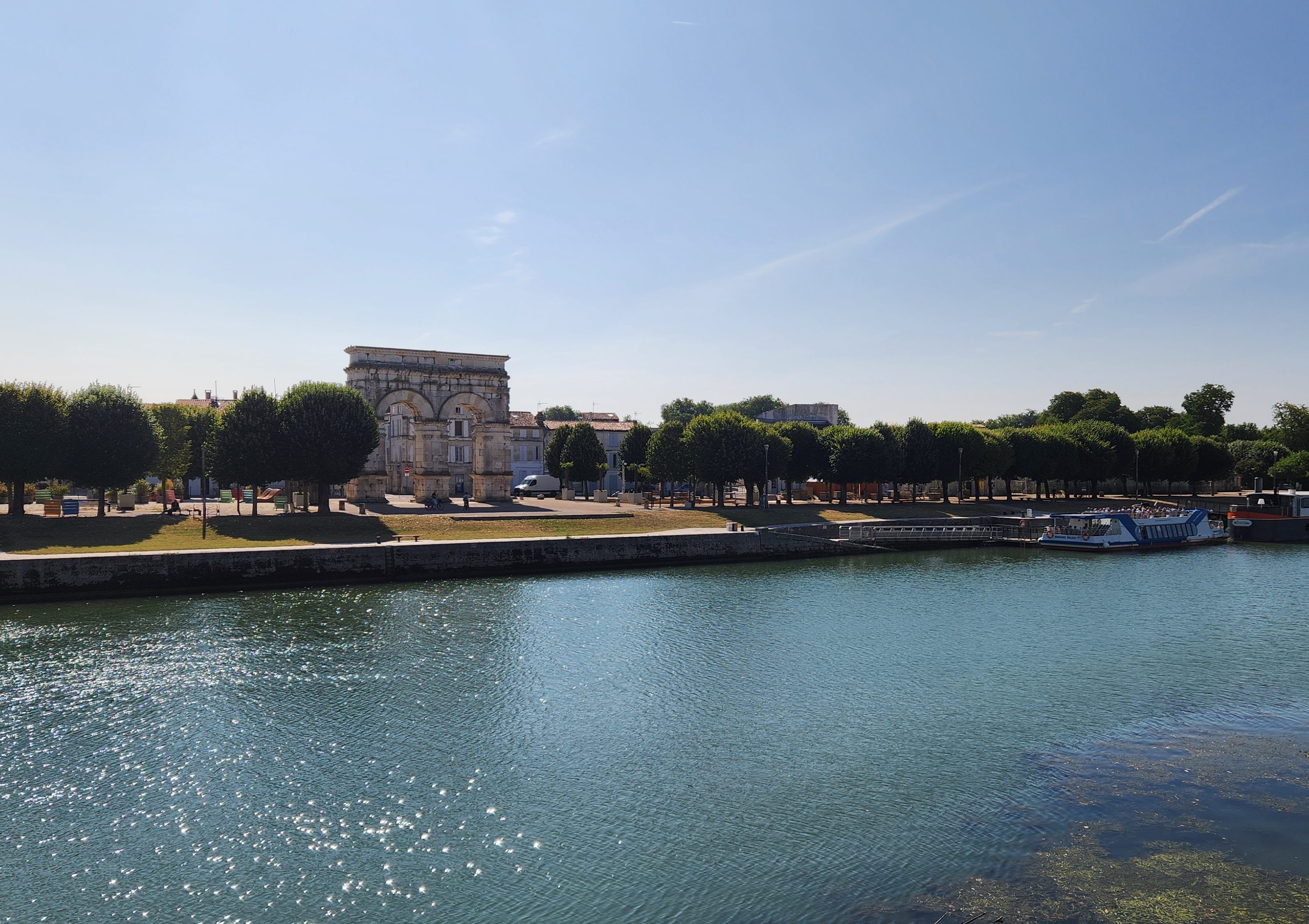
In July, my ‘blog buddy’ Carolyn and I spent the day in Saintes, Charente Maritime. Starting with a stroll in the morning sunshine along the Bernard Palissy Bridge to the old town with a good view of the Arch of Germanicus, a Roman arch constructed around 18-19 AD.
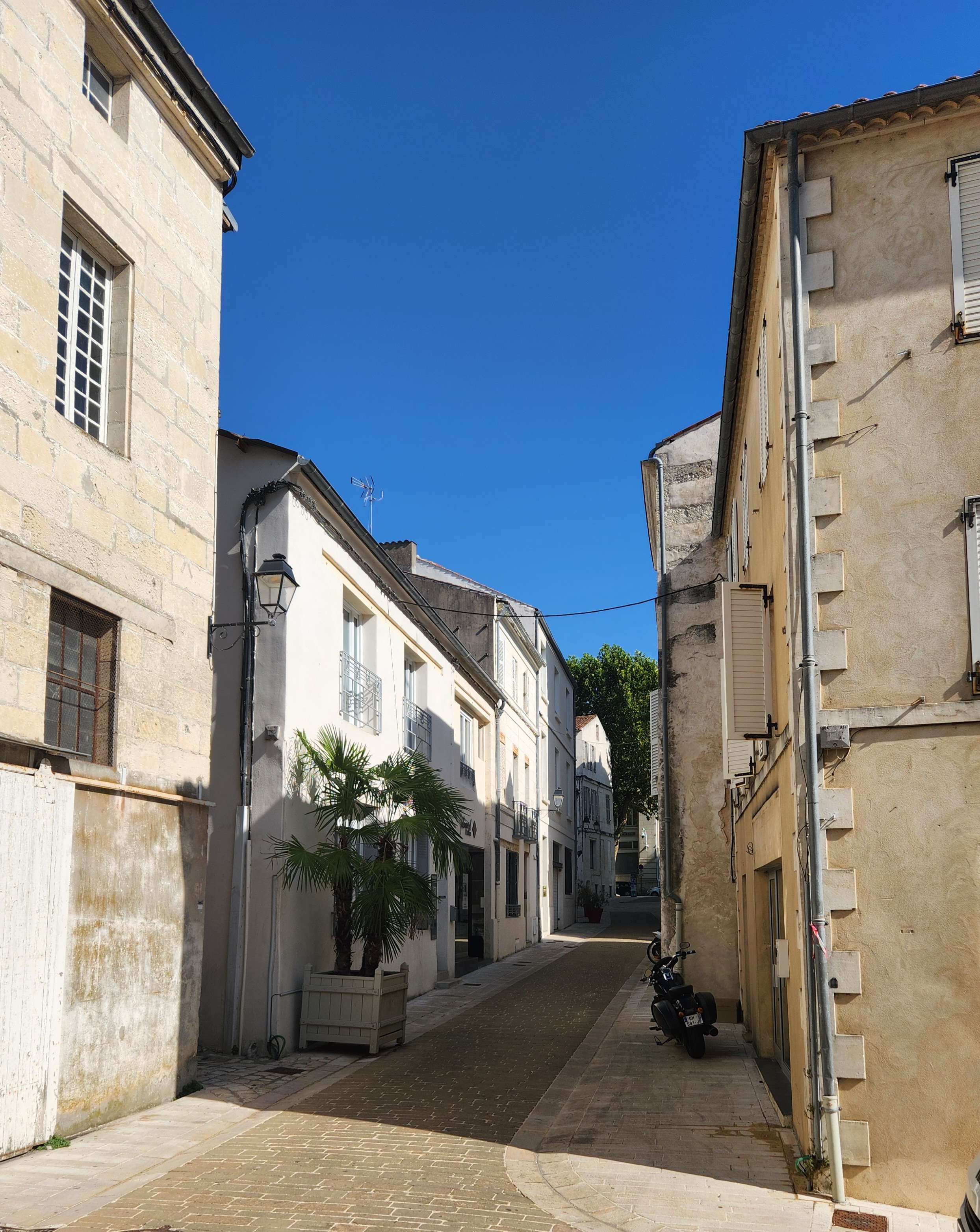
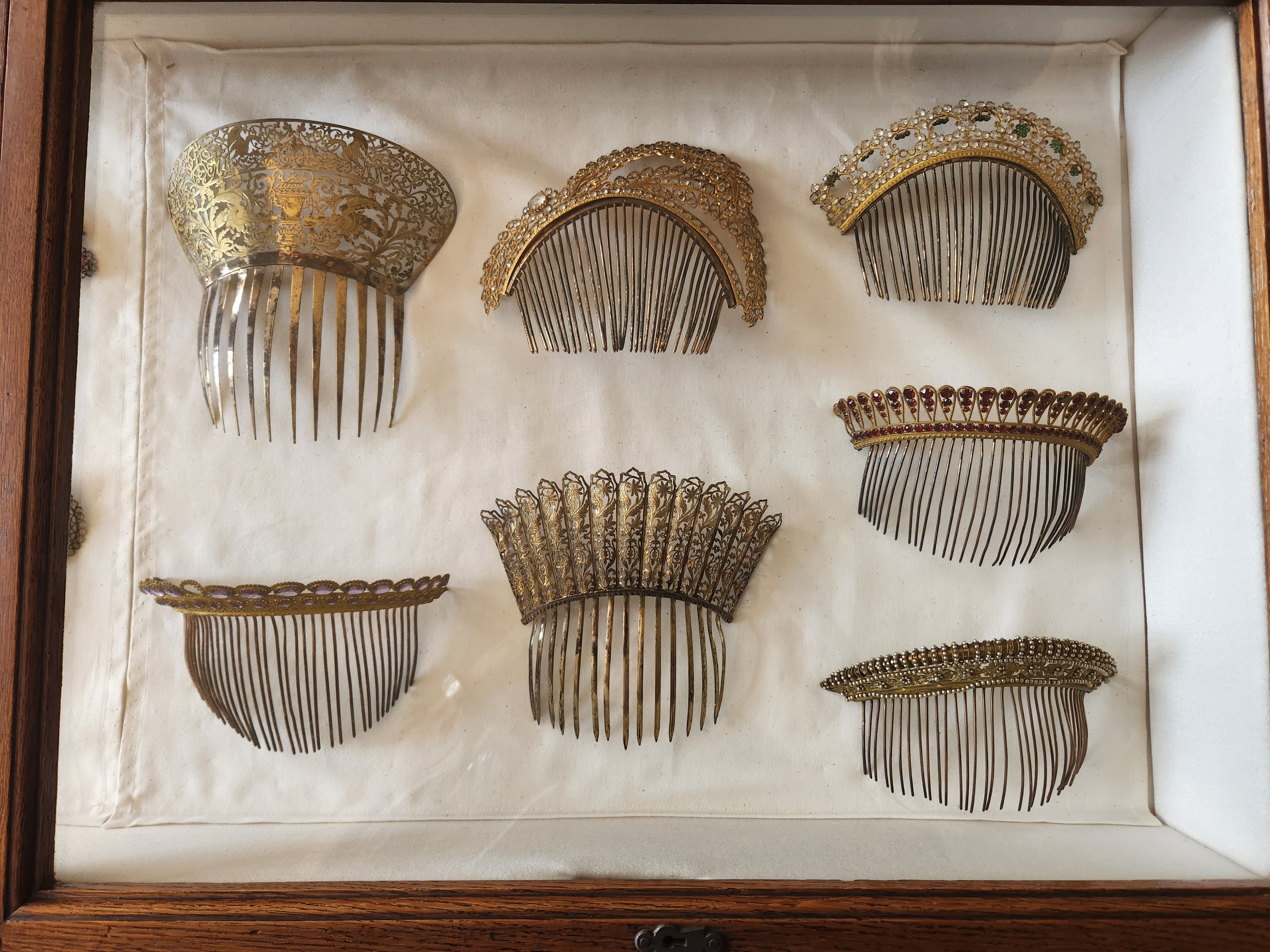
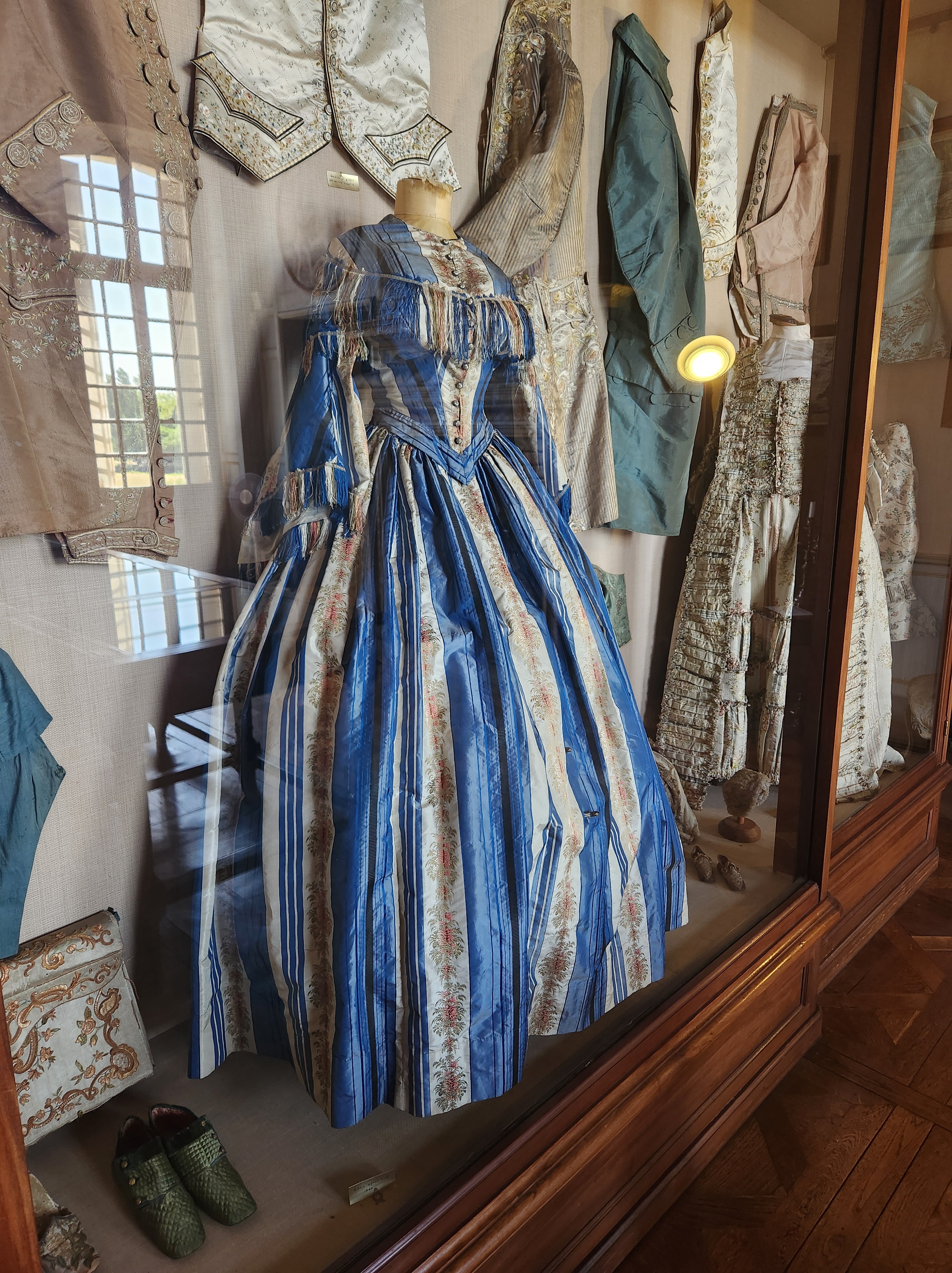
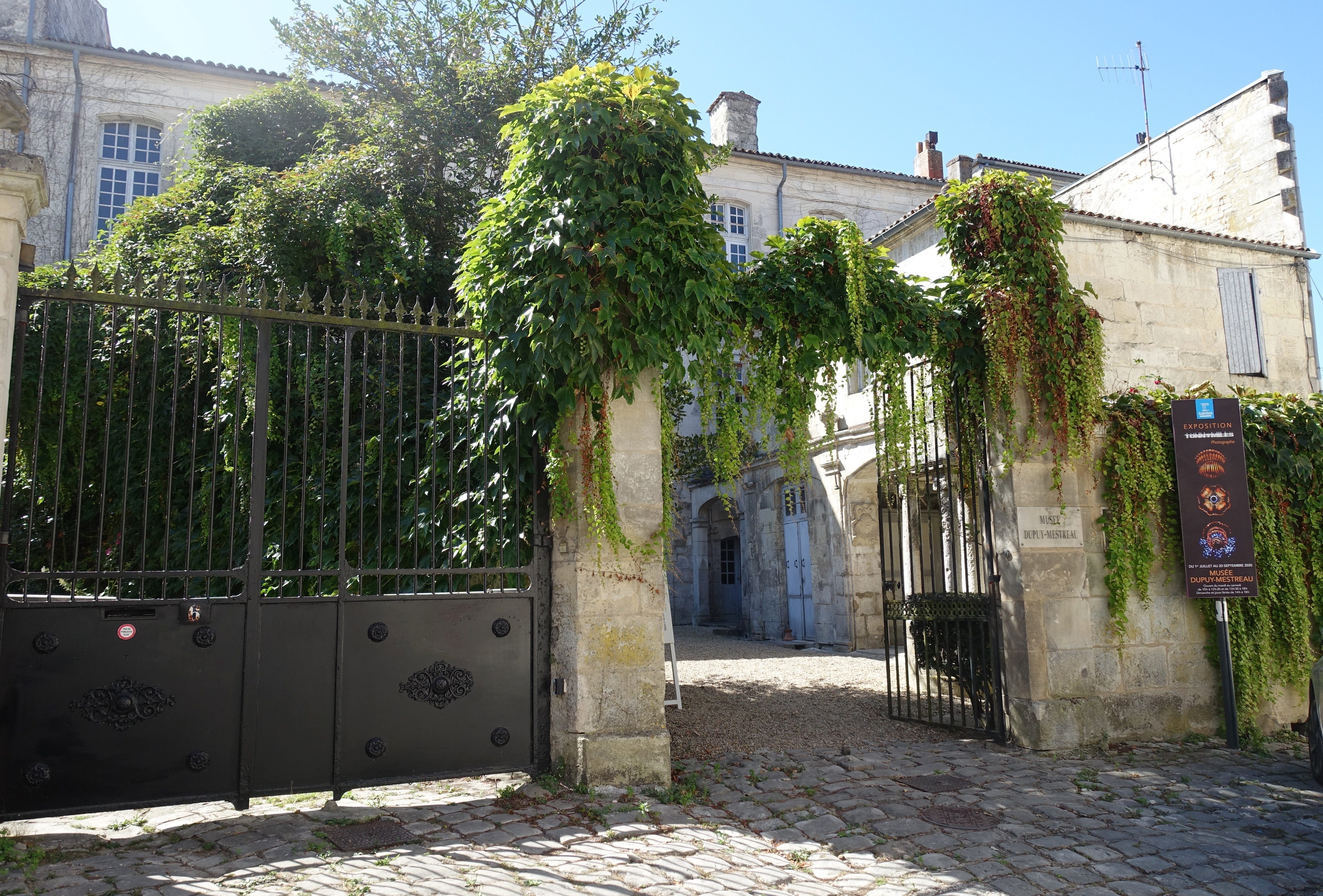
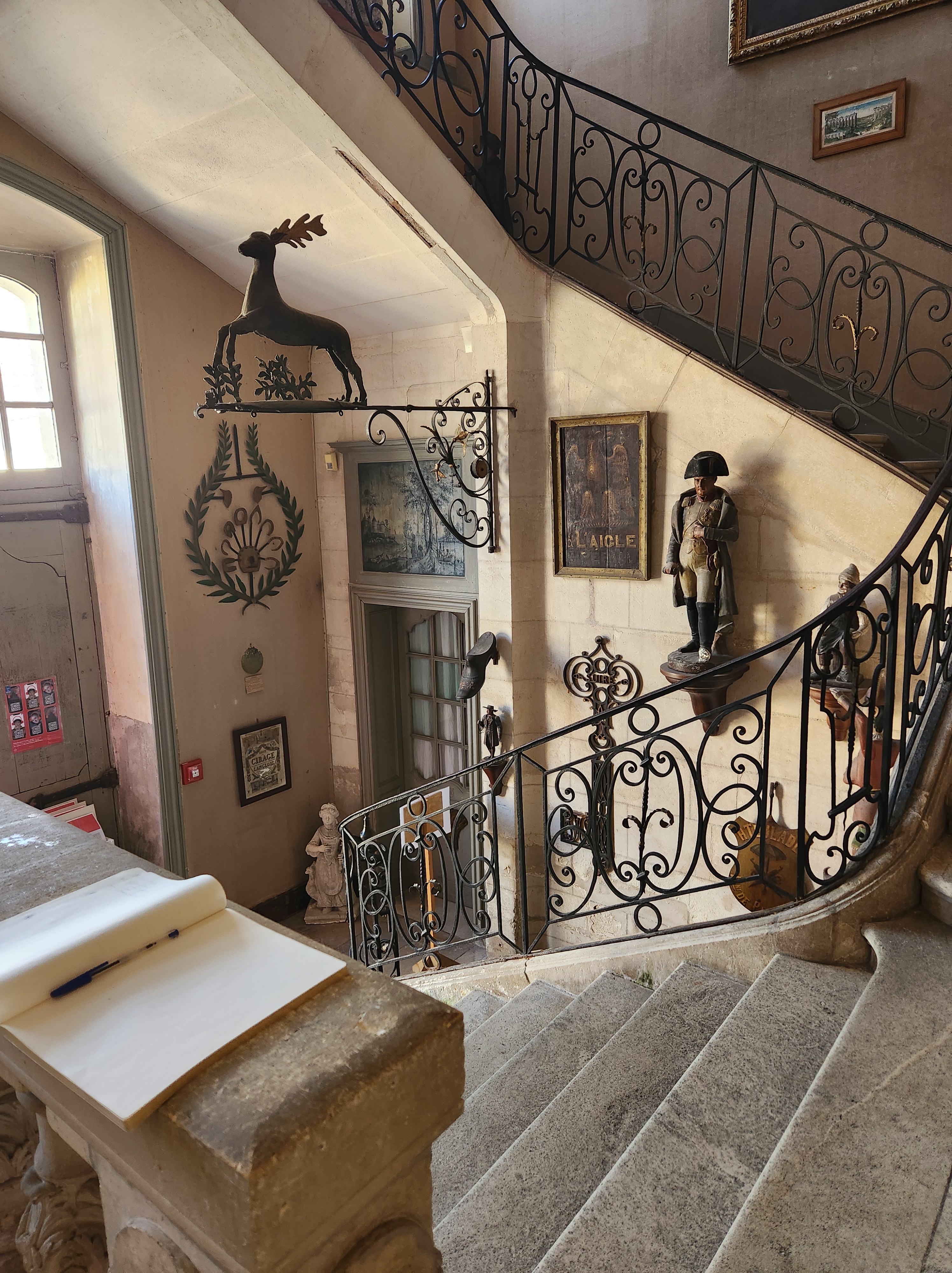
After a much needed coffee, we visited the cultural museum Dupuy Mestreau. This small, intimate museum featured a collection of artefacts and showed the historical significance of Saintes and the surrounding area.
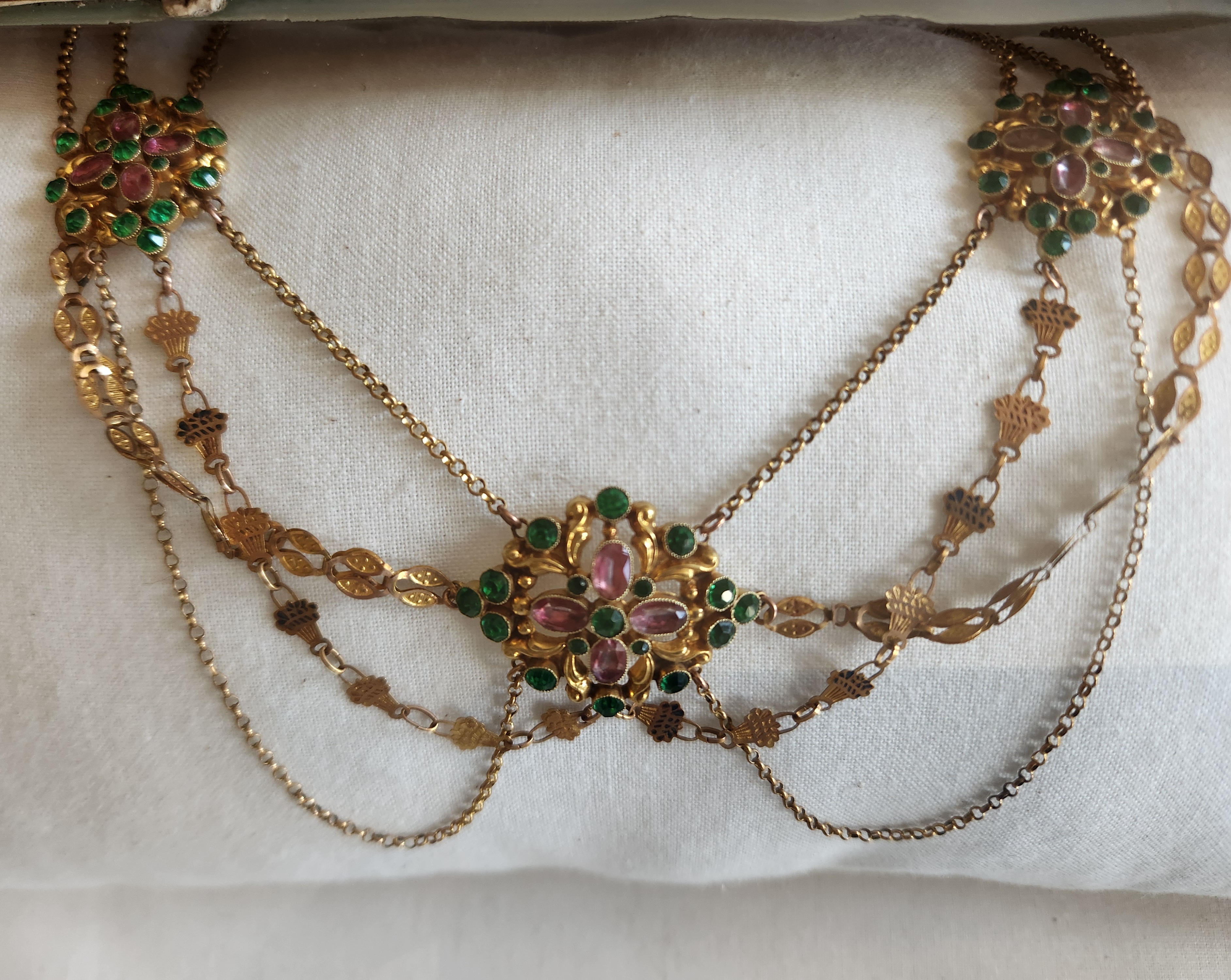
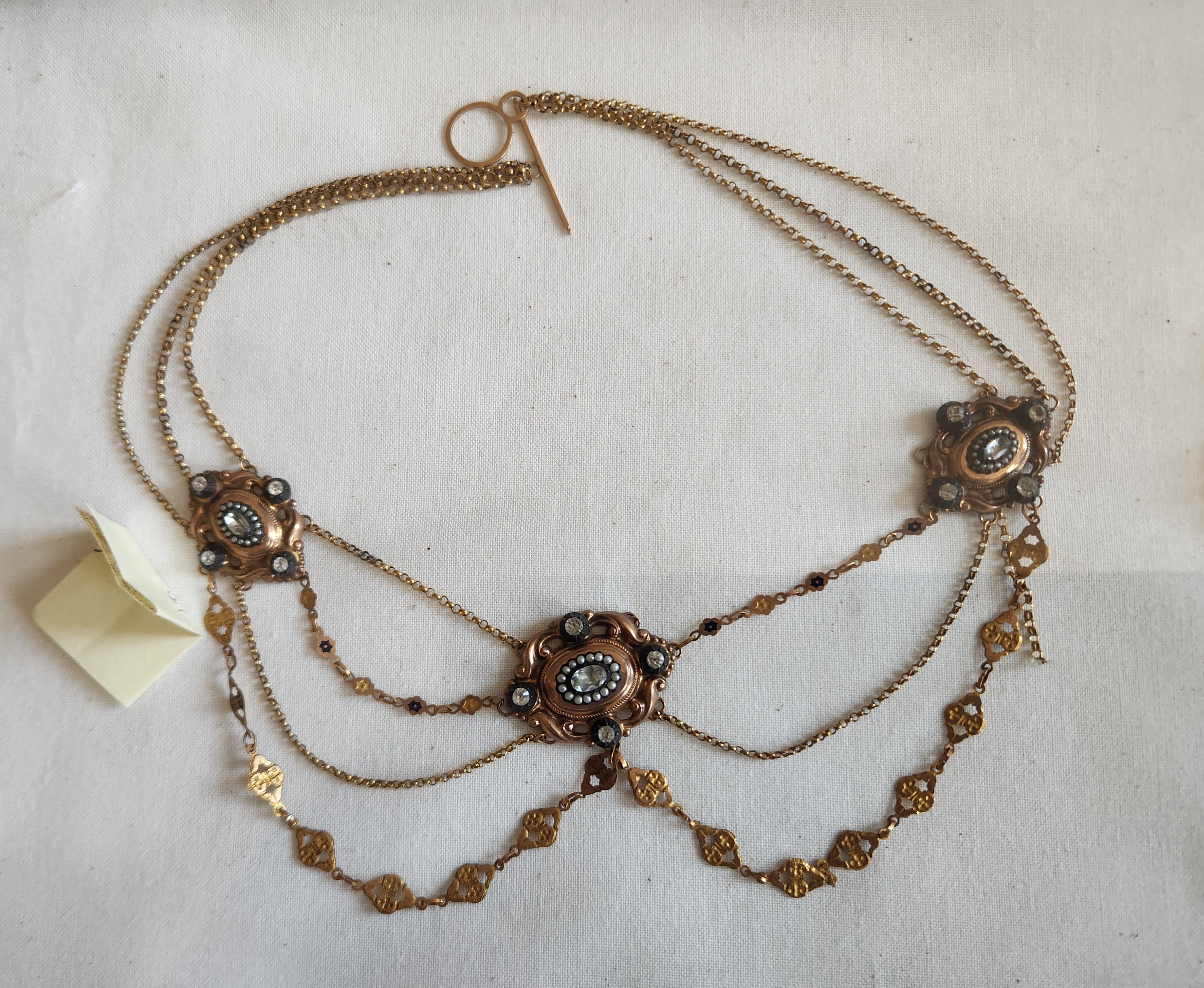
There was a display of pretty ‘colliers d’esclavage’ better known as ‘slavery necklaces’. The fashion for this type of necklace emerged in the first half of the 17th century among the prosperous French peasantry, particularly in Auvergne, Normandy, Poitou, and Saintonge. This trend extended across France during the second half of the 19th century. The necklace consisted of three chains symbolising one for the past, one for the present and one for the future. Sometimes, a fourth chain was added for the eternal union of the spouses or their first child. The materials used varied according to the family’s wealth. Traditionally, a young man would give this type of necklace to his fiancée when the couple were formally introduced to their parents. A sign of love and the sincerity of their commitment. The ‘slavery’ label applied may also suggest that, at the time, marriage was perceived, metaphorically, as a form of slavery. A wedding song from Poitou proclaimed, ‘To set up house is nothing but certain death… Farewell to pleasures, farewell to happy days; I am in slavery.’
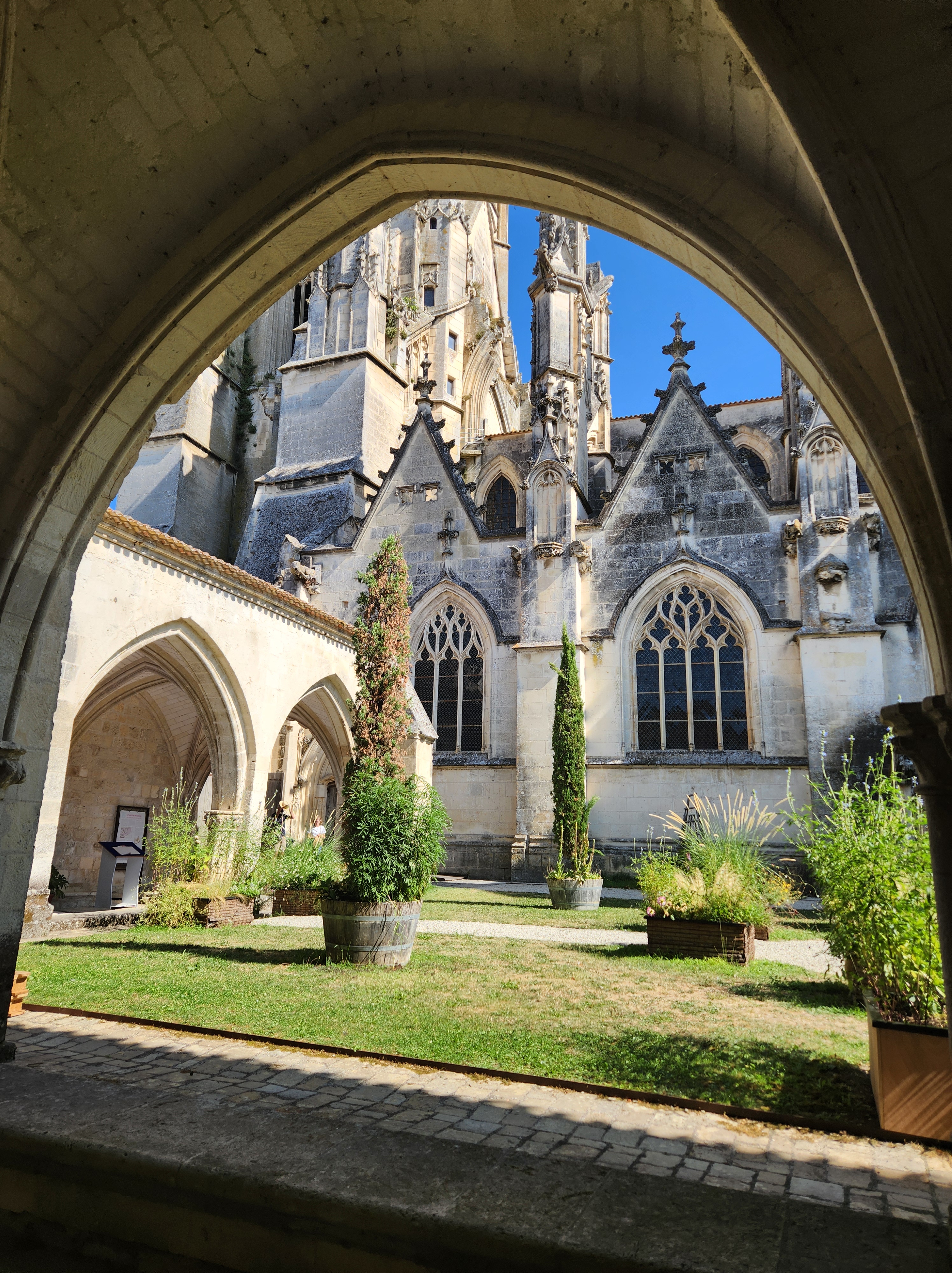
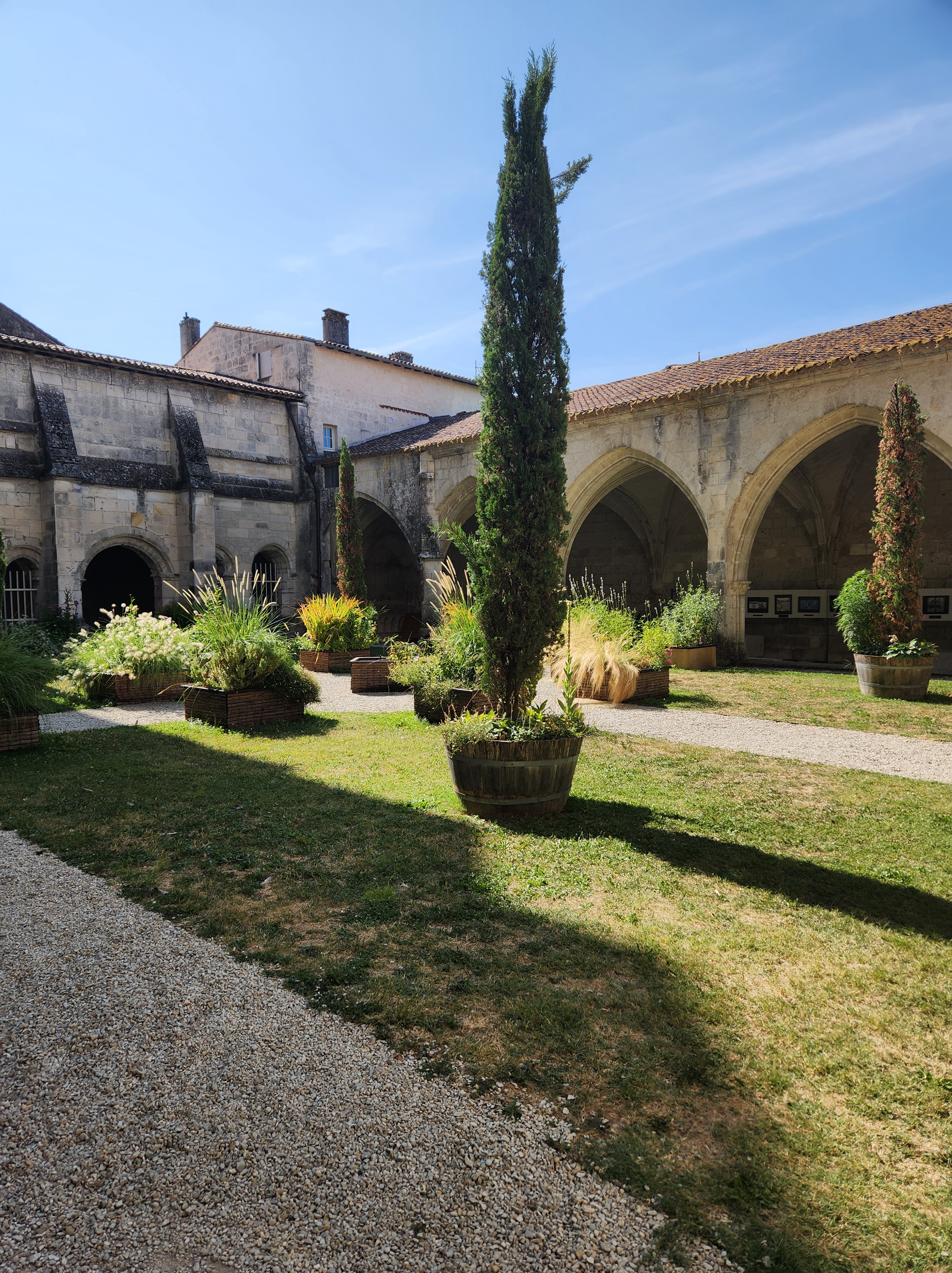
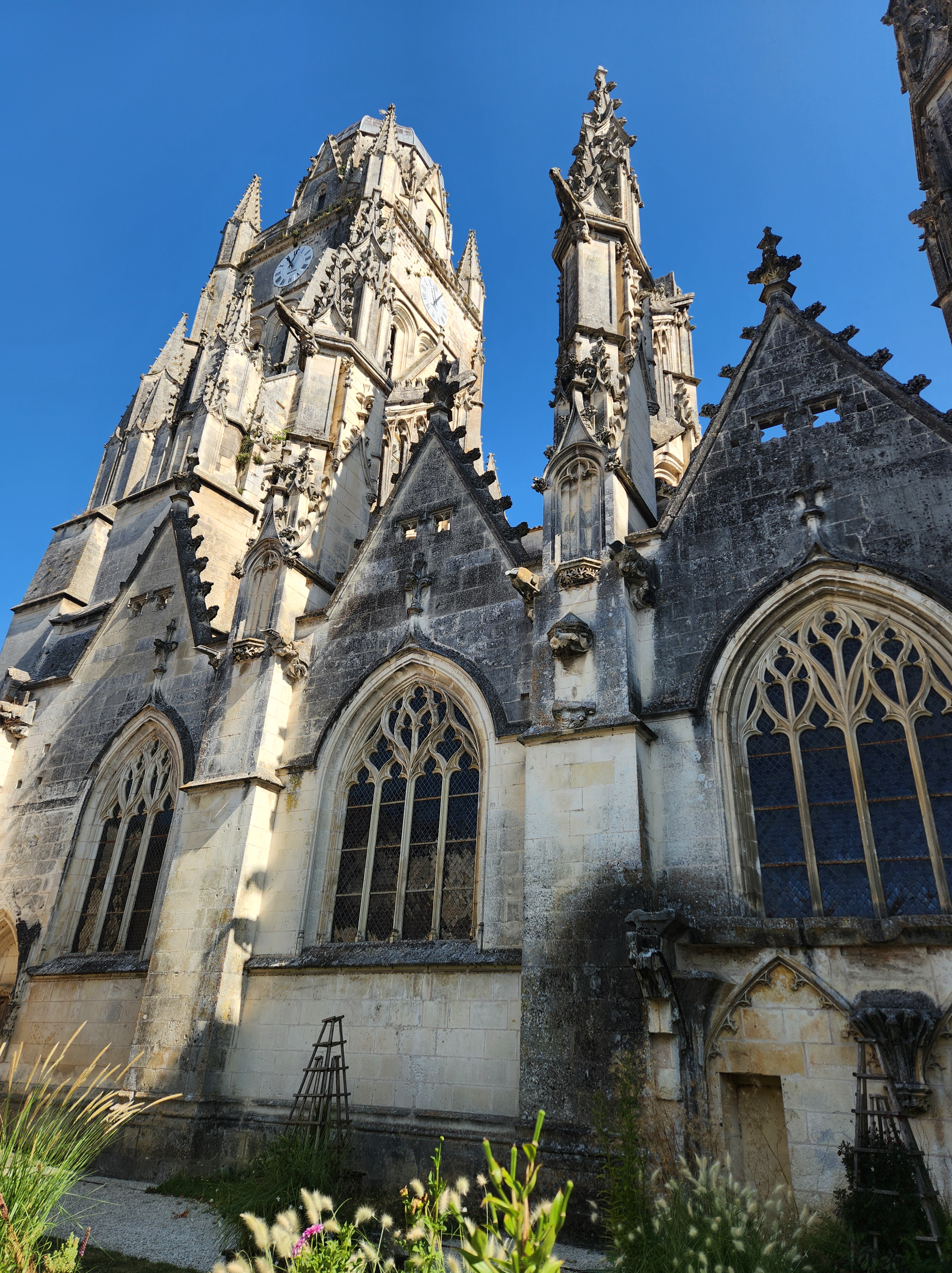
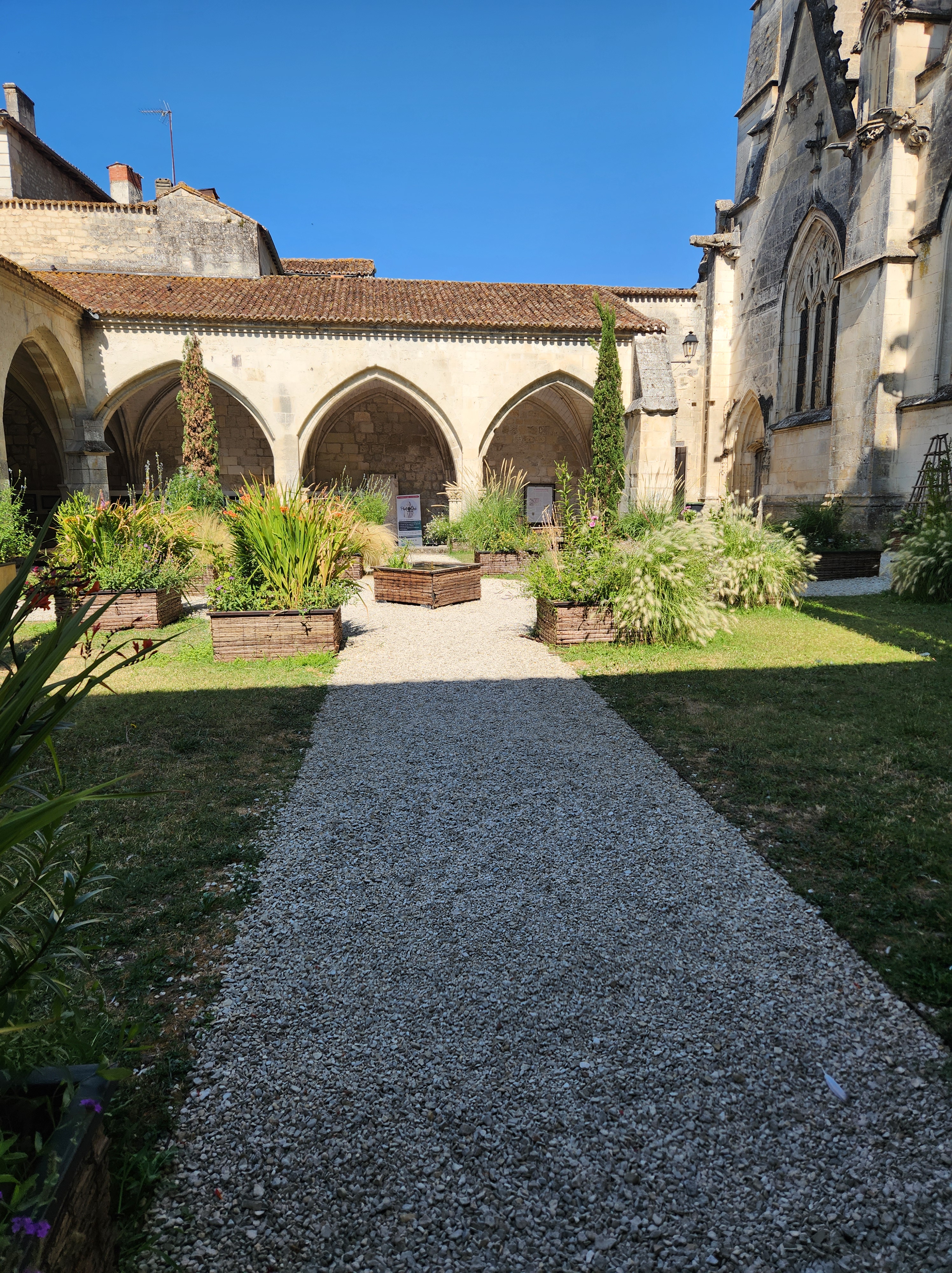
Saintes Cathedral grounds showed Gothic elements. The construction started in the 12th century and was finished in the 17th hence a mix of architectual styles.
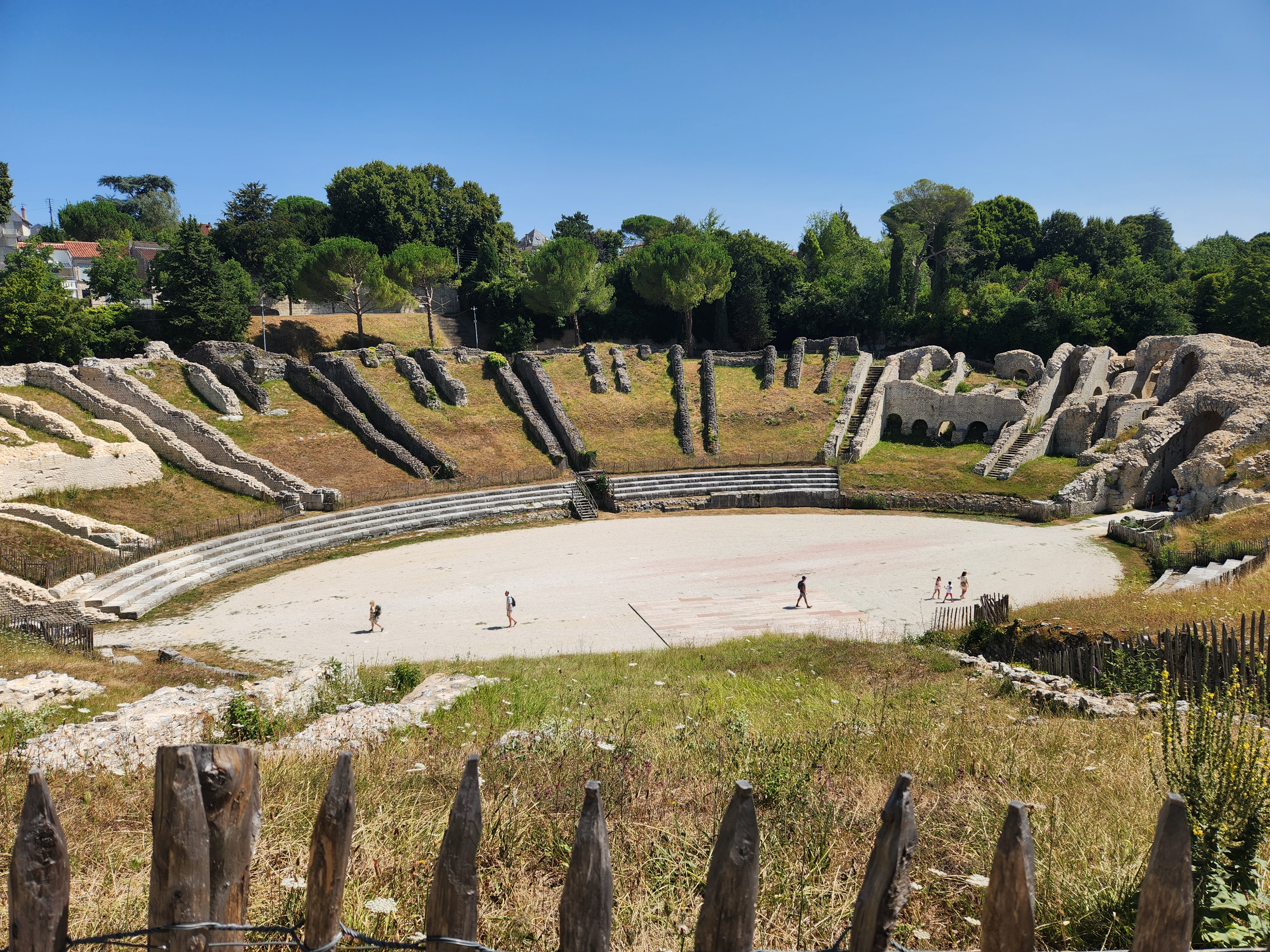
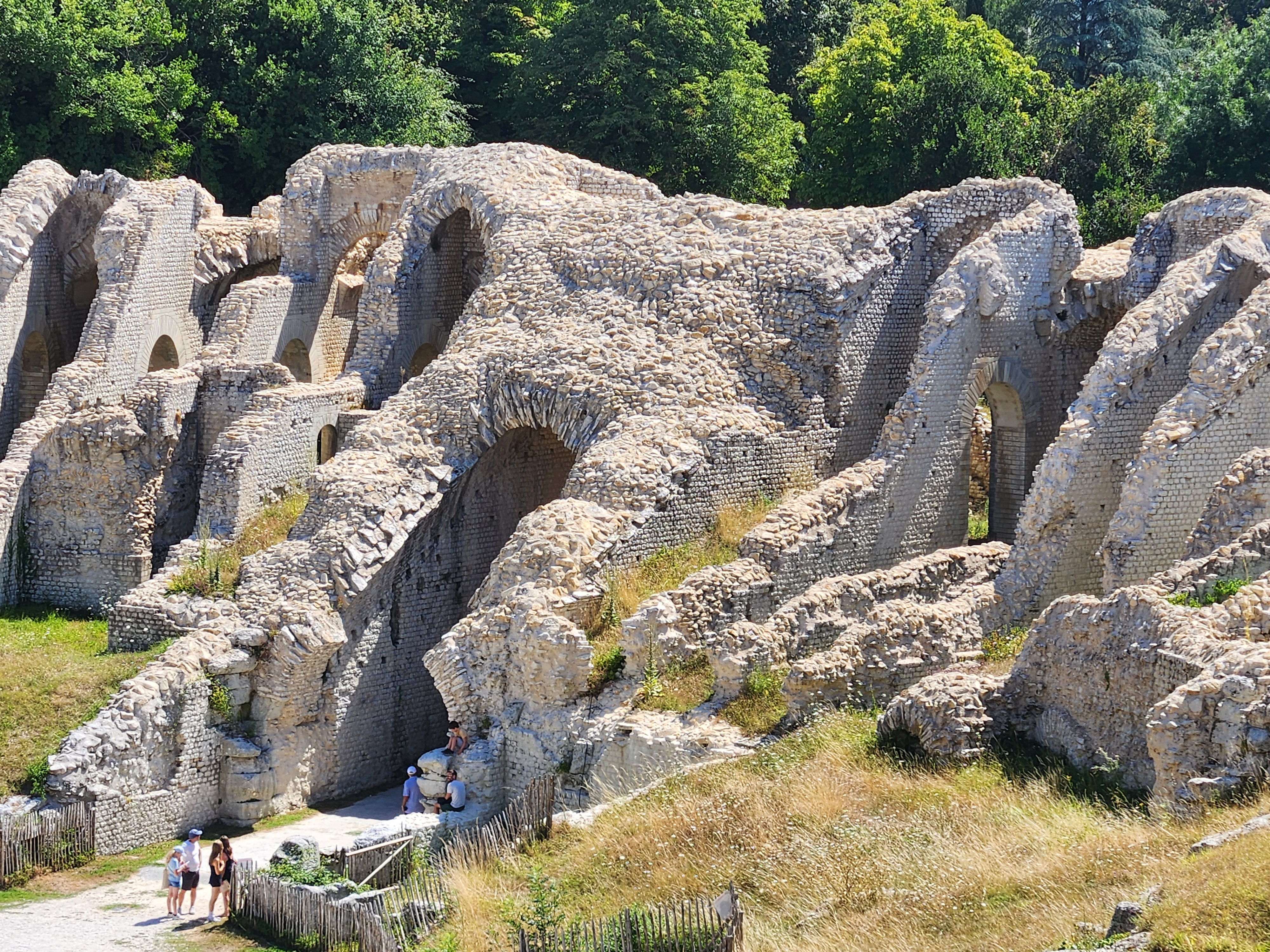
The main tourist attraction in Saintes is the amphitheatre built around 40-50 AD, during the reign of Emperor Claudius and believed about thirty years before the Colosseum in Rome. In 1906 work started on clearing several meters of sediment. But 1982 saw serious flooding which caused landslides. So, in 2021 a three year restoration project started to preserve what was left of the amphitheatre. There is a tour you can take but on very hot day, and a lot of walking, a late lunch and cold drink beckoned!
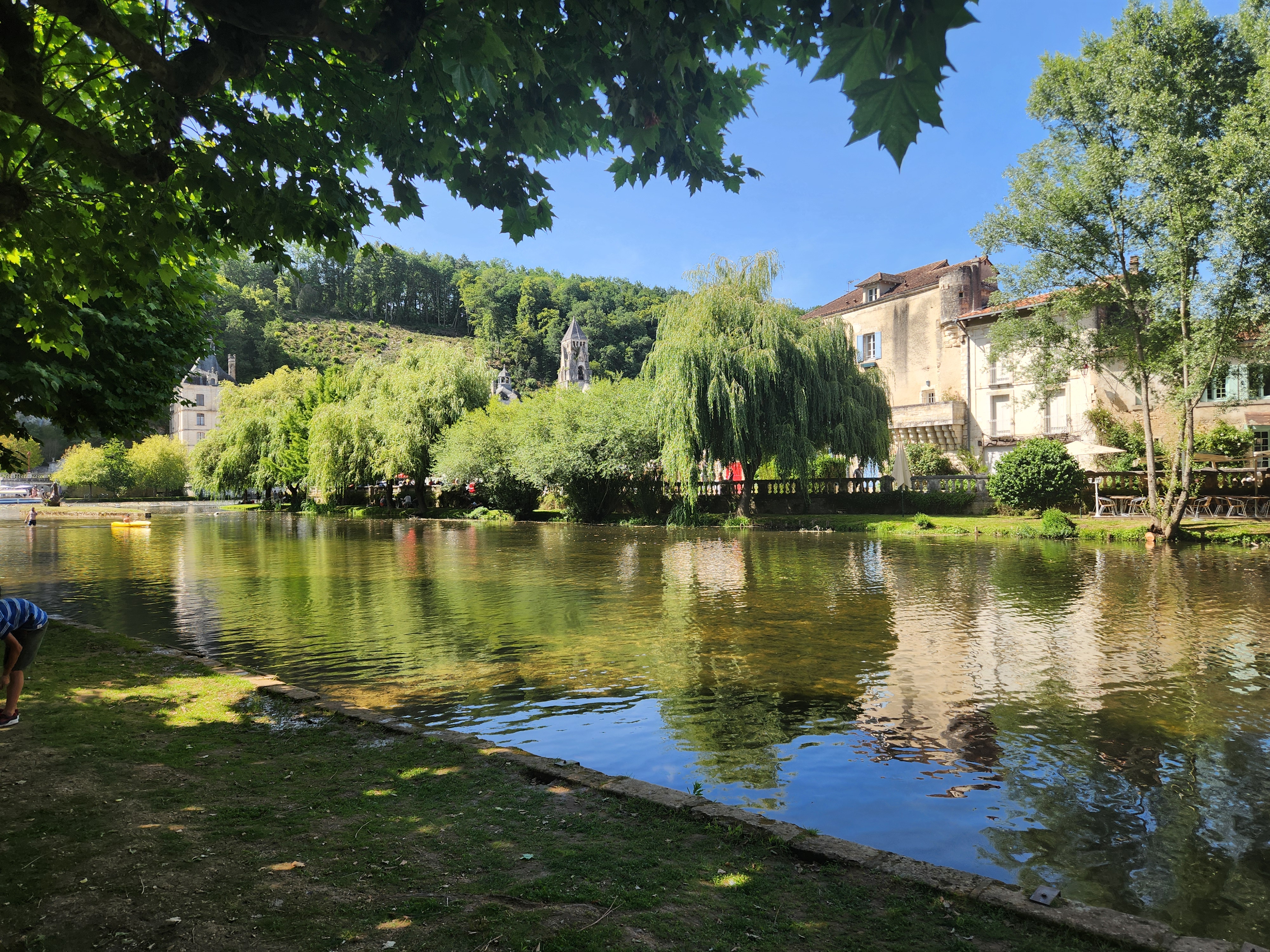
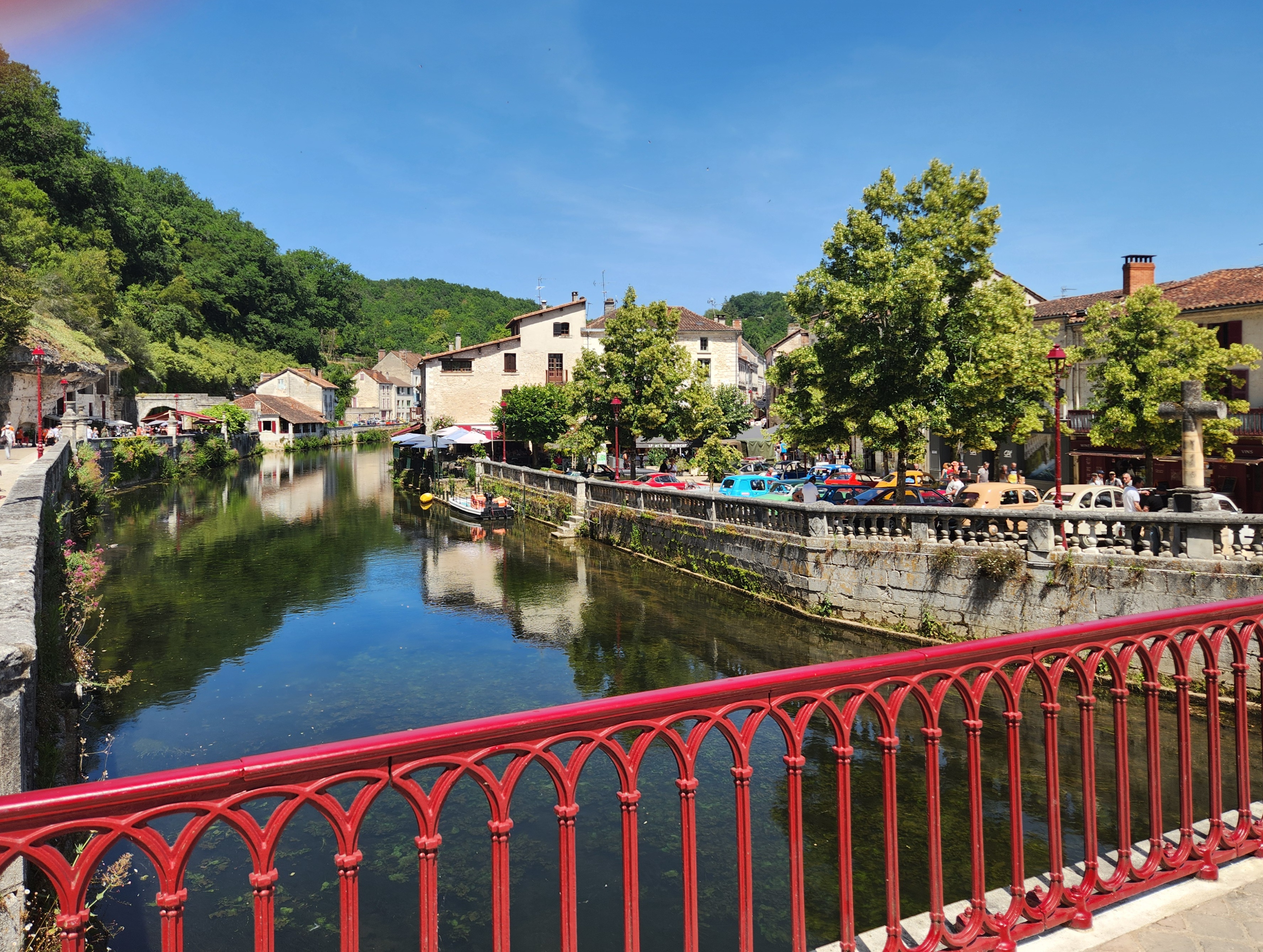
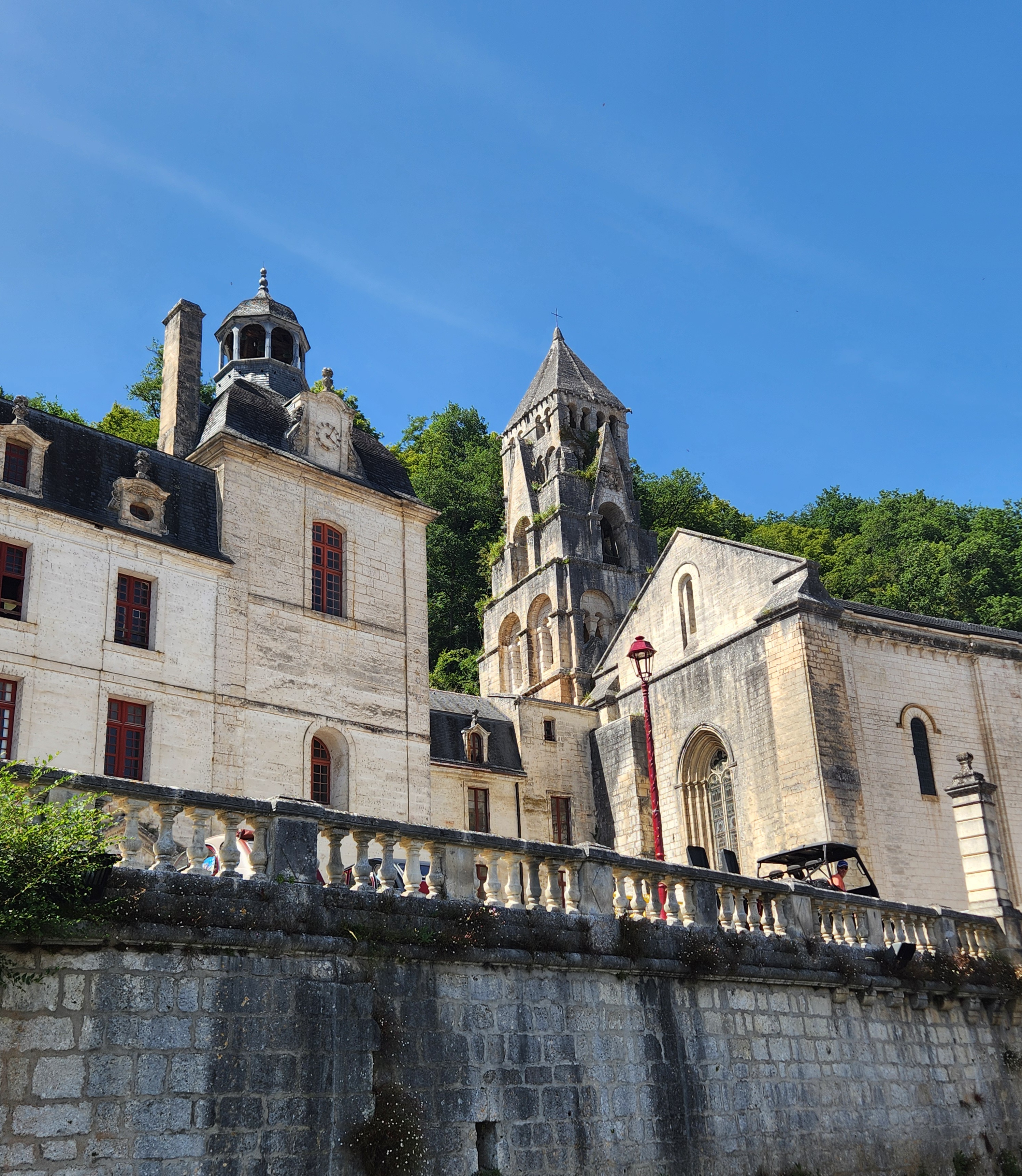
In June, I took an organised trip to Brantôme in the north of the Dordogne. Set on the river Dronne, Brantôme is very pretty, with a backdrop of steep wooded slopes and the Benedictine Abbey. Unfortunately, I didn’t have time to visit the abbey, which was founded by Charlemagne in 769 and the most historical highlight of the town.
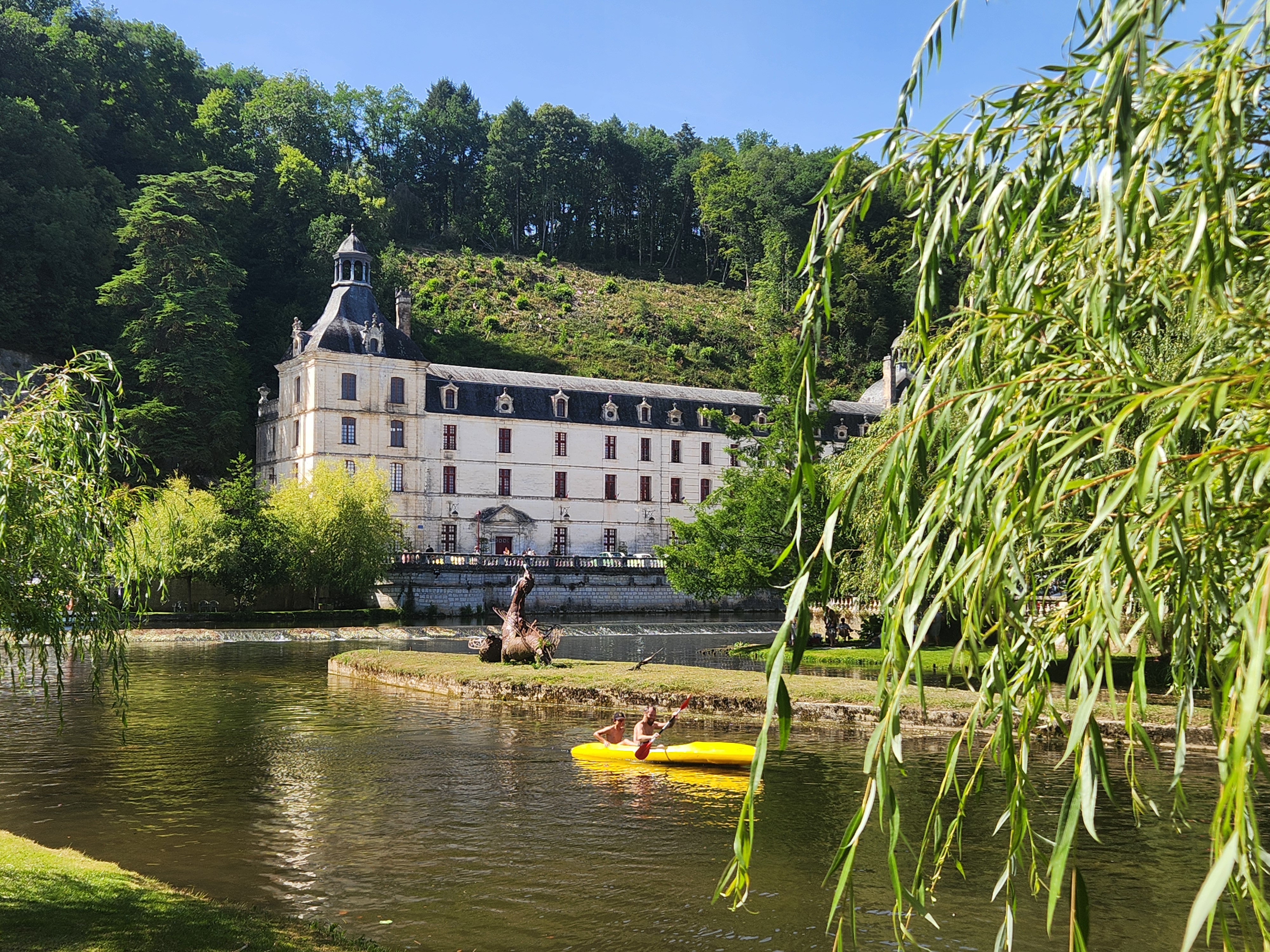
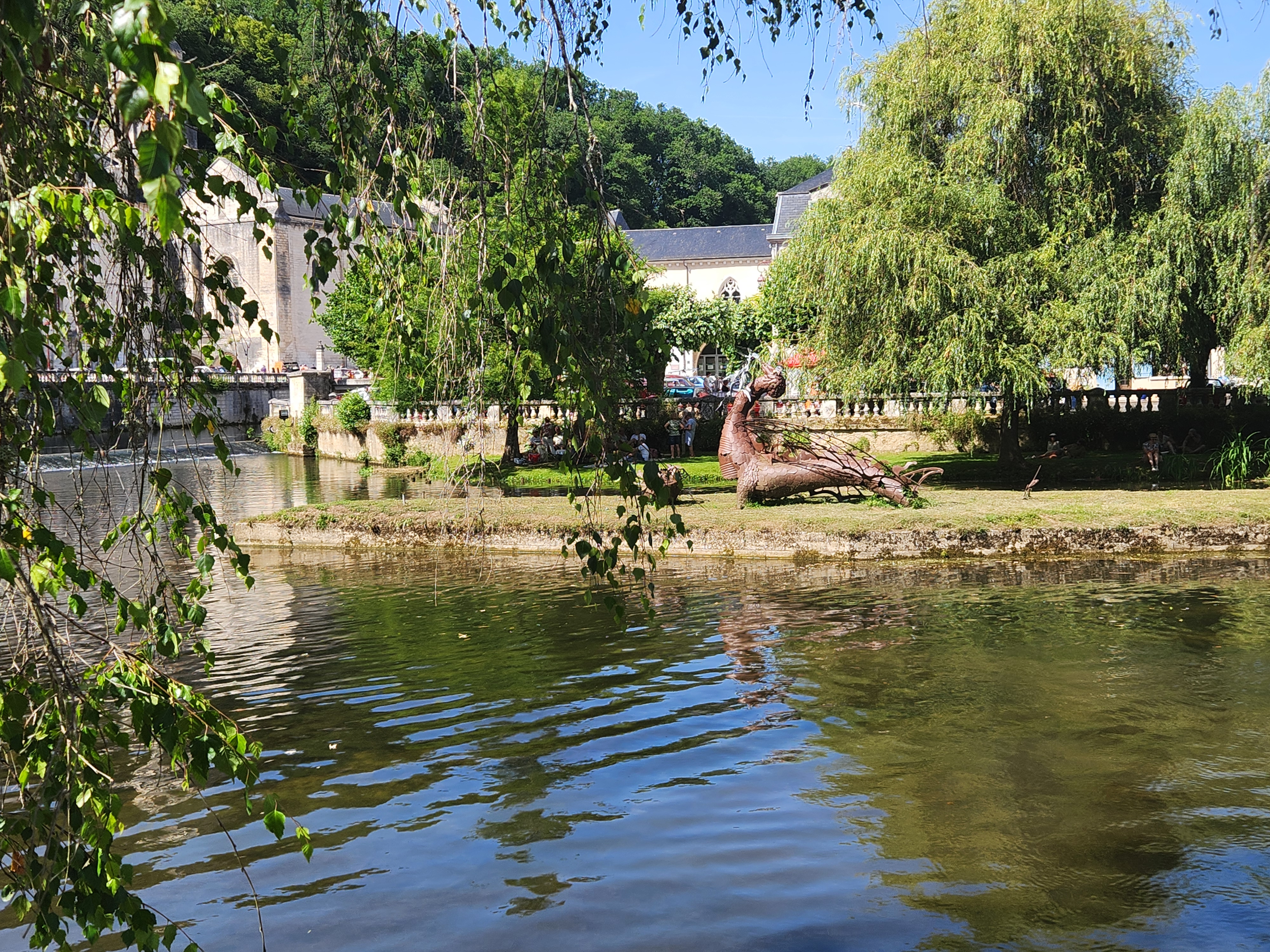
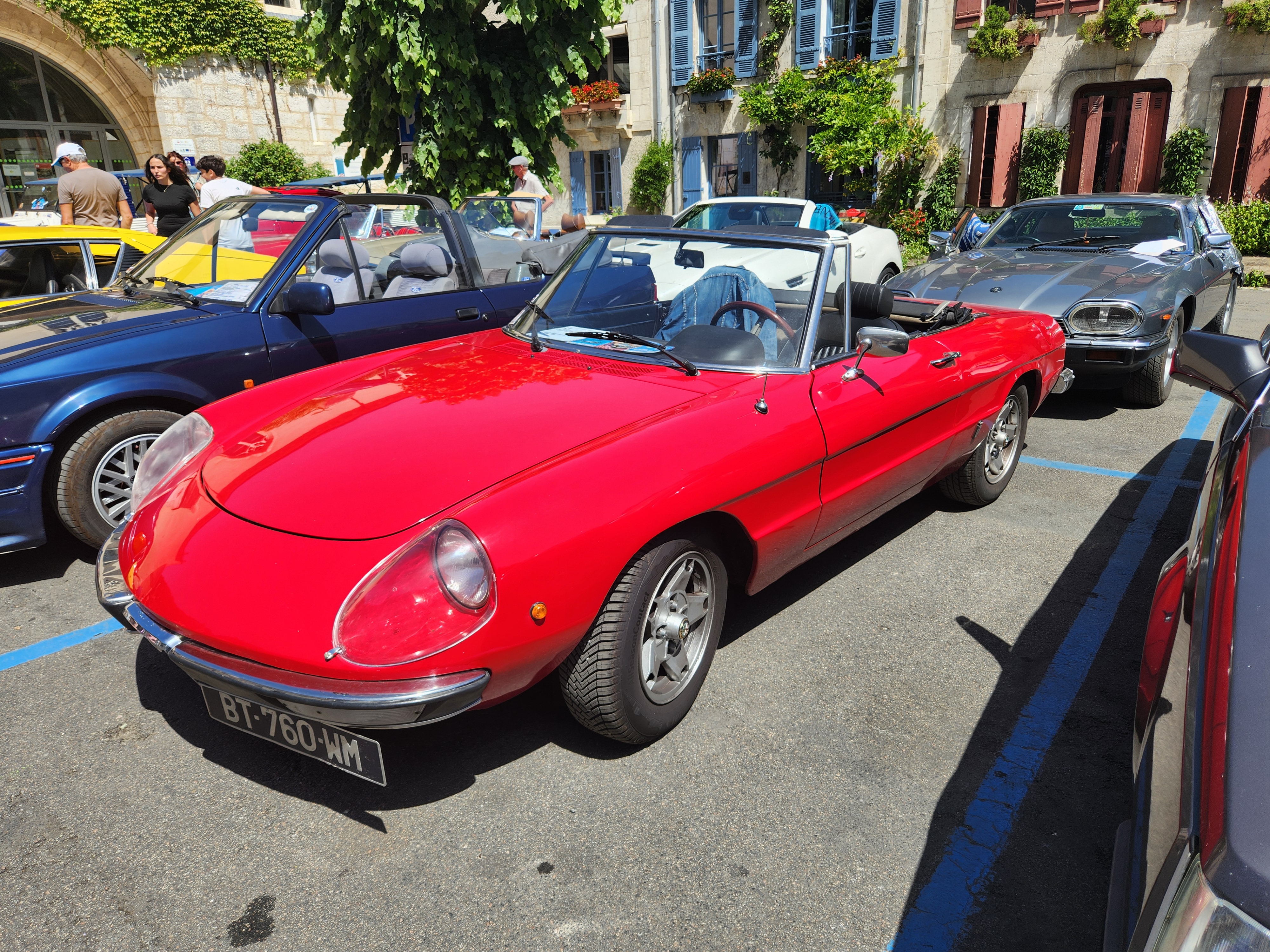
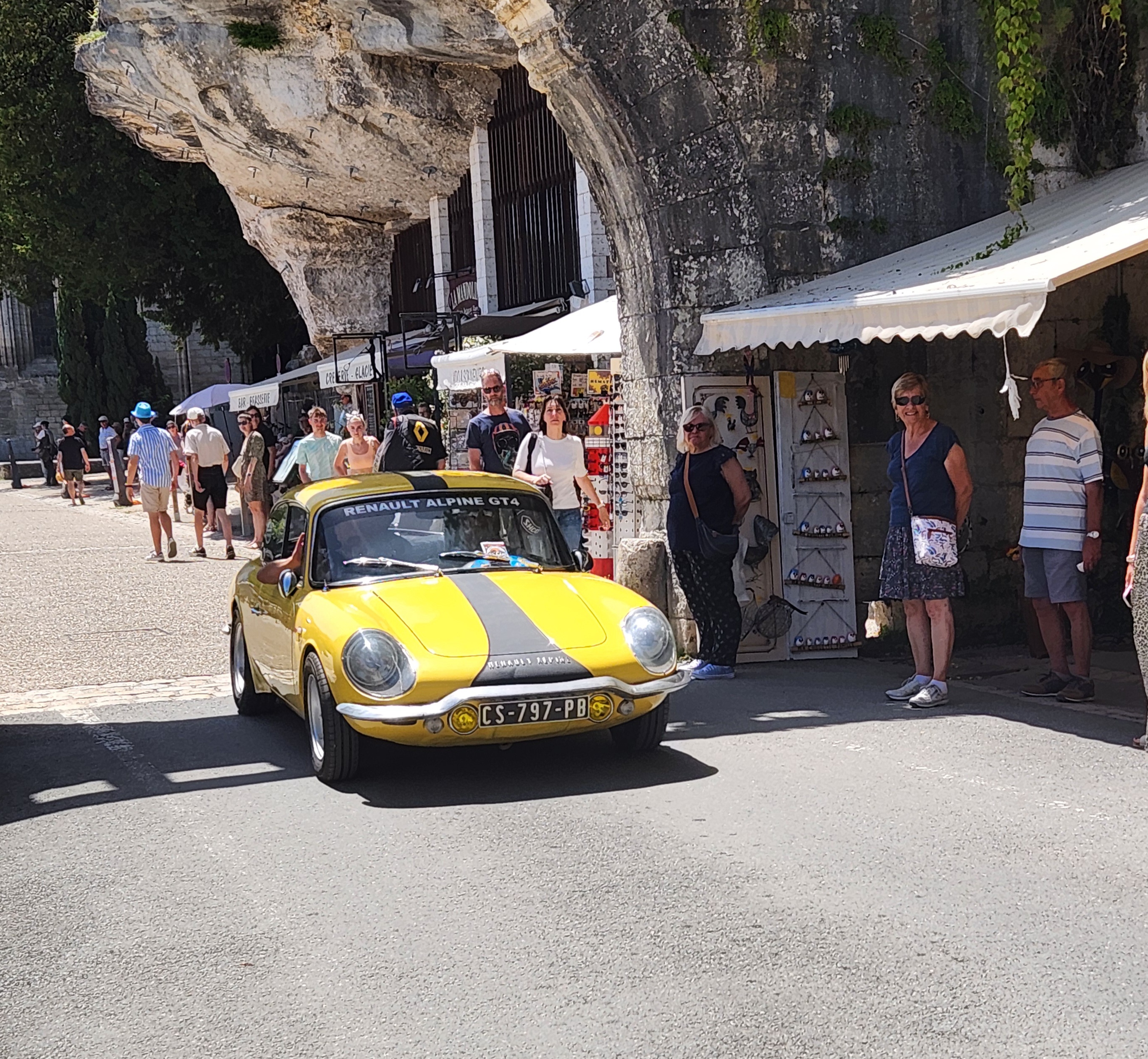
Brantôme was really busy with tourists plus there was a Classic Car meeting on, which added a festival summer vibe!
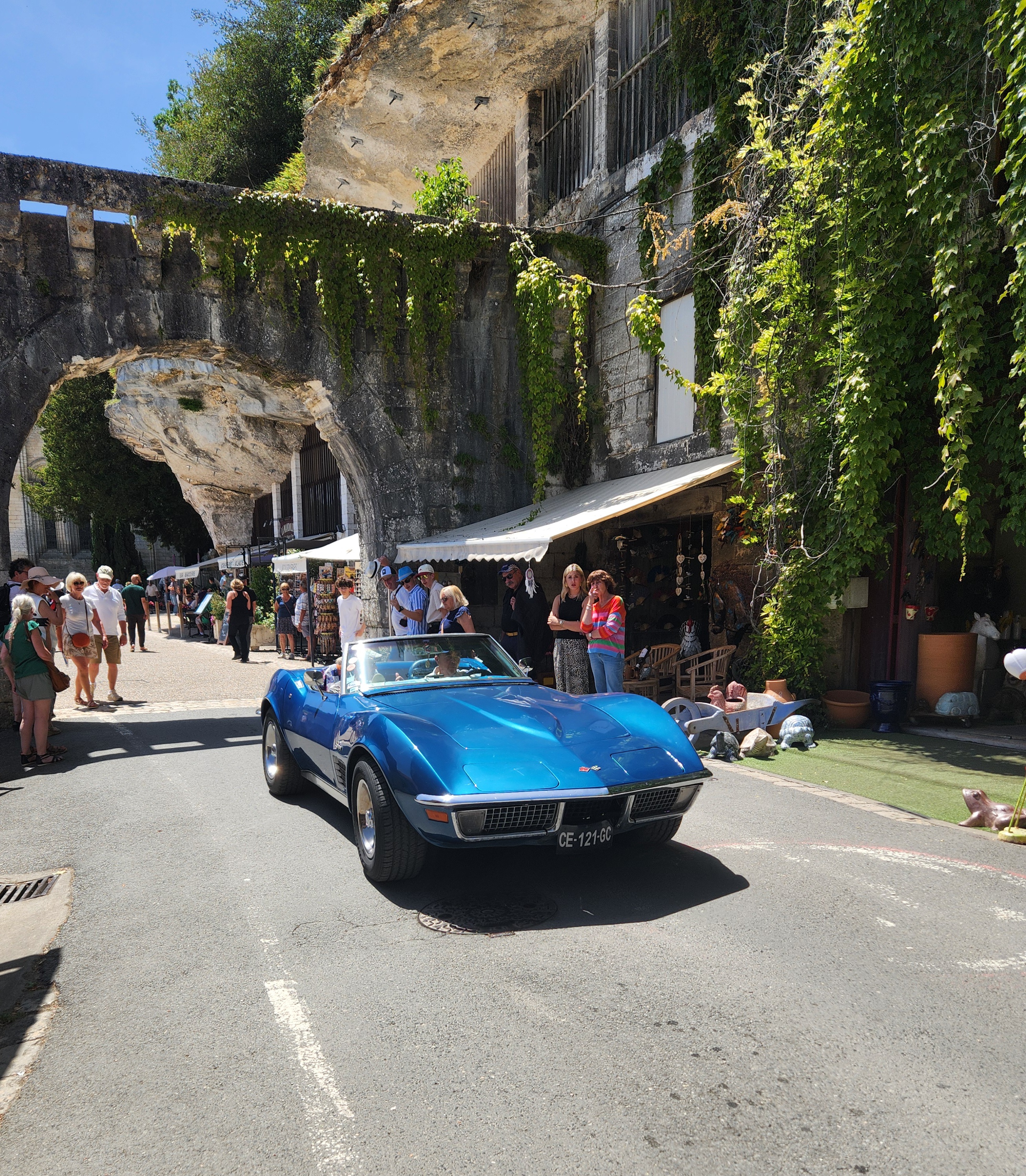
The riverside restaurants were buzzing and plenty of cold drinks were needed in the sunny 33°C. People out in canoes, kids and dogs swimming in the river, just lovely.
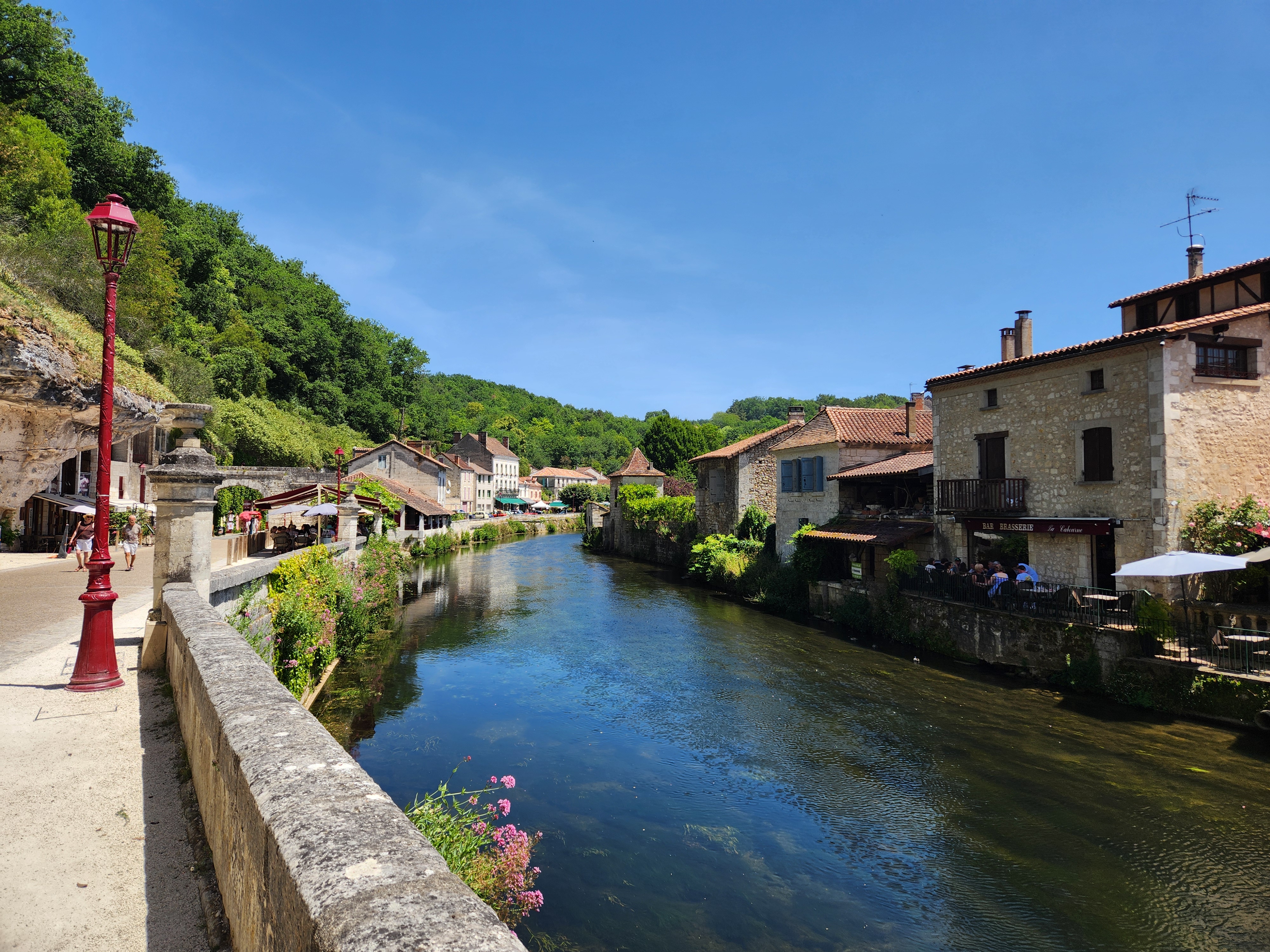
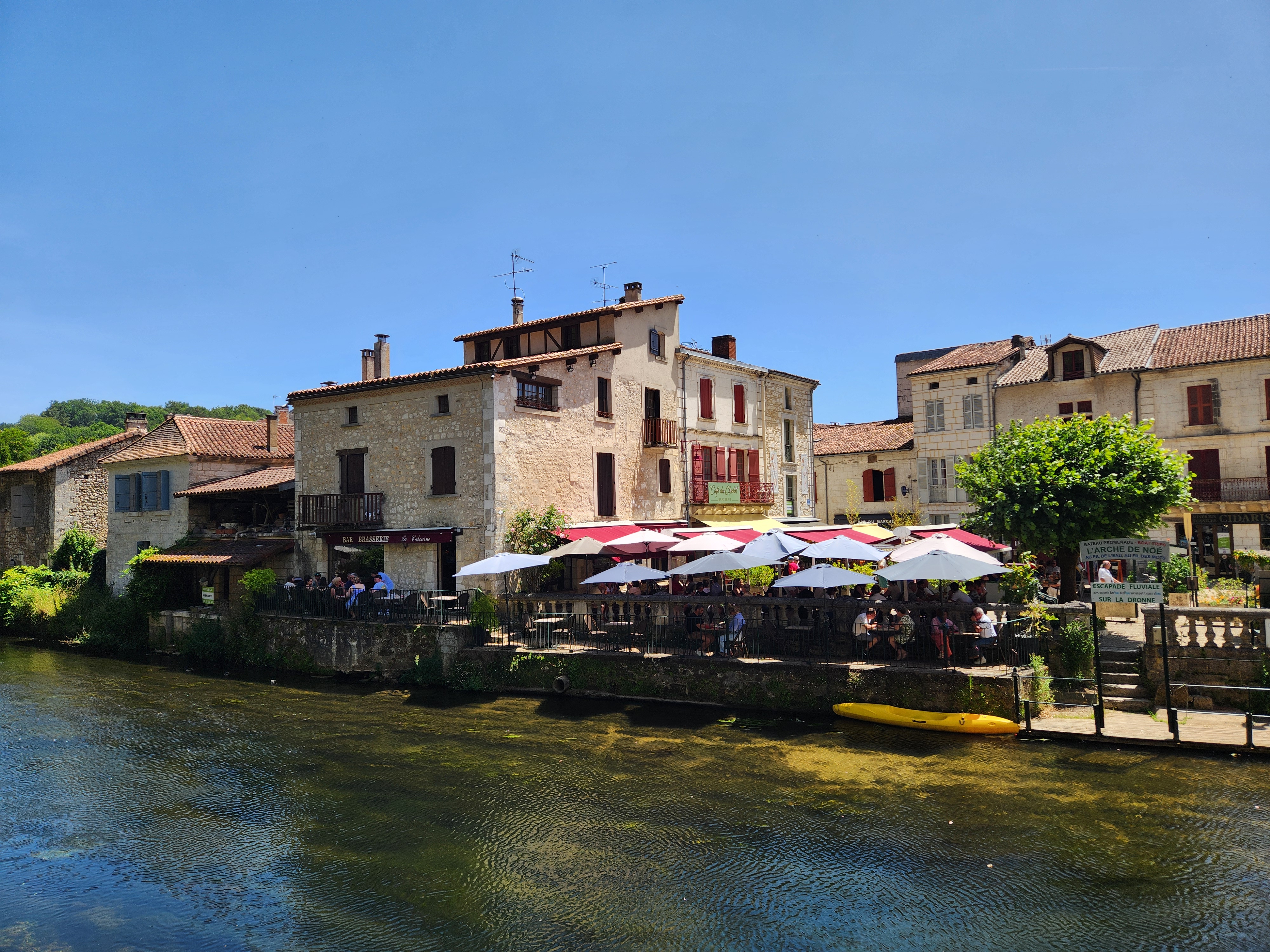
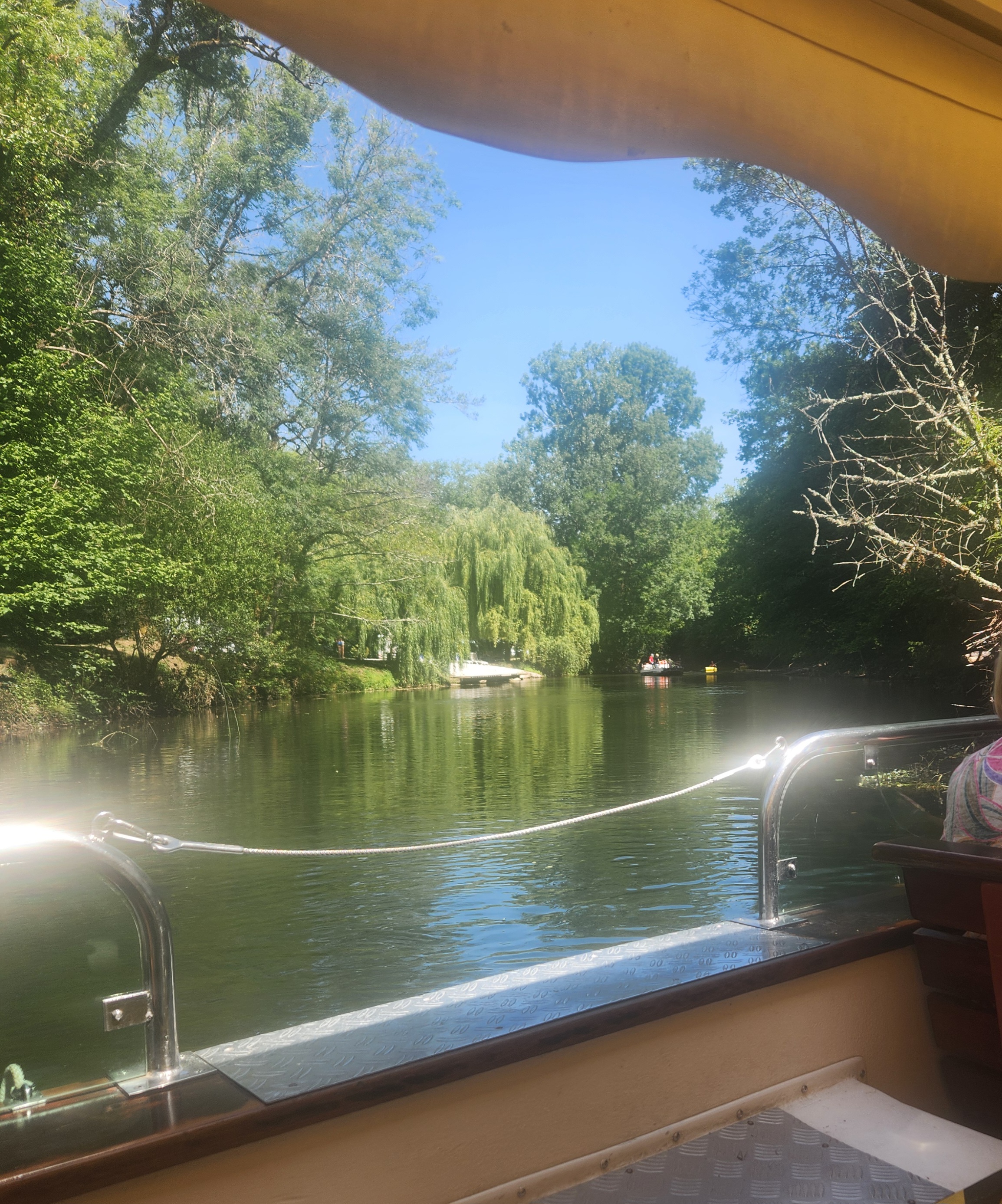
After a leisurely lunch and a wander, it was time for our riverboat trip. We passed by the remains of old rounded tower of the castle attached to the Abbey in the 16th century. On the opposite side the old Millers Ford. There were also the remains of a once planned hotel in the 1930’s. The project was rejected by the historical monuments act.
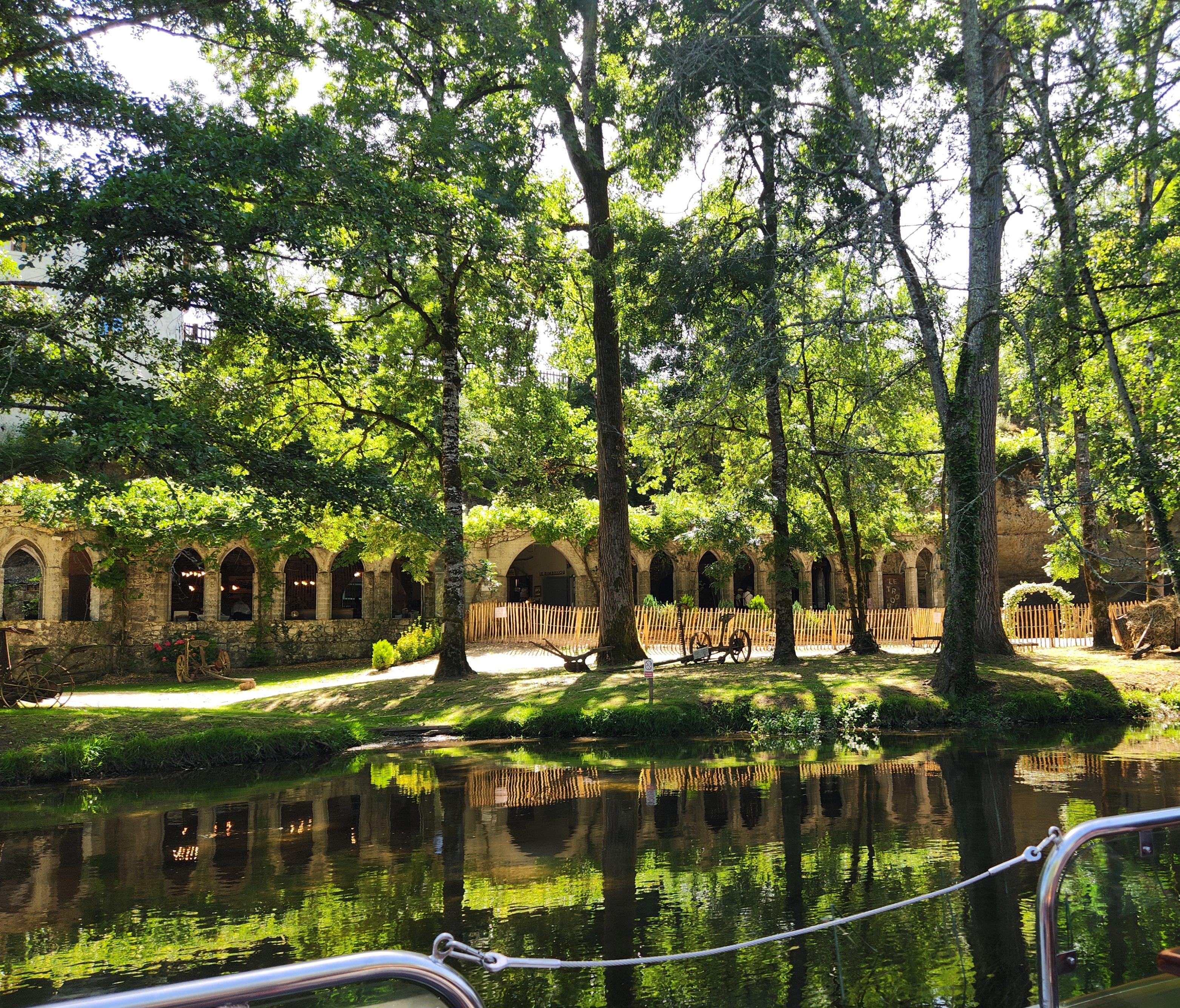
Further along the river it was so peaceful, cool and picturesque. Eighty percent of the watercourse of La Dronne is classified as Natura 2000, which is a network of protected areas across the EU. The water was so clear with apparently an abundance of trout, pike, zander and more. Some migratory birds, herons, moorhens and mallards nest there.

I will definitely re visit Brantôme to enjoy more of the town and I think out of season when it will be quieter.
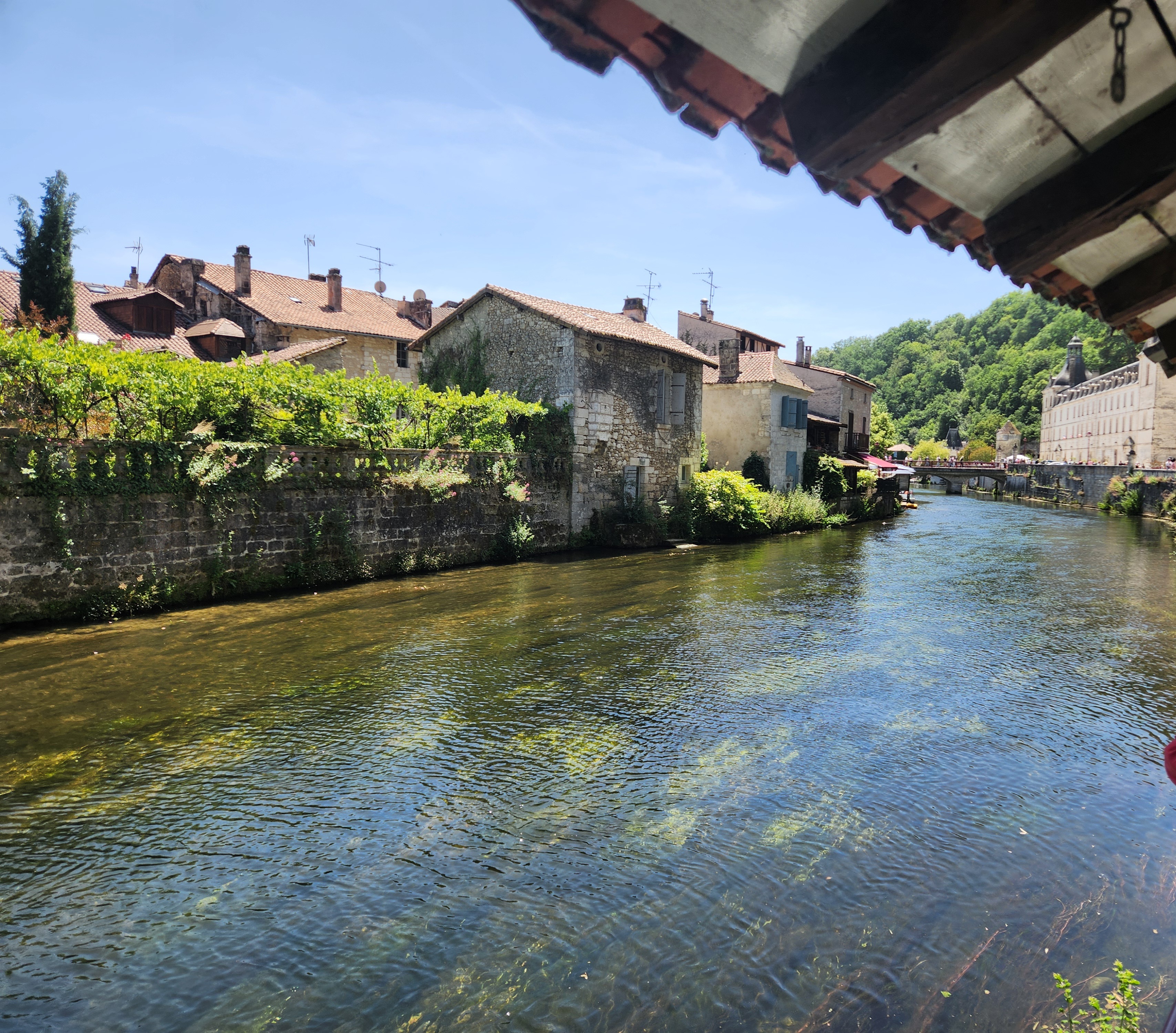
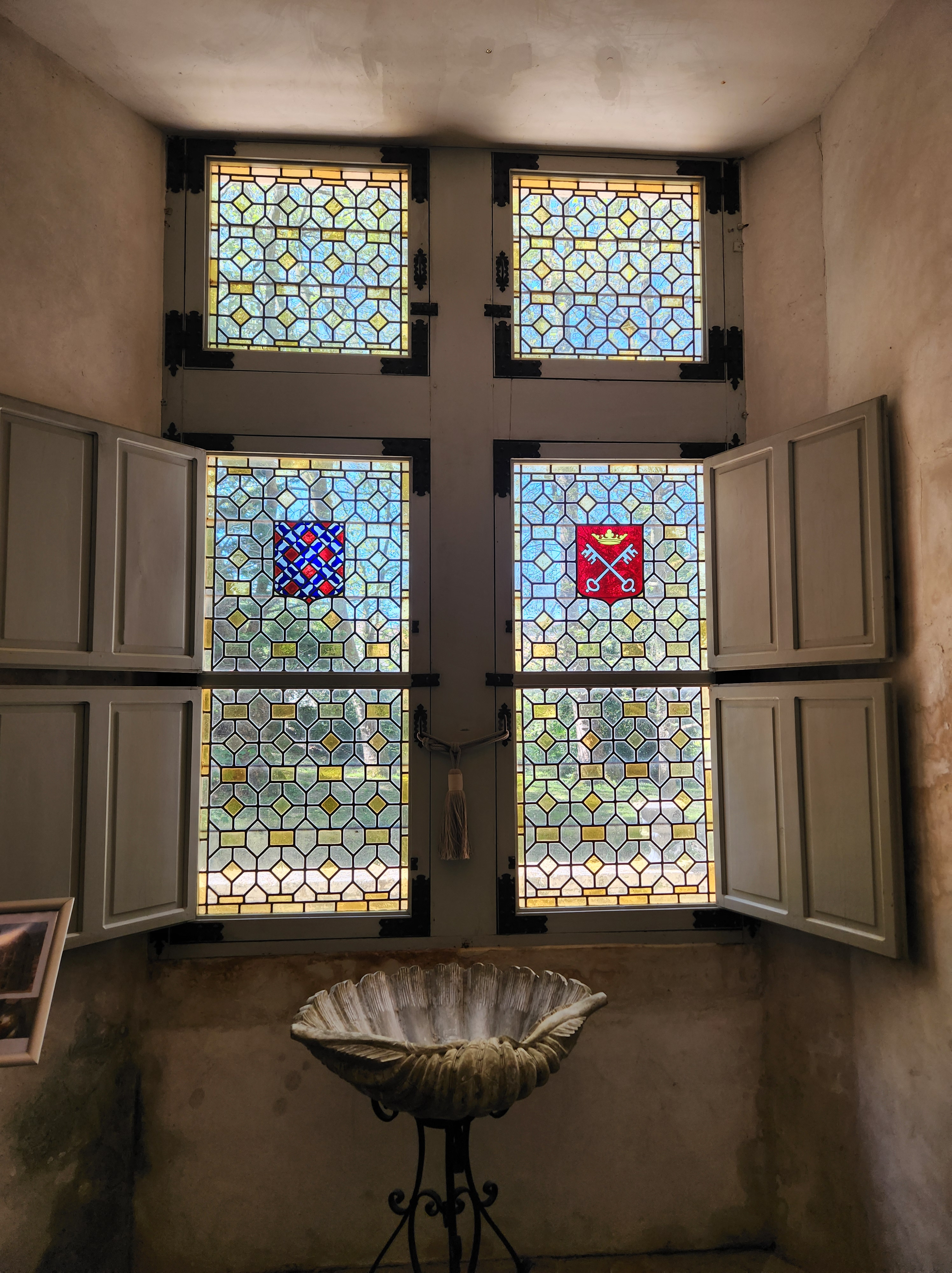
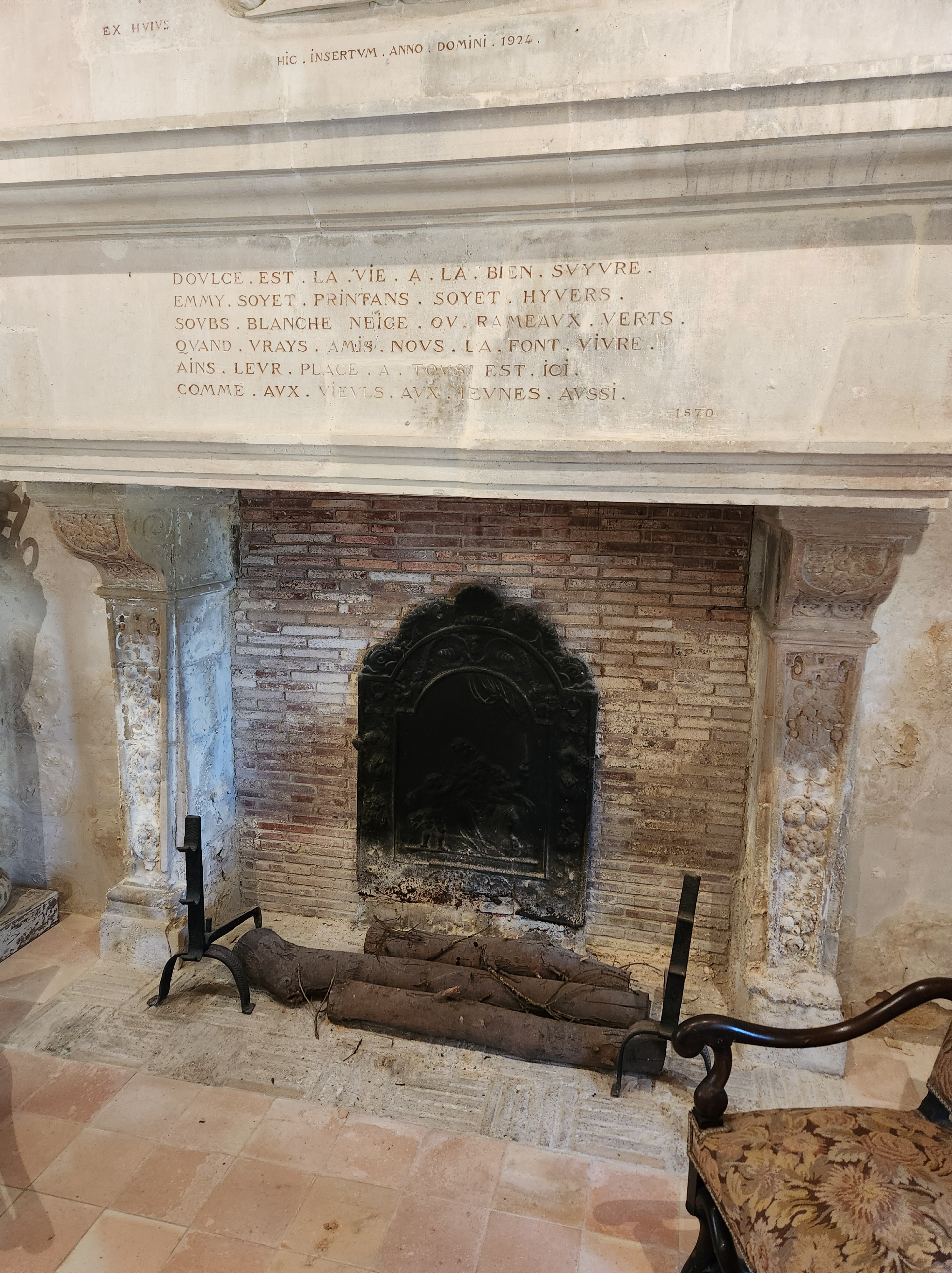
Early in spring, I took an afternoon tour at Château de Dampierre – sur -Boutonne, in the Charente Maritime.
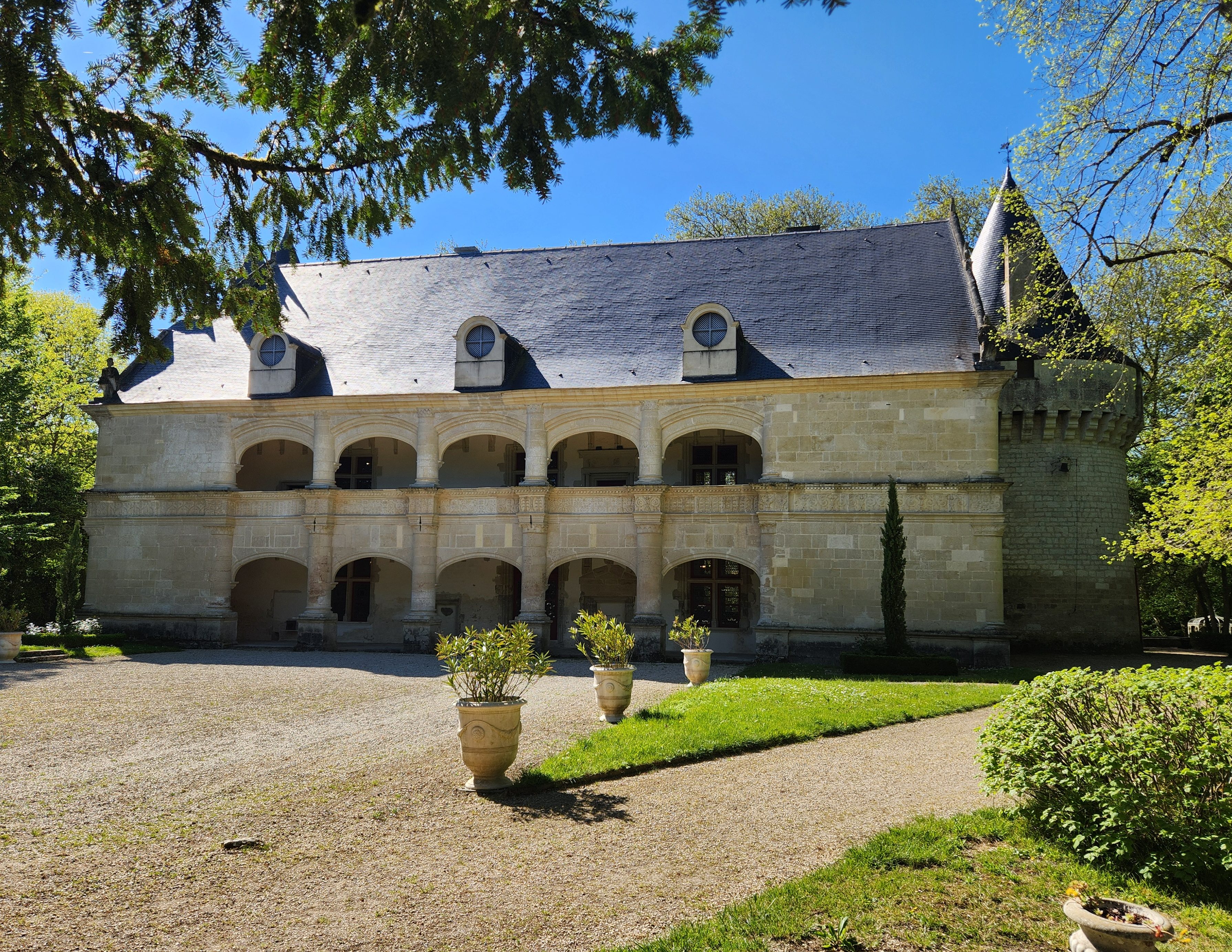
The château has a very rich and long history dating back to 995 when the village church was the château chapel. (Visit the website chateaudampierre.fr) It is an interesting read especially about all the influences with the structure of the château and how it has evolved over centuries.

In 1495, François de Clermont returned from Italy and was so impressed with the art of the Renaissance he decided to abandon his old fortified château and build on the site of a former priory of the Knights Templar (south tower), a residence in the style of Italian palaces. This is the origin of the current château located on the two islands surrounded by the water of the Boutonne, the main tributary of the Charente.
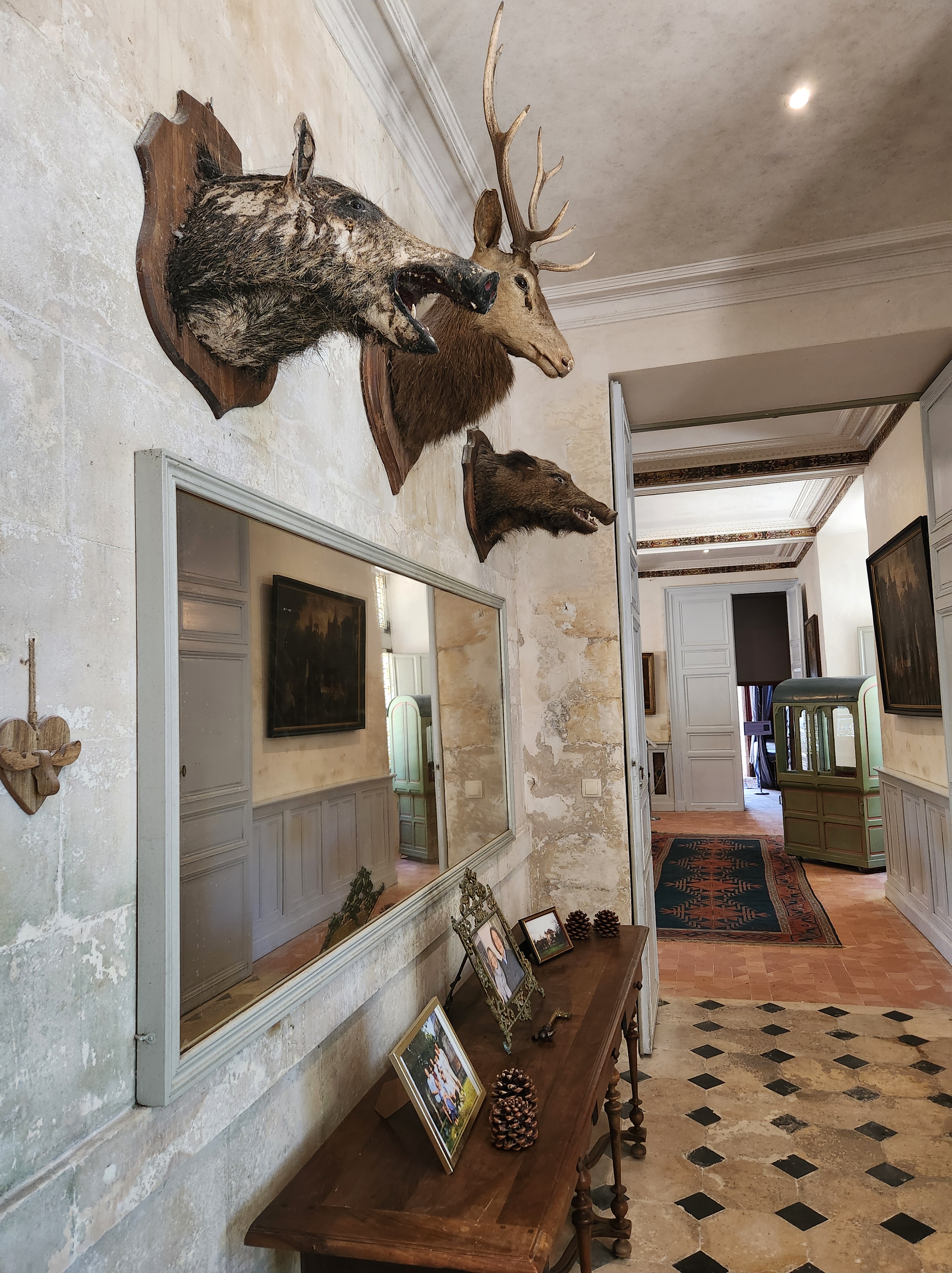
There is a Renaissance poem inscribed on the façade of the castle
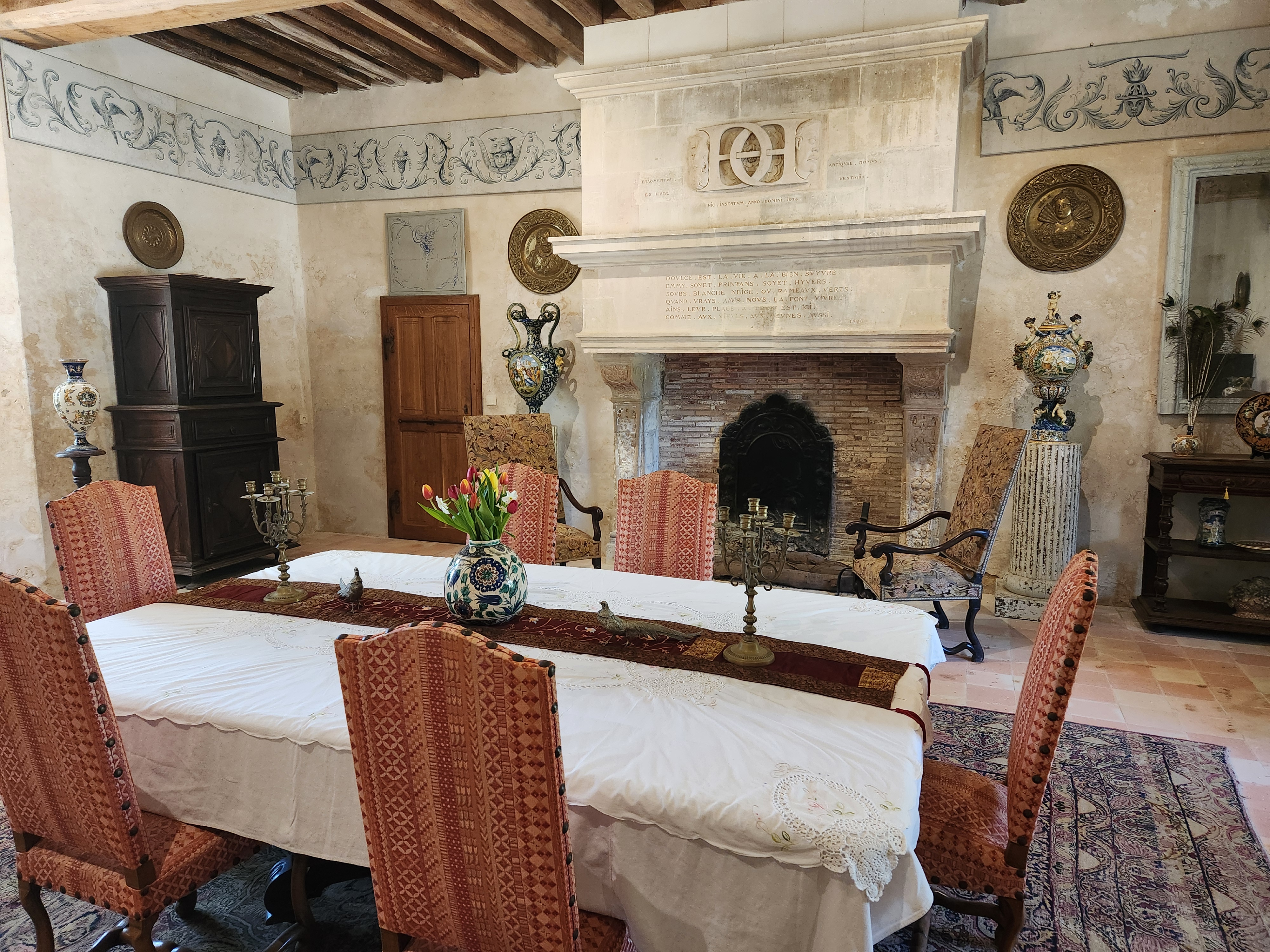
Si tu viens partager notre lumiere blonde, salut!

Mais si tu veux la partager longtemps,

Ne viens qu’avec ton coeur,

N’emporte rien du monde

Et ne raconte pas ce que disent les gens.

Translated…

If you come to share our blonde light, hello!

But if you want to share it for a long time,

come only with your heart,

takes nothing of the world,

and don’t tell what people say.
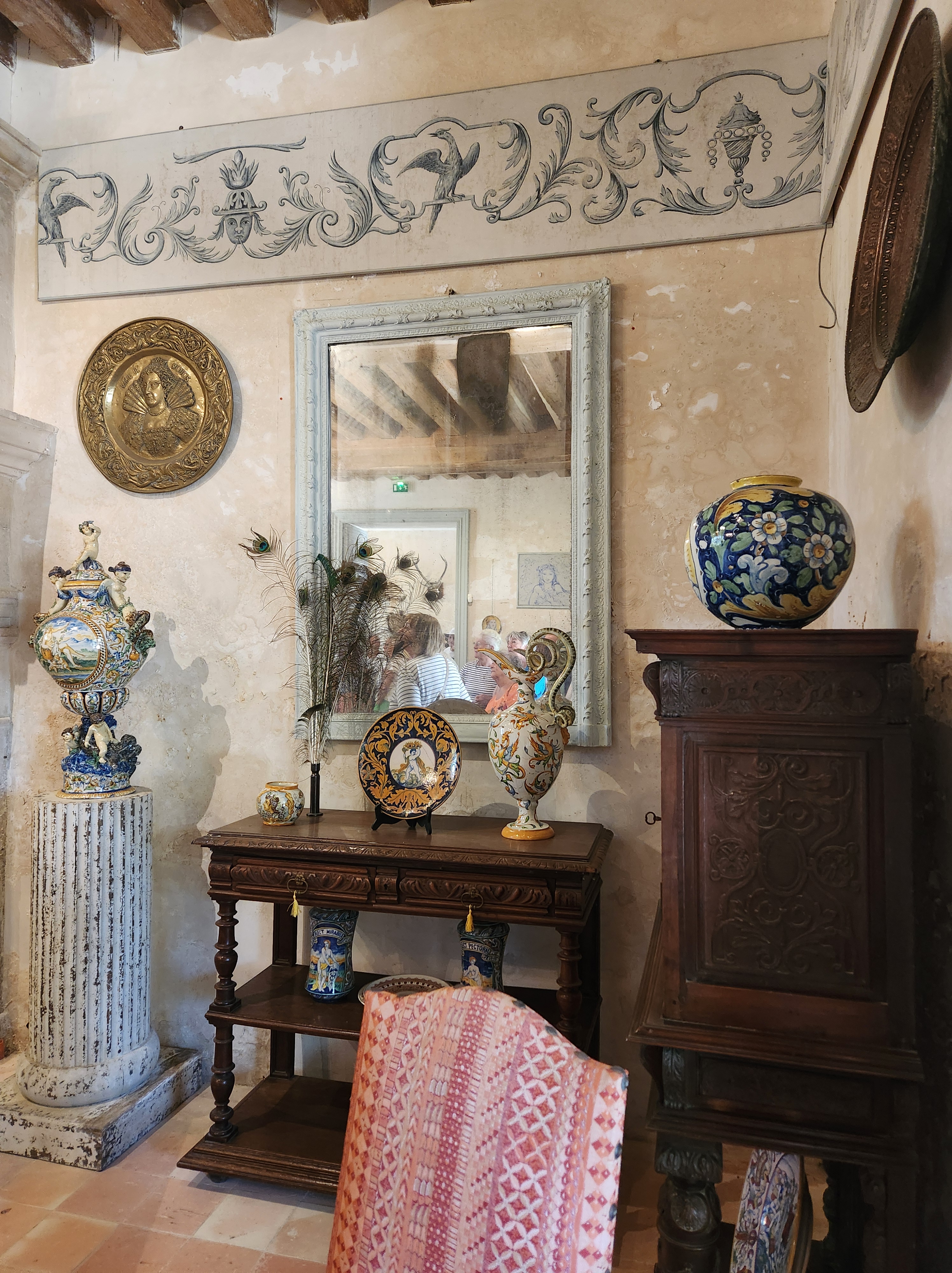
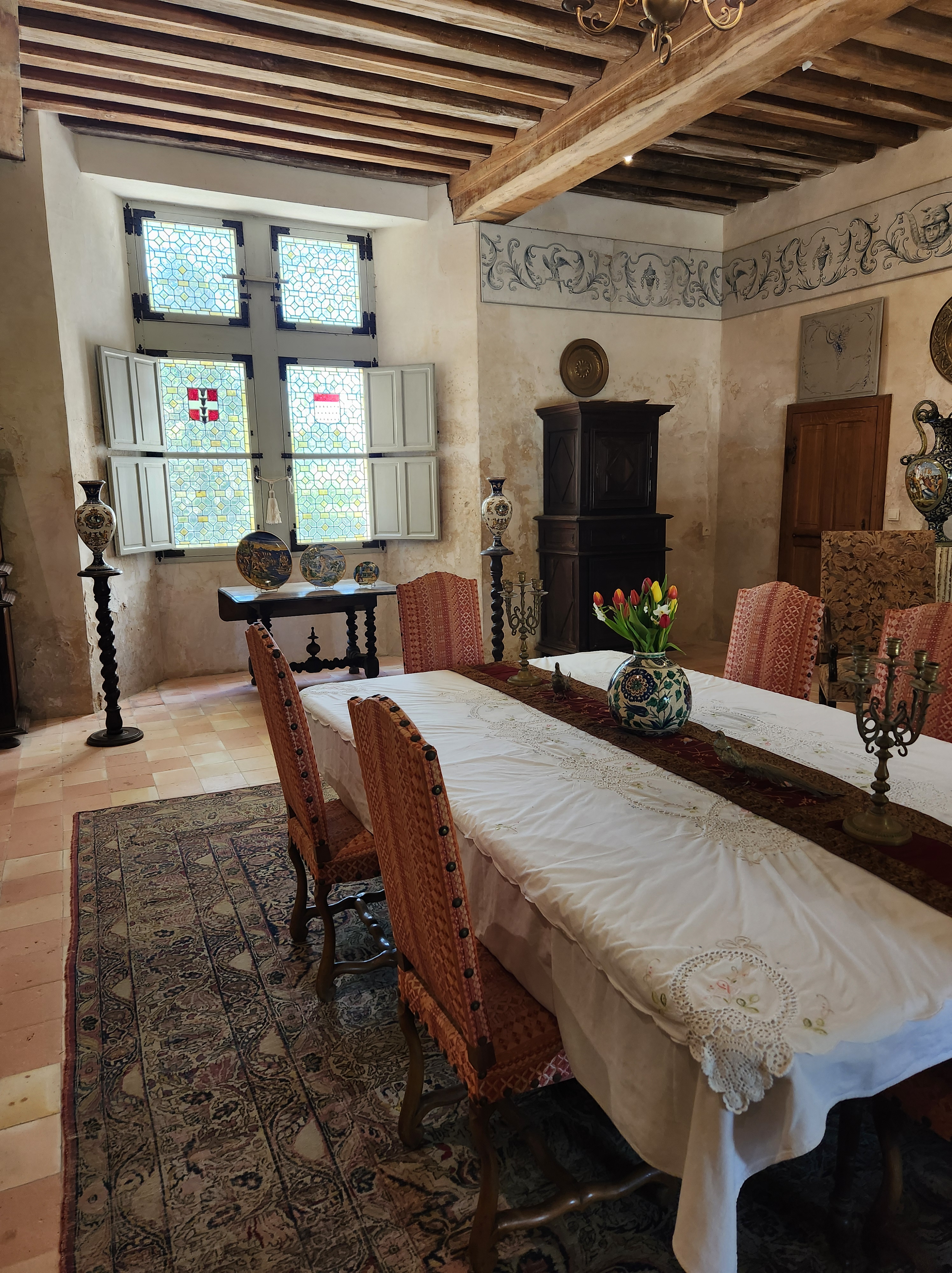
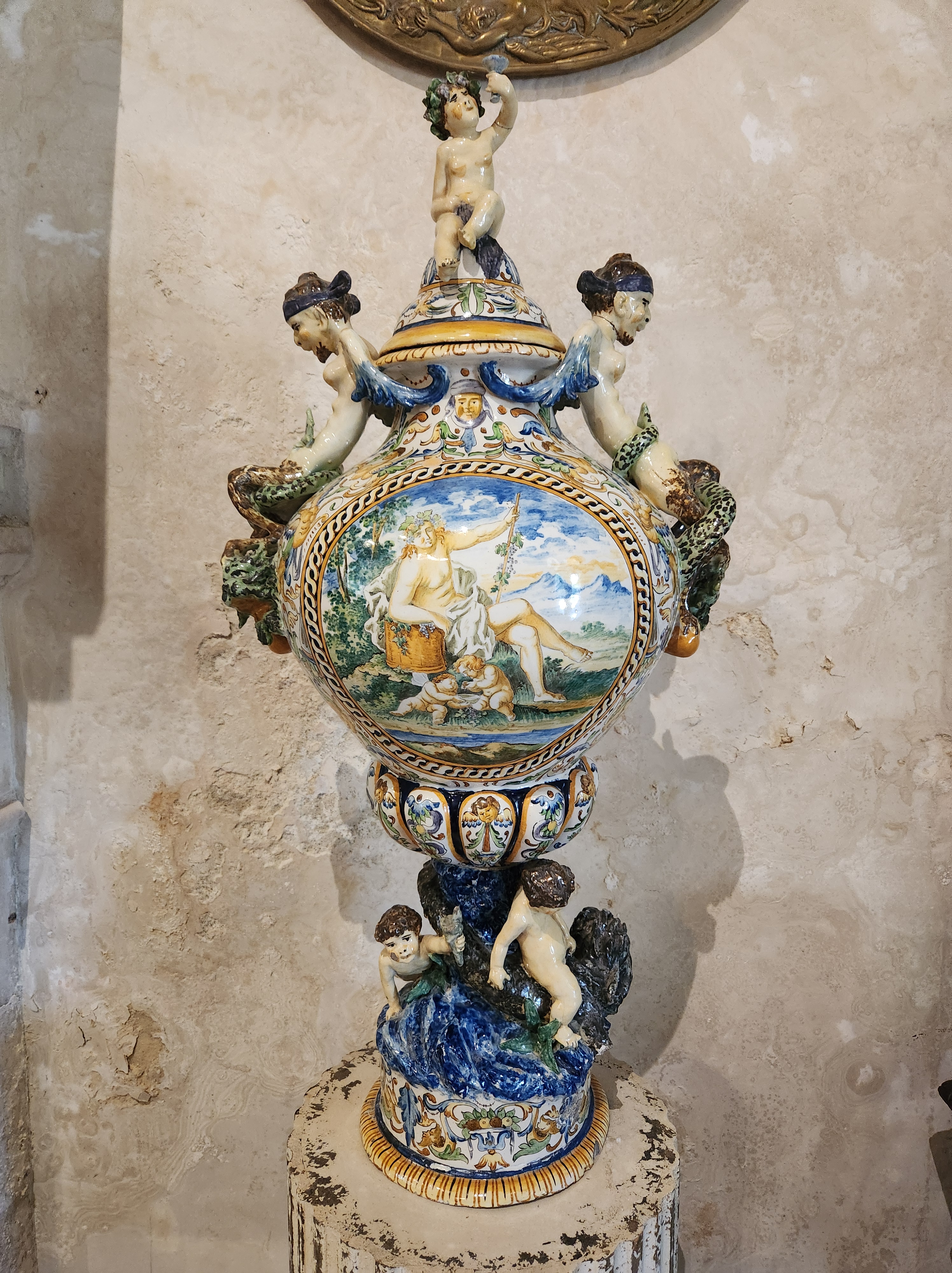
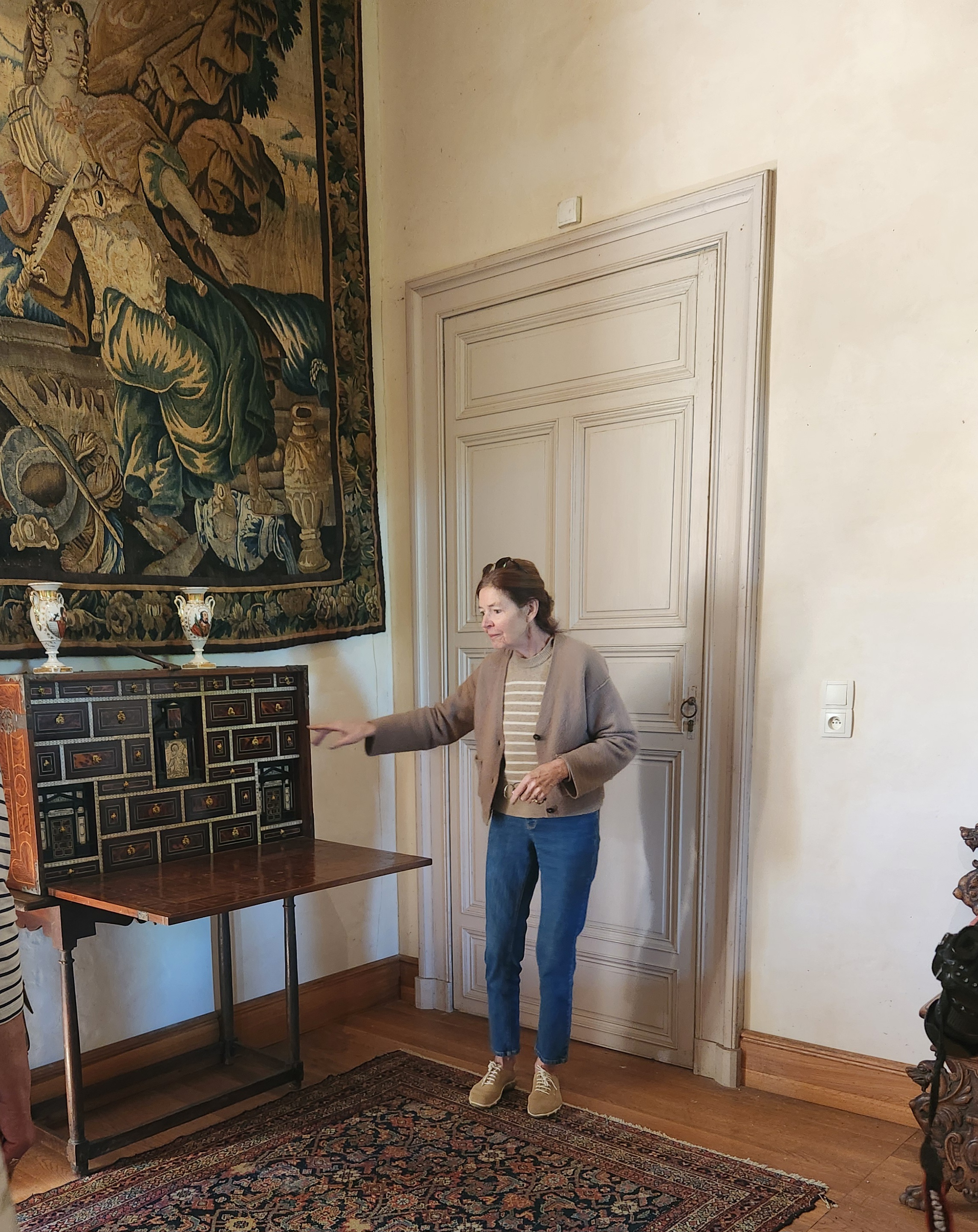
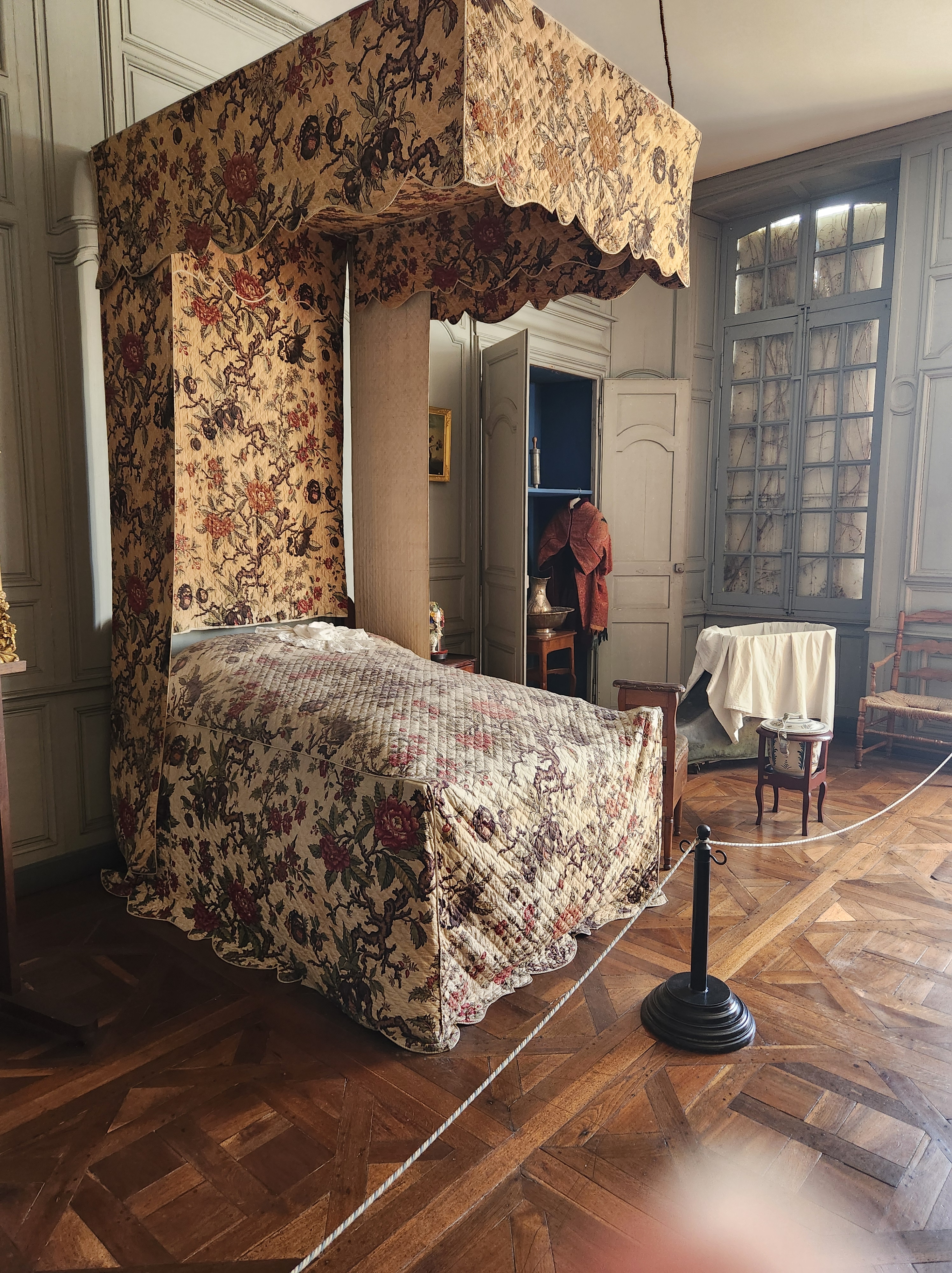
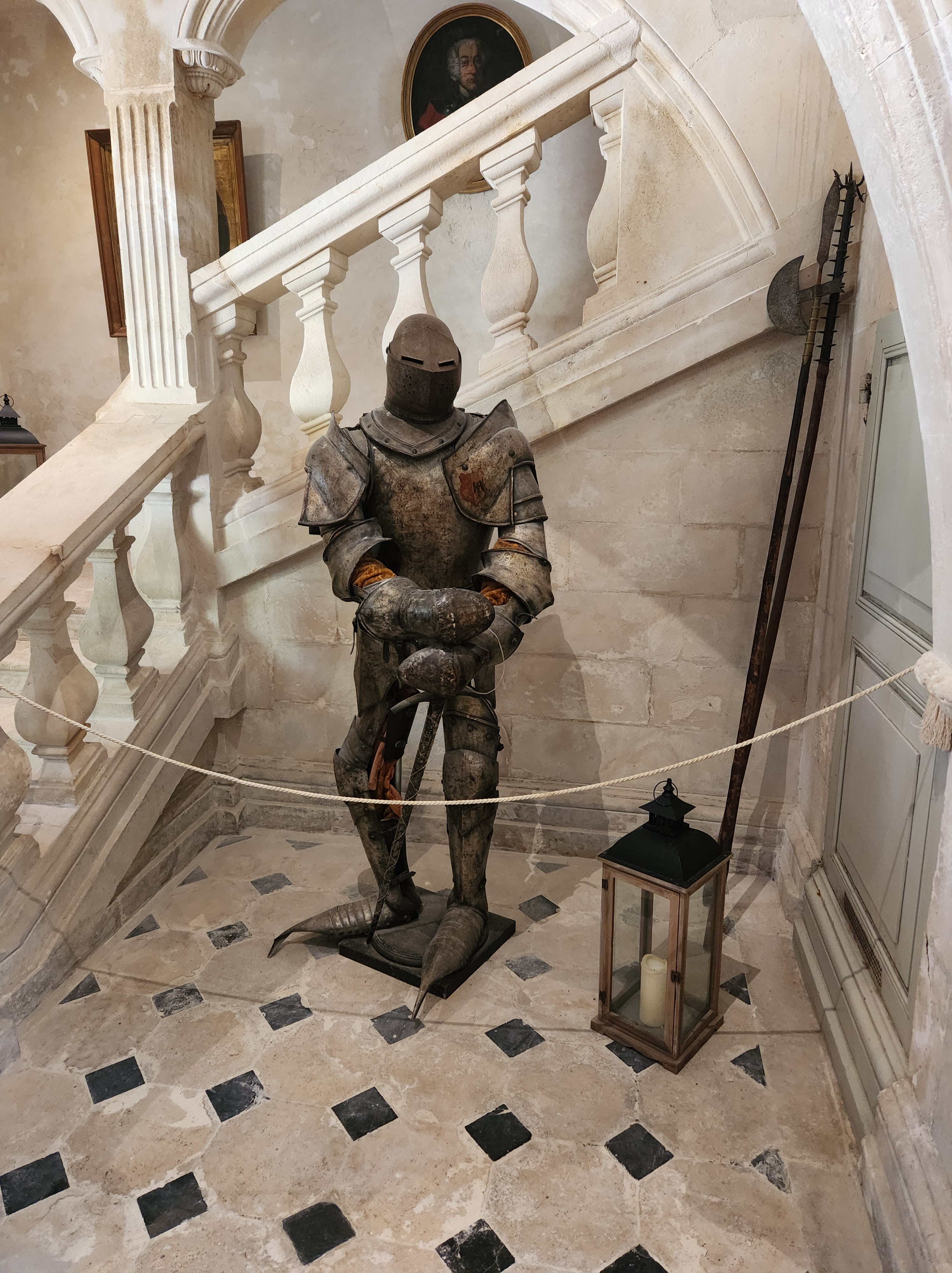
The rooms were decorated beautifully but with the age and fragility of some of the pieces of furniture, it was requested no photos/flash lights.

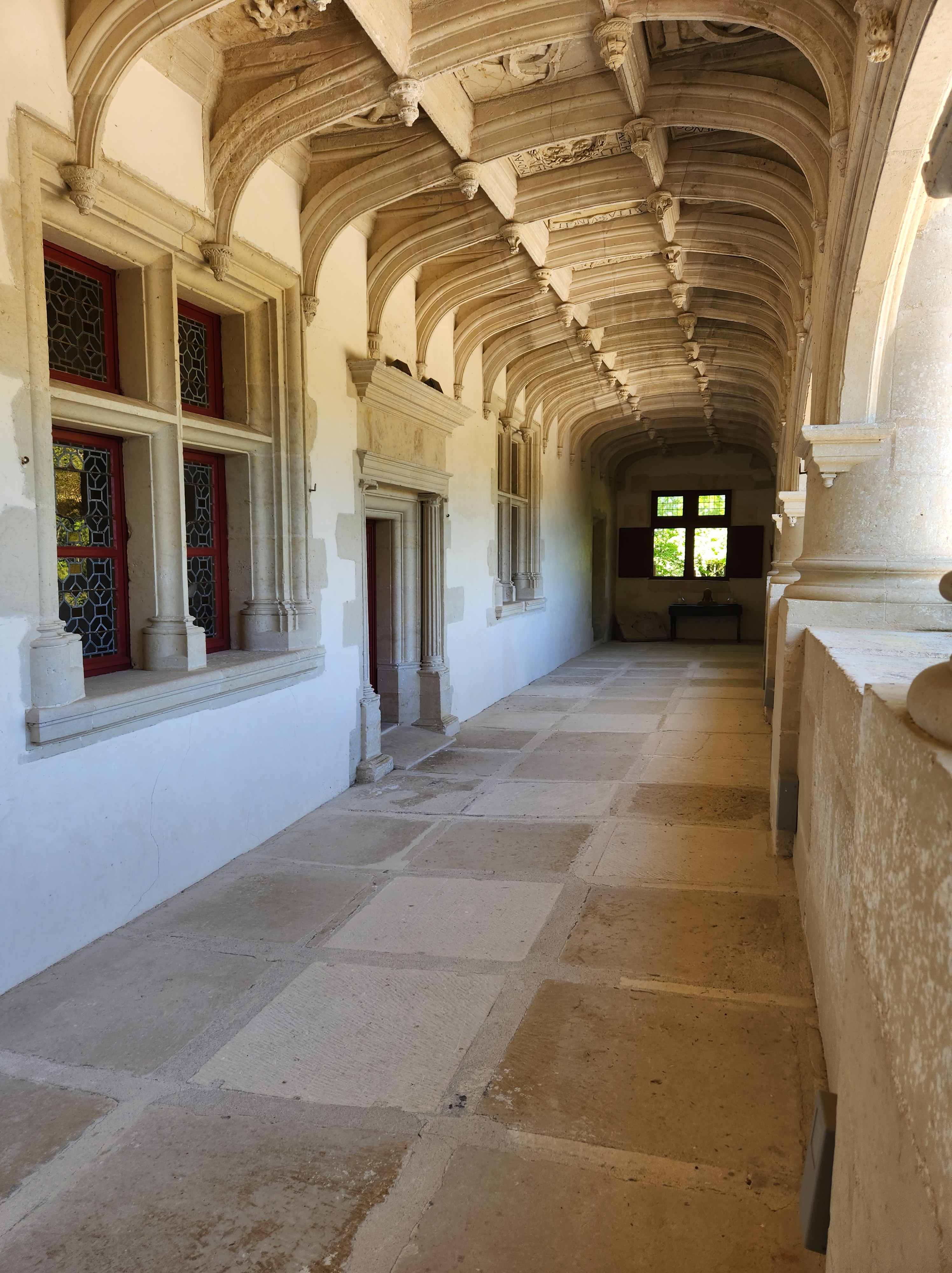
Further down in the generations of owners, Jeanne de Vivonne, who married Claude de Clermont, had the double gallery (1545-1550) added with its renowned ribbed vault of sunken panels with emblematic and alchemical emblems
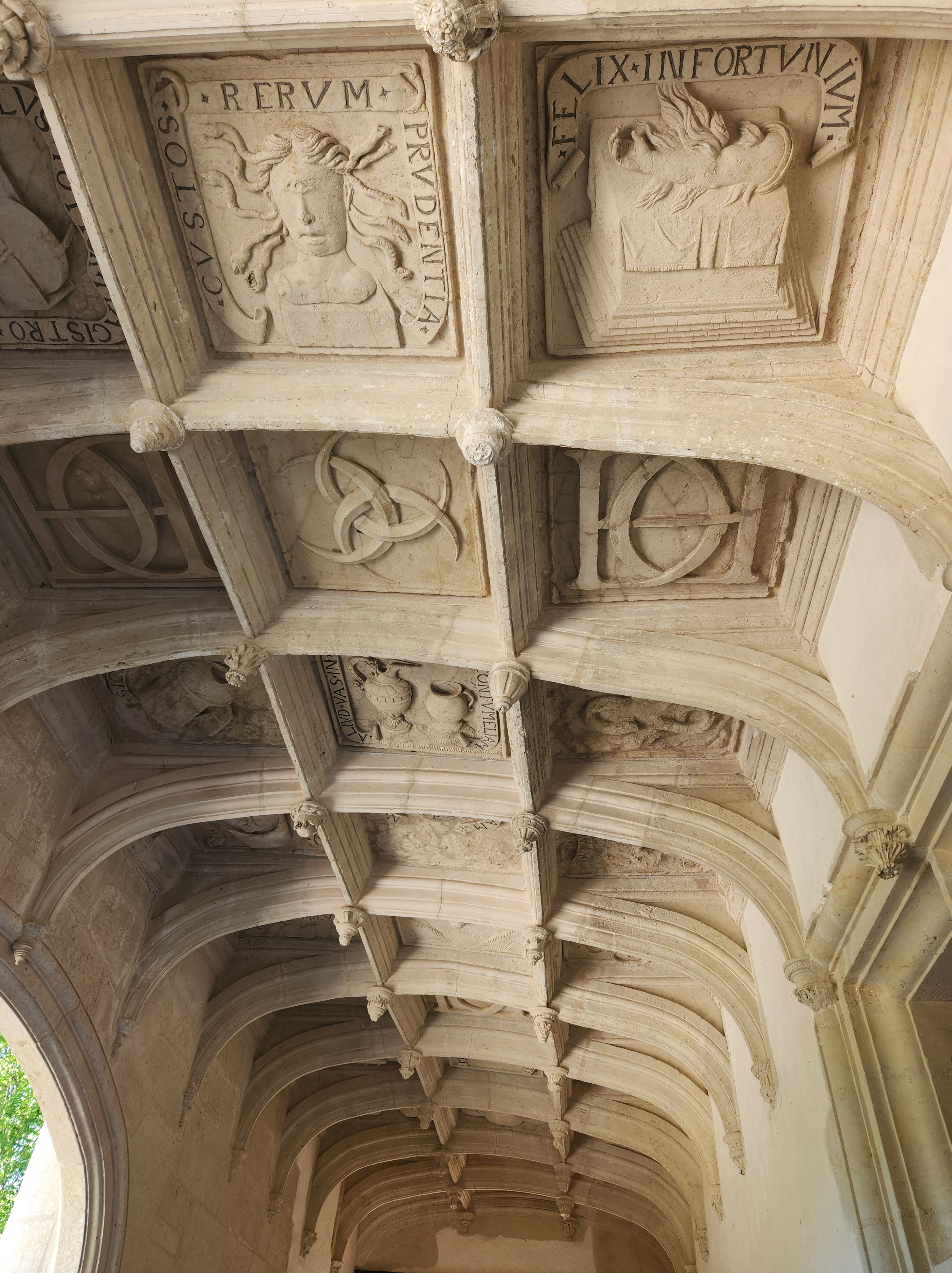
The current owners are Danièle-Anne Grunhertz and Alain Pfister, since 2017. They continue the work started by the Hédelins plus huge restoration work following a devastating fire in 2002.
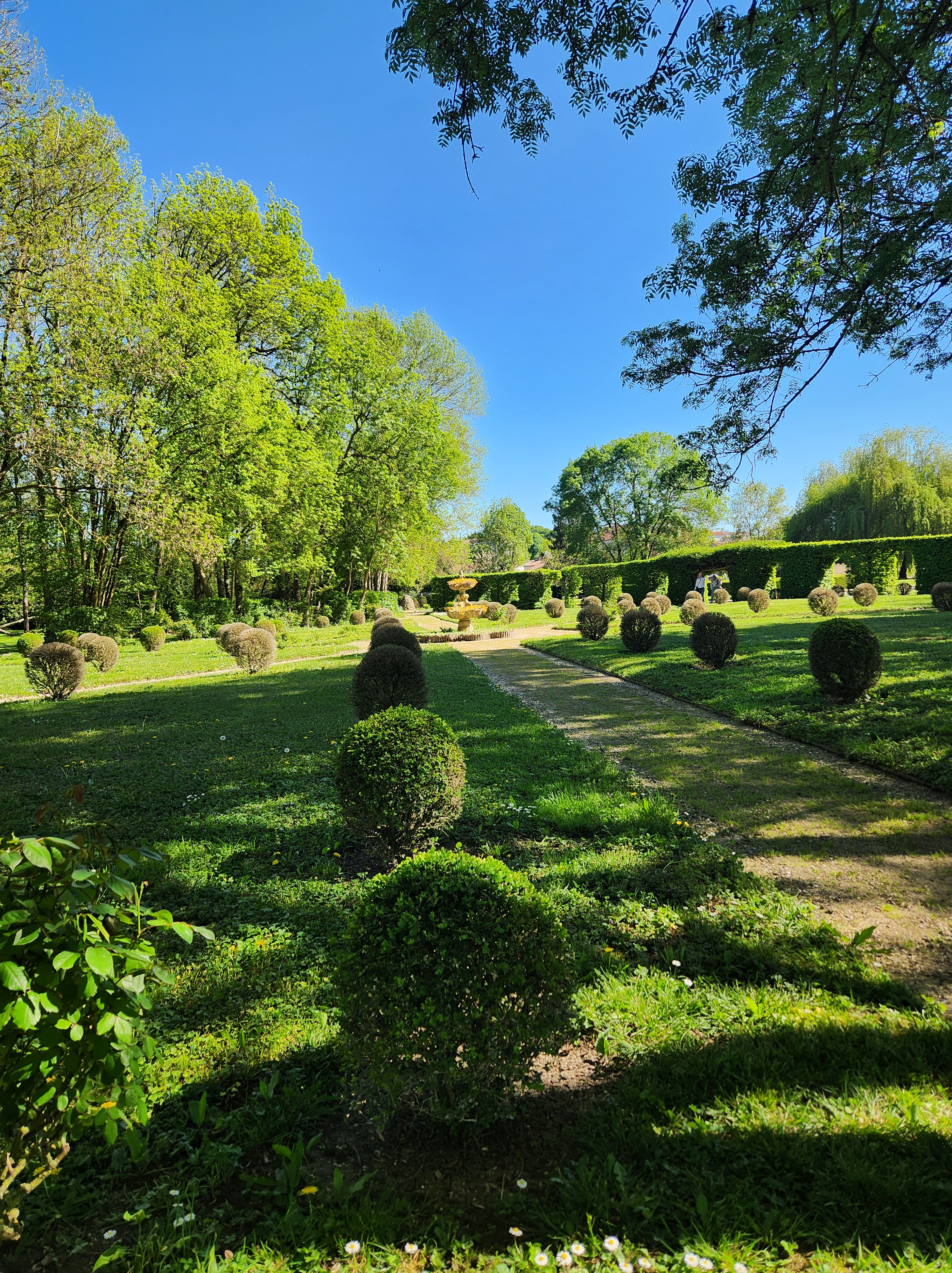
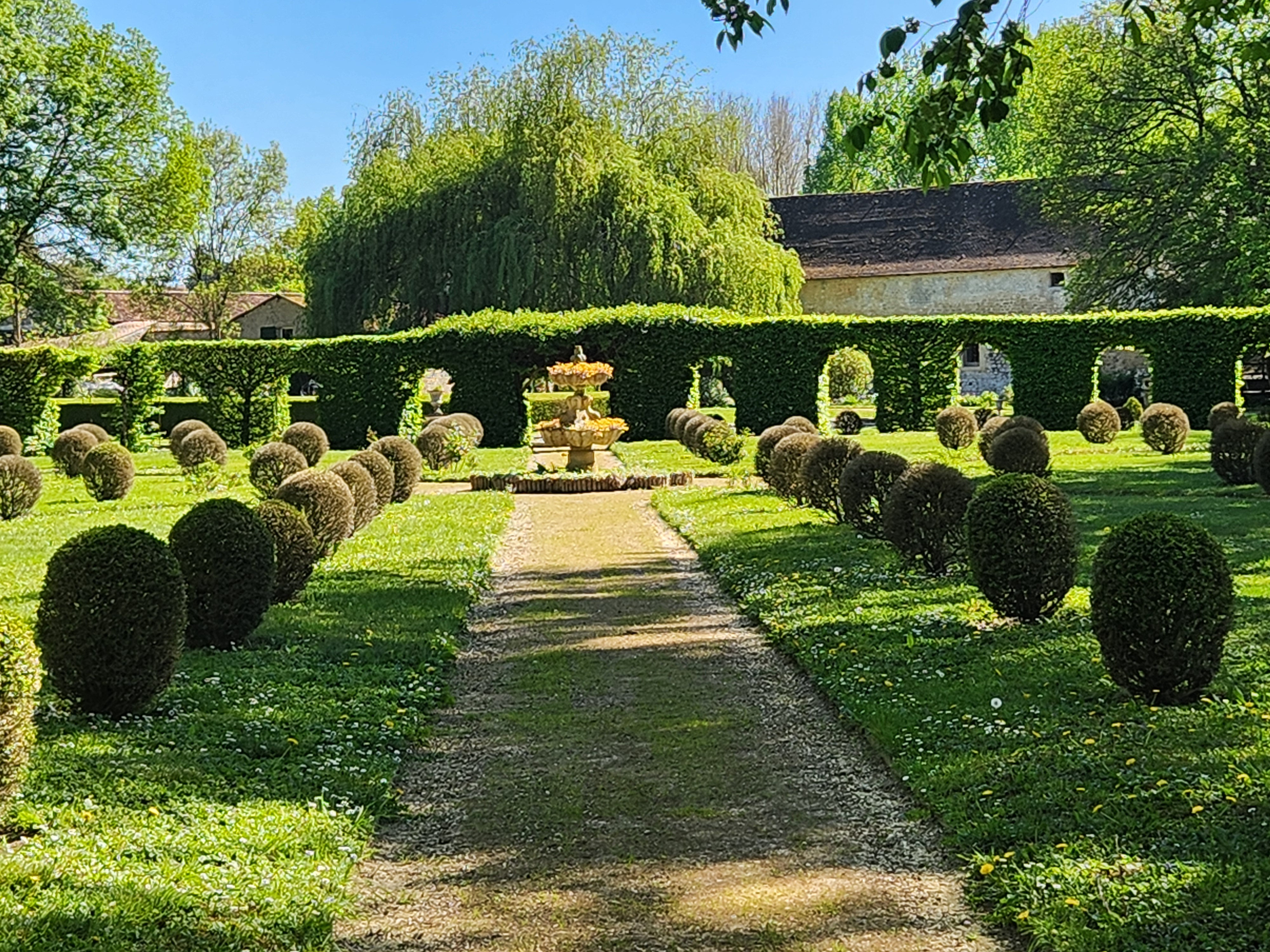
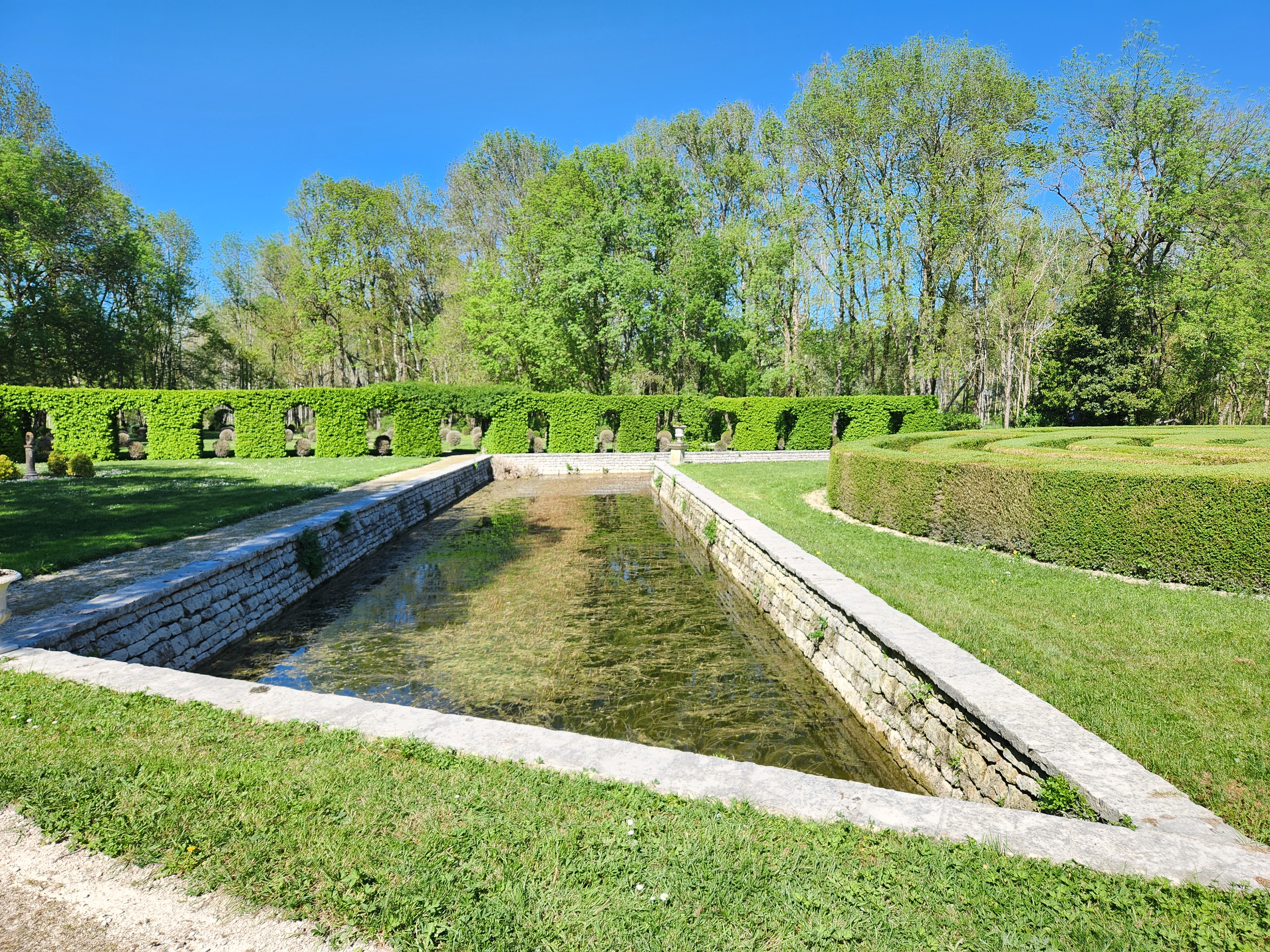
The Hédelins also created the labyrinth and the French-style flowerbeds, echoing the alchemical symbolism of the gallery. 
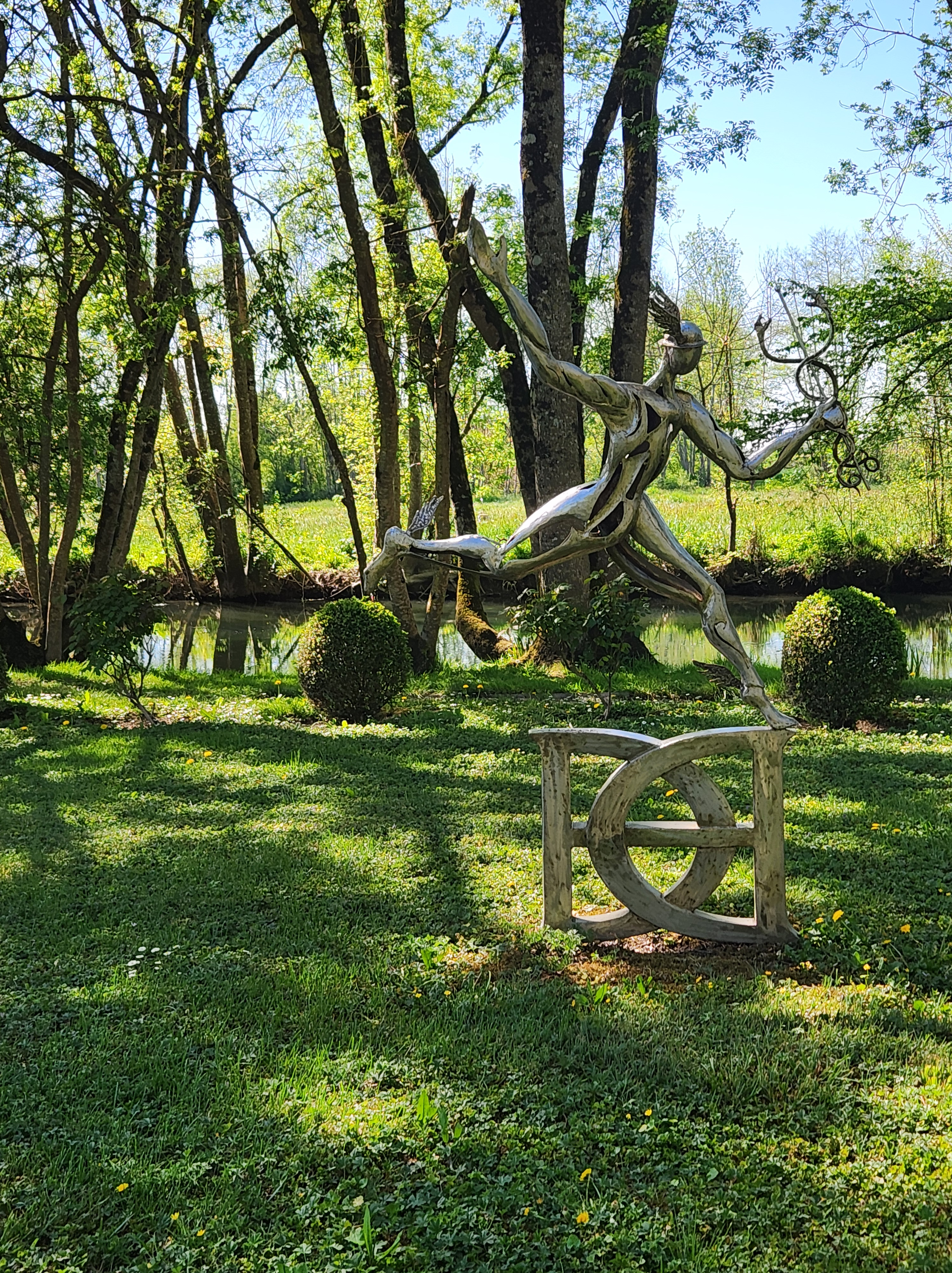
Where to next?
Summertime, and the livin’ is easy


Its been a busy summer with local brocantes, markets and aperos with friends and all in beautiful weather, and its not over yet!

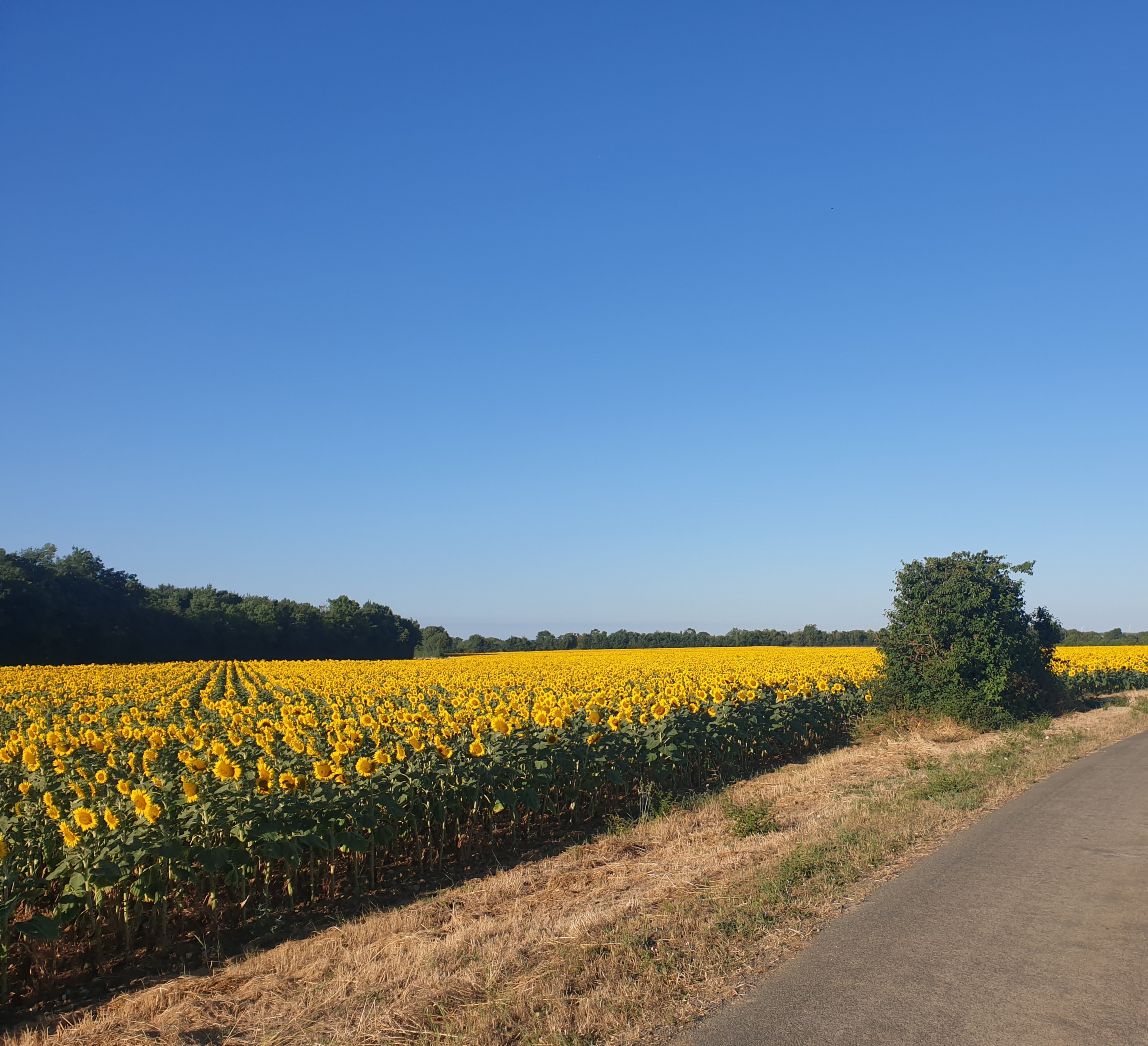
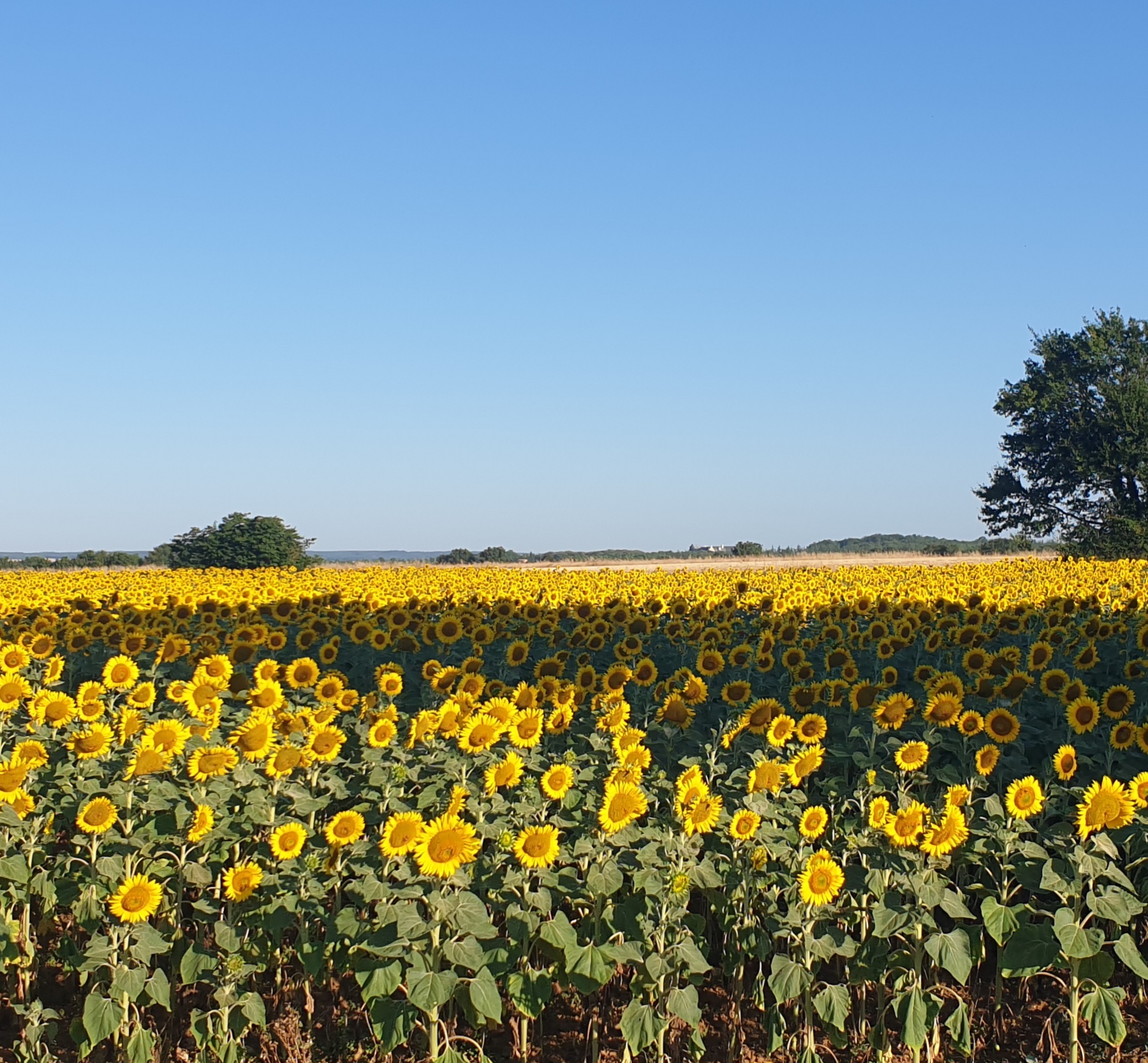
I have been loving my dog walks in the countryside from July when we had weeks of the fields bursting with sunflowers. In the sunshine the fields looked almost a fluorescent yellow, just stunning. In the morning the flowering buds and young blossom face the east and then track the sun. This is distinctive to sunflowers and called ‘heliotropism’.

Did you know, France is the fifth largest producer of sunflower oil (Ukraine being no.1). And sunflowers have additional uses aside from human consumption. They are able to remove toxins from the soil and in fact where used in the remediation of contaminated areas affected by nuclear disasters in Chernobyl and Fukushima. Sunflower seeds were even grown successfully on the International Space Station back in 2012, as part of a biological experiment by astronaut Don Pettit.

Sorry, let me move on from my obsession with sunflowers!

Late July, I spent a wonderful evening at a theatrical show ‘L’exode de Ardennais’ which was performed in the grounds of the Château de Javarzay in Chef Boutonne, Deux Sévres.

The show explored the different cultures, the solidarity, fears, mistrust, friendship and love of two families in the Mellois region. As during the Second World War, May 1940, there was a government directive to around 70,000 people in Ardennes, to flee the advancing German army and take refuge in the department of Deux Sévres. How would people from the industrial East be welcomed in the agricultural West?
A very moving and funny story. It was of course all in French but I managed to follow and understood about 50% of the language which was a pleasant surprise for me!

Then it was time for my city fix and a visit to Paris and another exhibition, this time at Le Louvre.

I had never been to Le musée du Louvre and could not believe the size but then it is the largest museum in the world! A far cry from when it opened in August 1793 with 537 paintings both royal and confiscated church property.

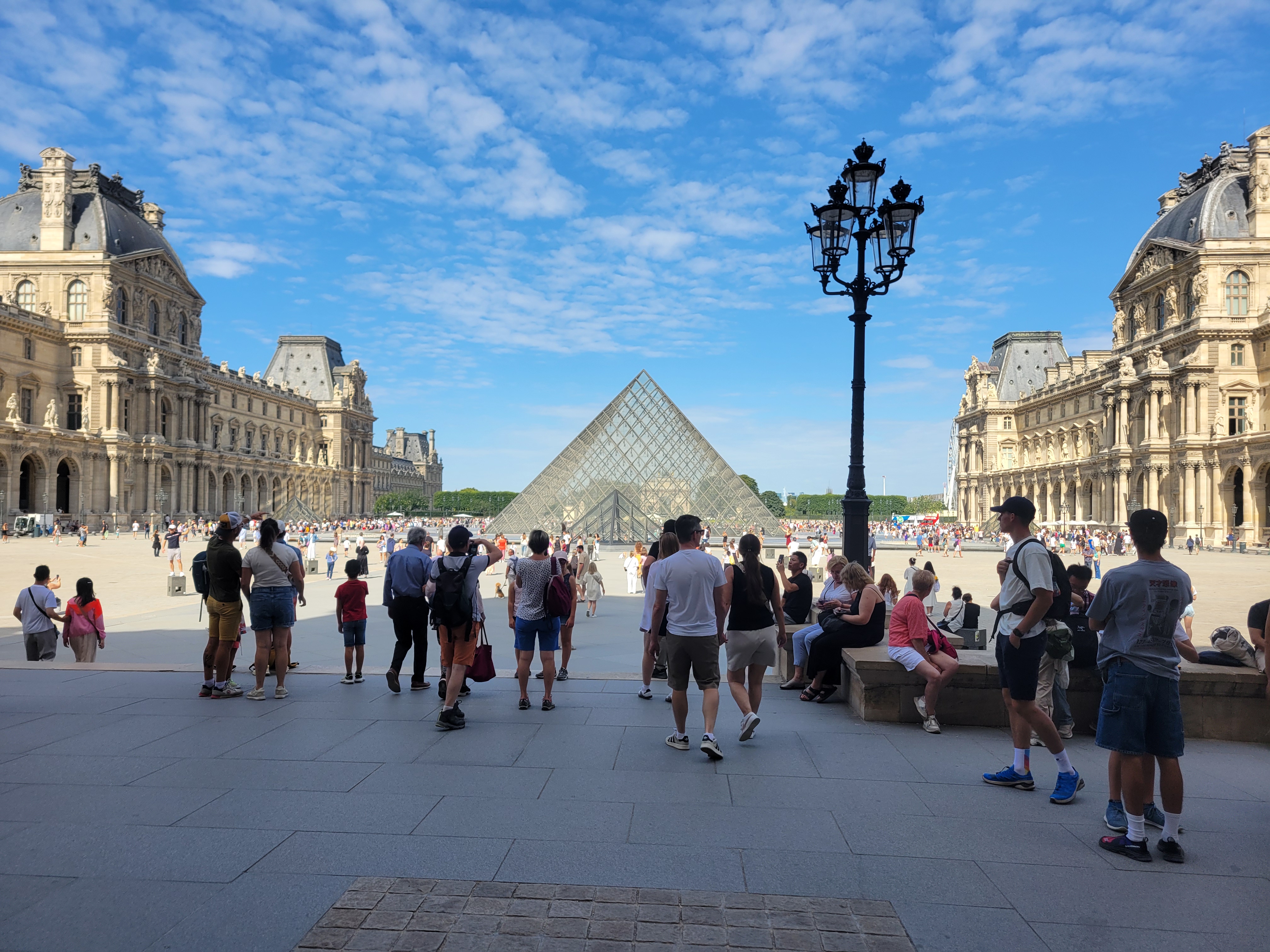
The iconic glass Pyramid designed by the late I.M. Pei, was inaugurated 29th March 1989 after four years work. It is a mini city and took us about twenty minutes to locate ´Louvre Couture’ and that was with Carolyn knowing the museum really well!

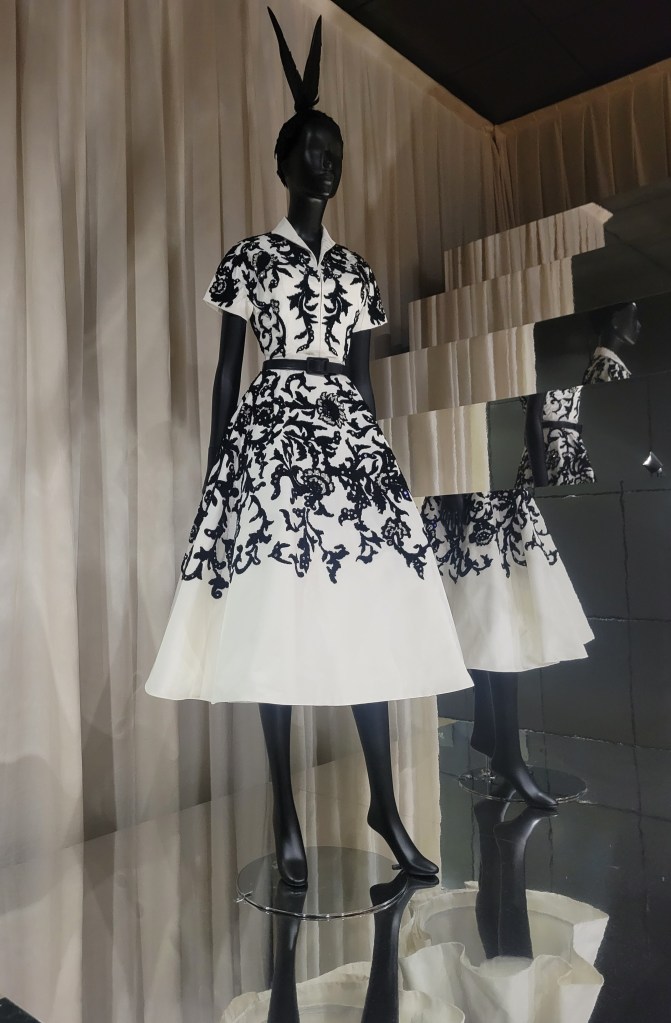
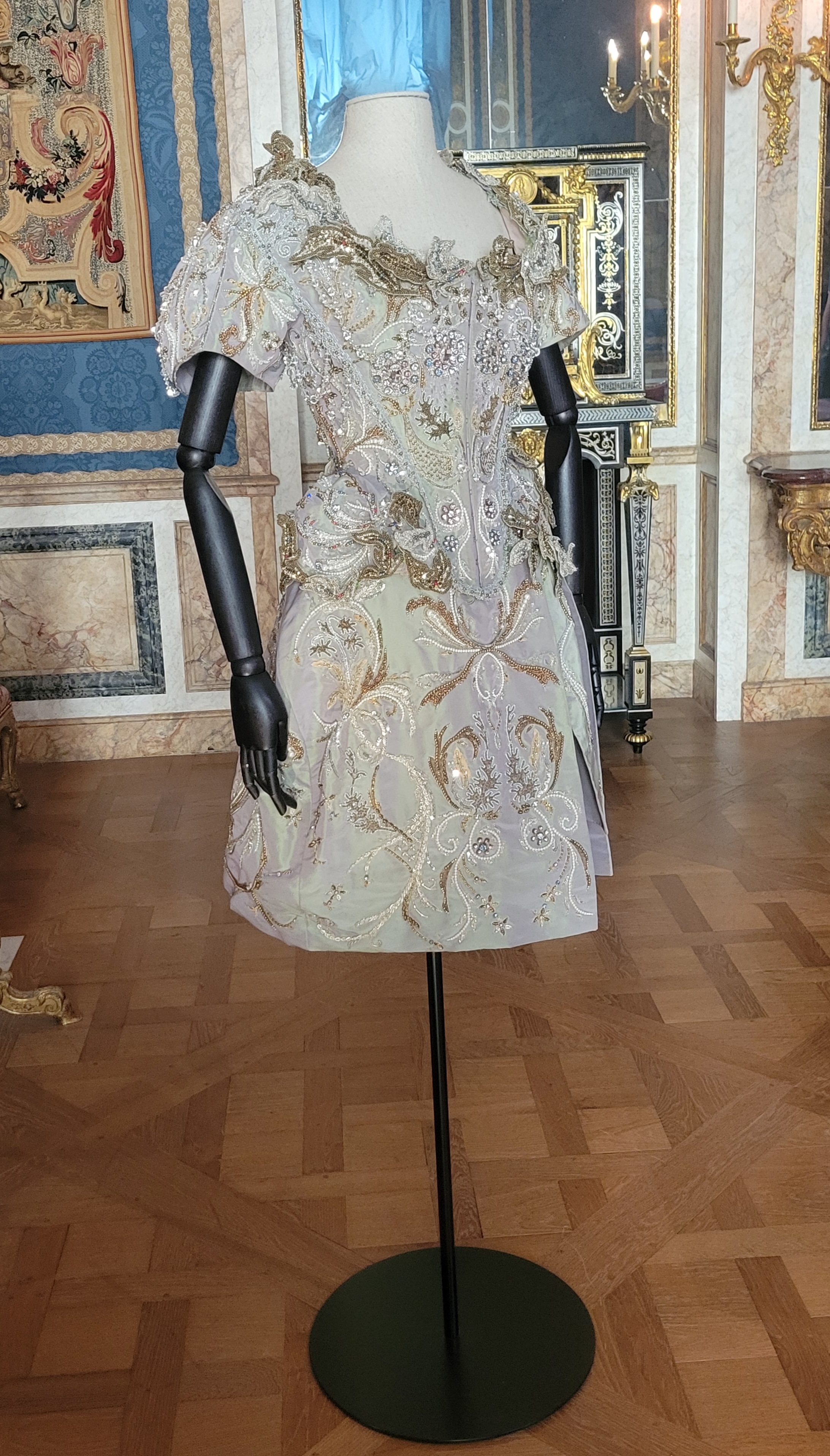
S/S 1949 Haute Couture – Christian Dior designed this hand embroidered gown, named ‘Musée du Louvre.

It was situated in the Richelieu wing, ‘Department of Decorative Arts` home to unique collections from Byzantium to the Second Empire.

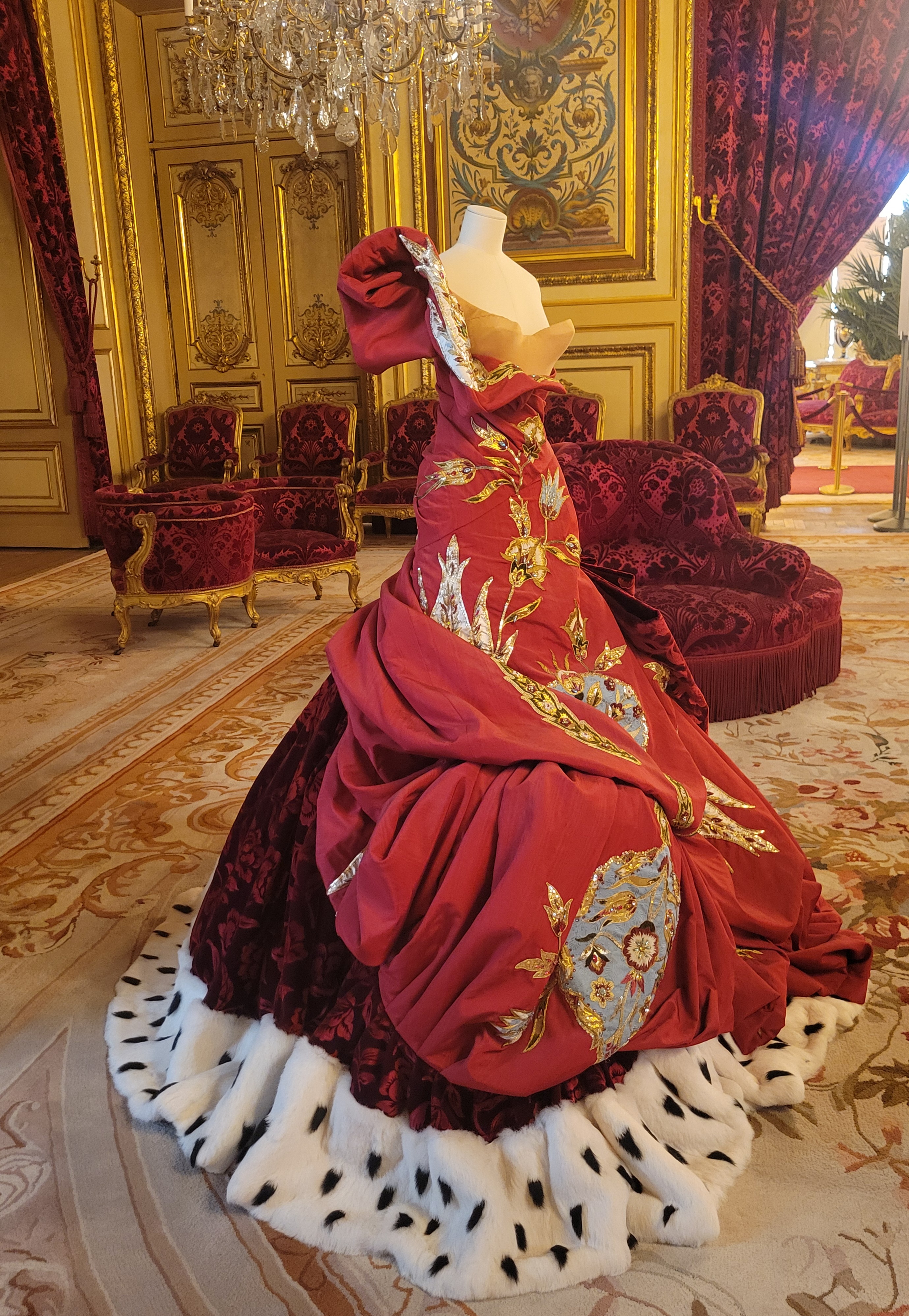
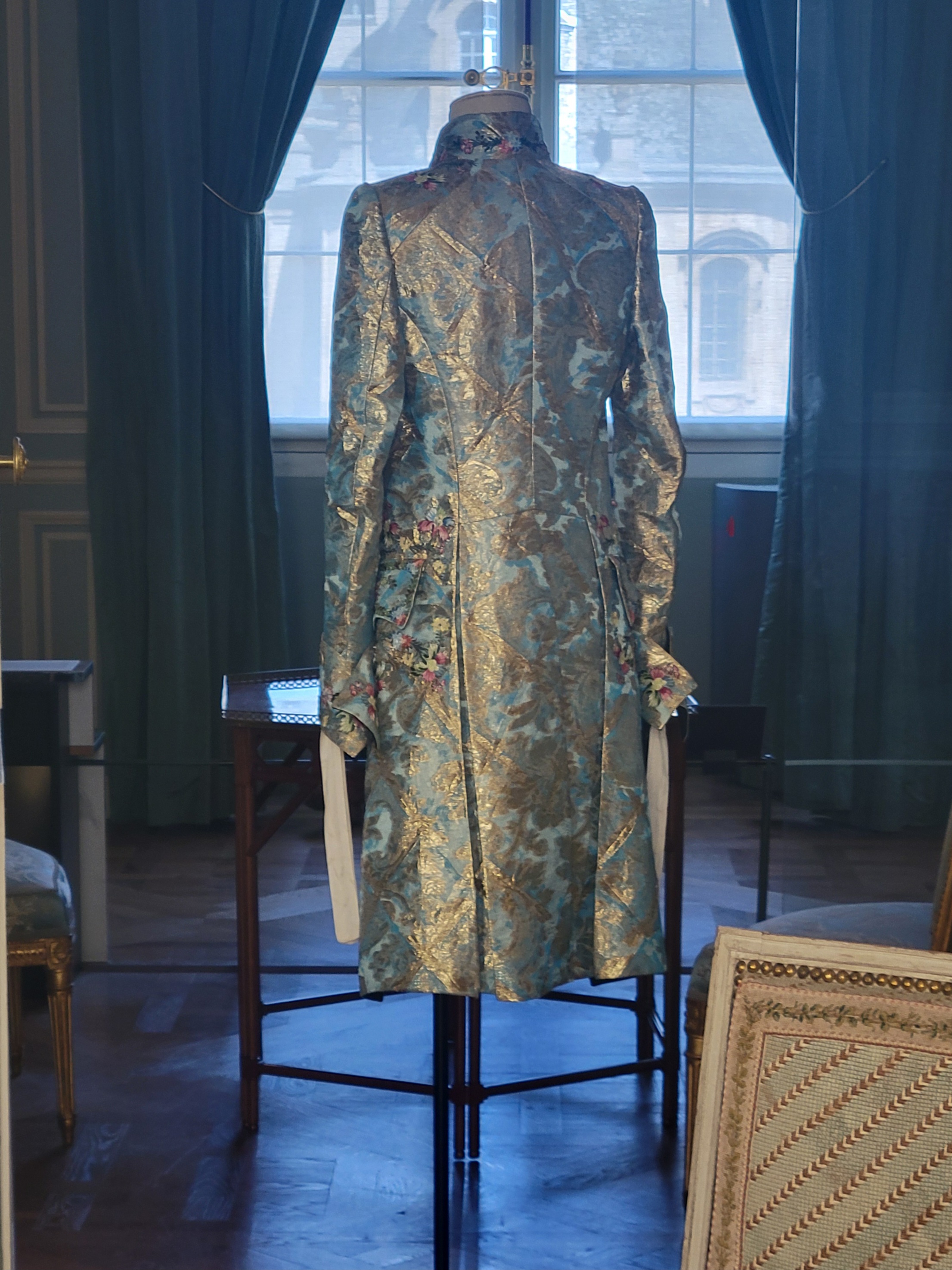
(L to R – Christian Dior by John Galliano, Jean Paul Gaultier and Balenciaga)

It was the first time contemporary fashion pieces and accessories have been exhibited at Le Louvre. Exploring the interplay of design, fabrics, techniques with the history of art and culture, it sounded interesting.

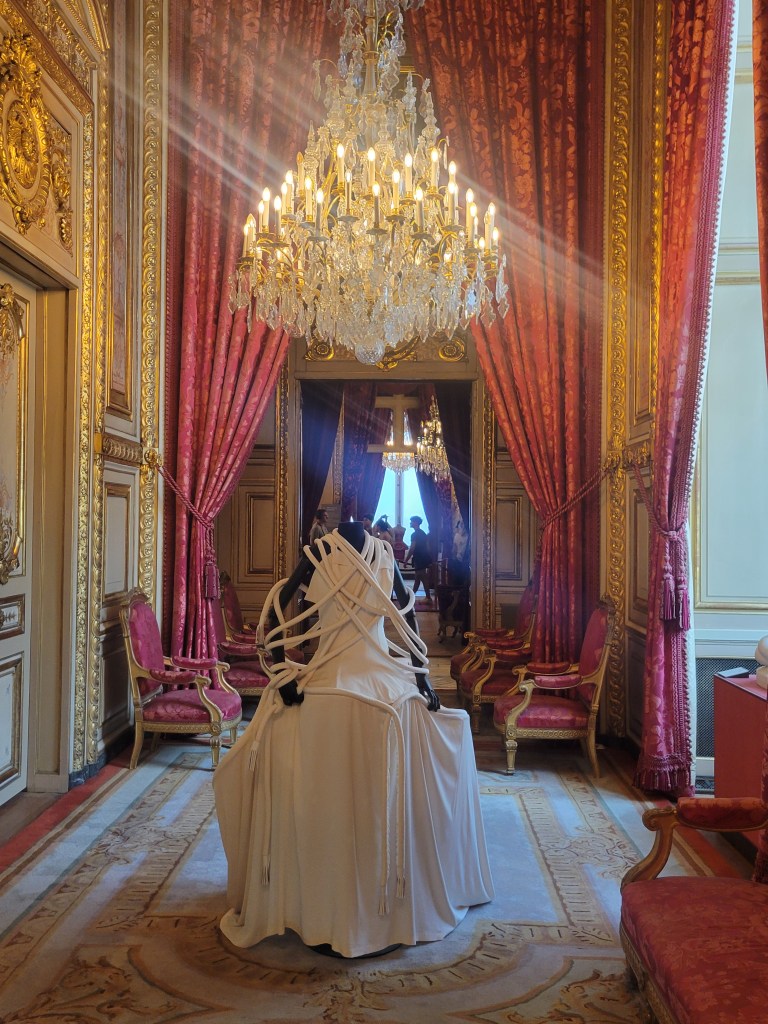
S/S 2006 – Yohji Yamamoto. Wedding dress, white silk crepe.

If I’m honest some of the pieces ‘vanished’ in the many vast opulent rooms which was a shame. It wasn’t always easy to see the amount of detail.

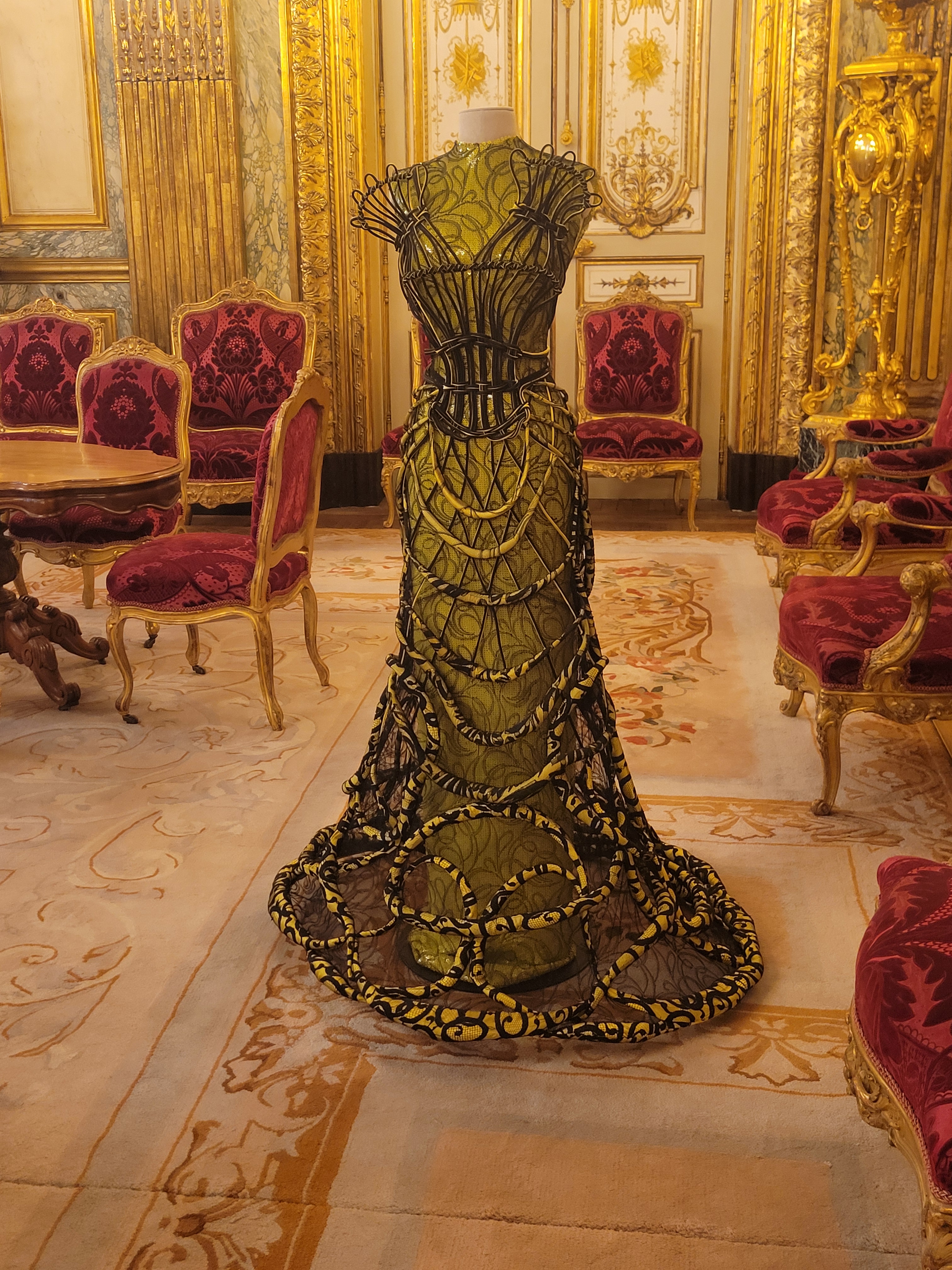
(Top L to R – Yves Saint Laurent, Alexander McQueen, Fendi and Vivienne Westwood)

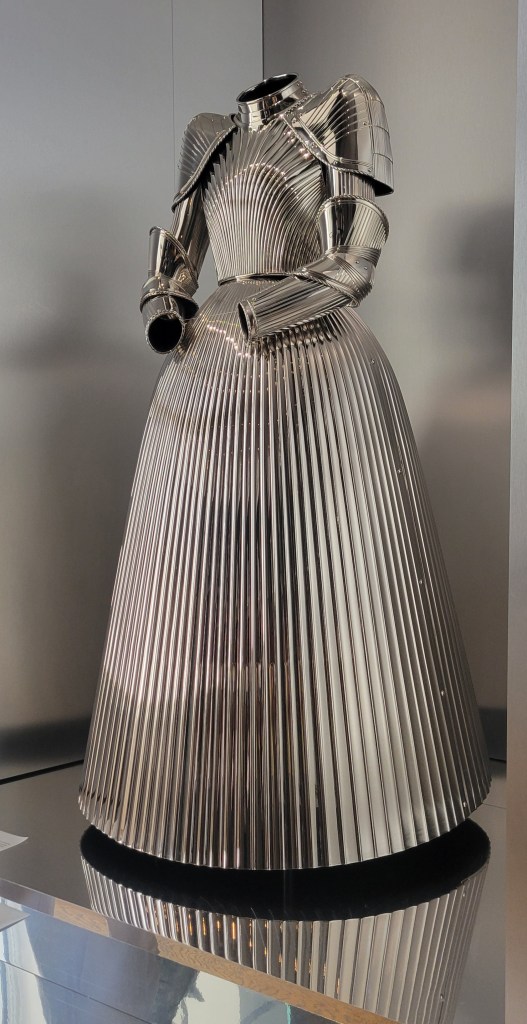
A/W 2023/4 – Balenciaga. 3D printed armour gown lined in a black flocked fabric so the model could wear without injury!

We both agreed it was still good and pleased we visited the exhibition

Walking around Paris was lovely and we could really notice the reduced traffic and with so many electric cars, positively quiet! After a late lunch, 18,000 steps, we returned back home to the countryside.

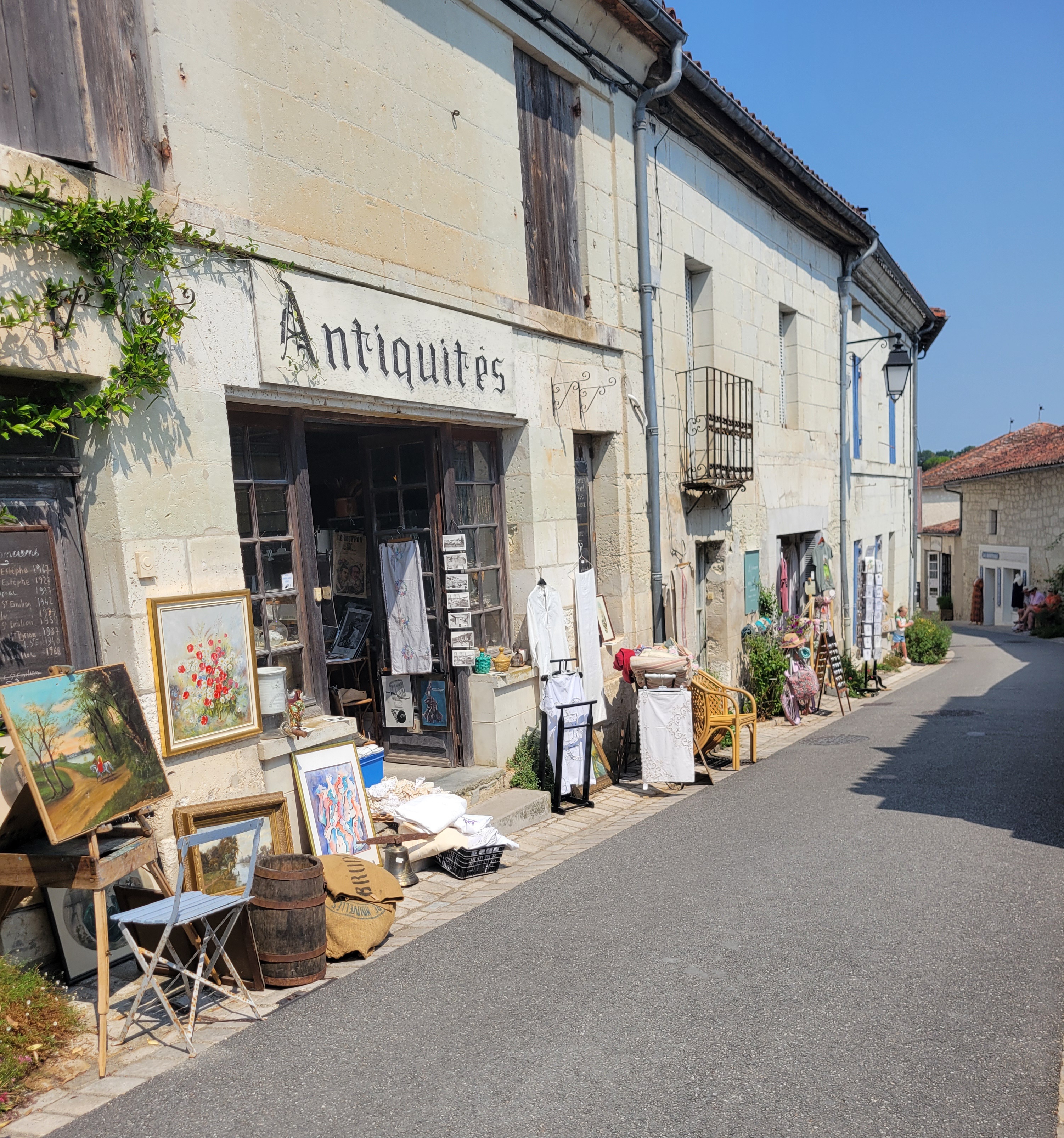
A couple of weeks ago, I drove to Aubeterre-sur-Dronne, two hours south on the border of South Charente and the Dordogne. Listed as one of France’s most beautiful villages. Of course, in August it is very touristy but well worth the visit.

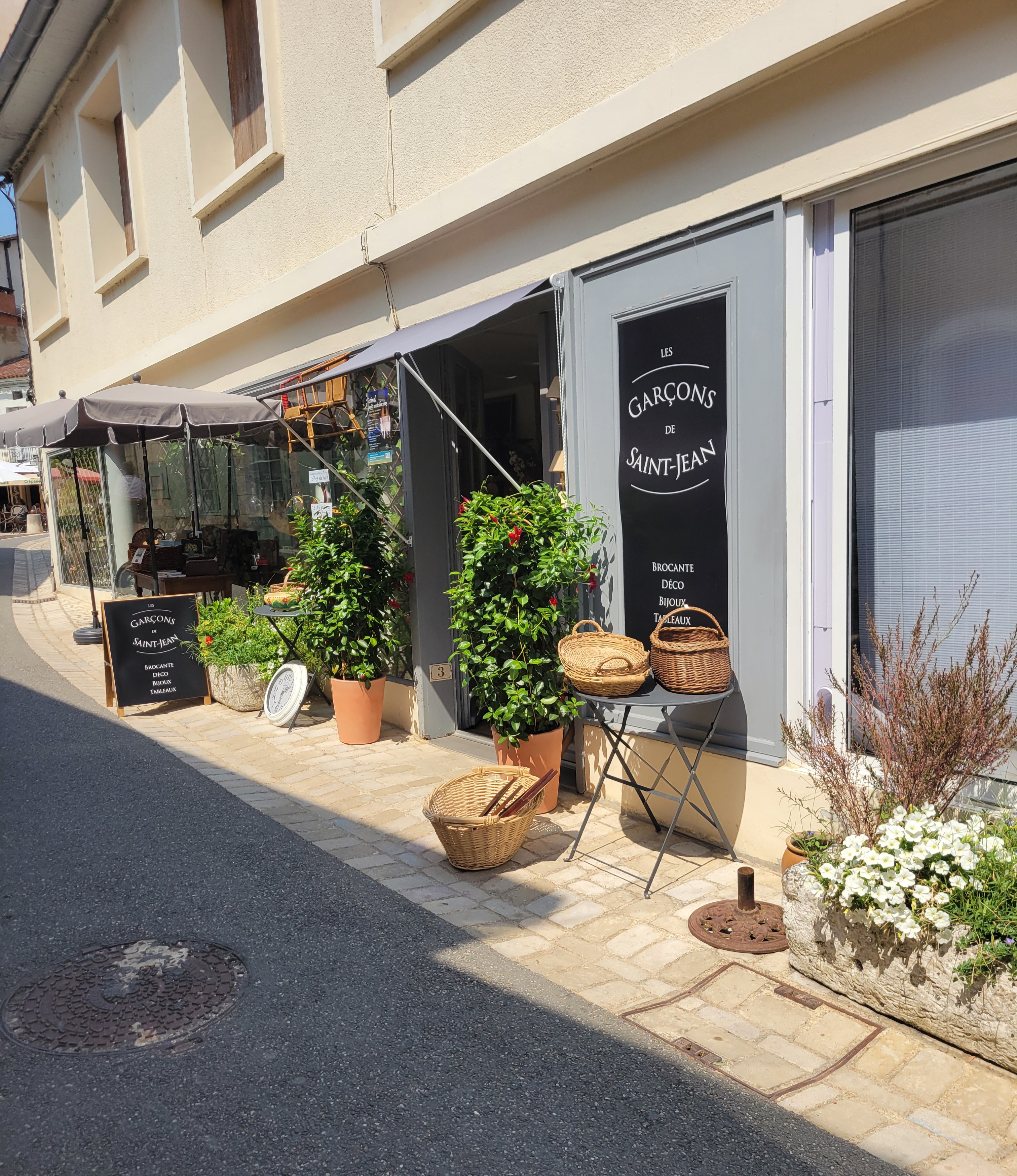
Charming winding streets and passage ways with plenty of artisan shops to look around. It has welcomed pilgrims on their way to Santiago de Compostella in north west Spain and tourists for over 1000 years. The Place Trarieux is full of restaurants and cafes under the shade of trees with a relaxed French vibe! As it was 40C that day, it was one of two cool places to be.

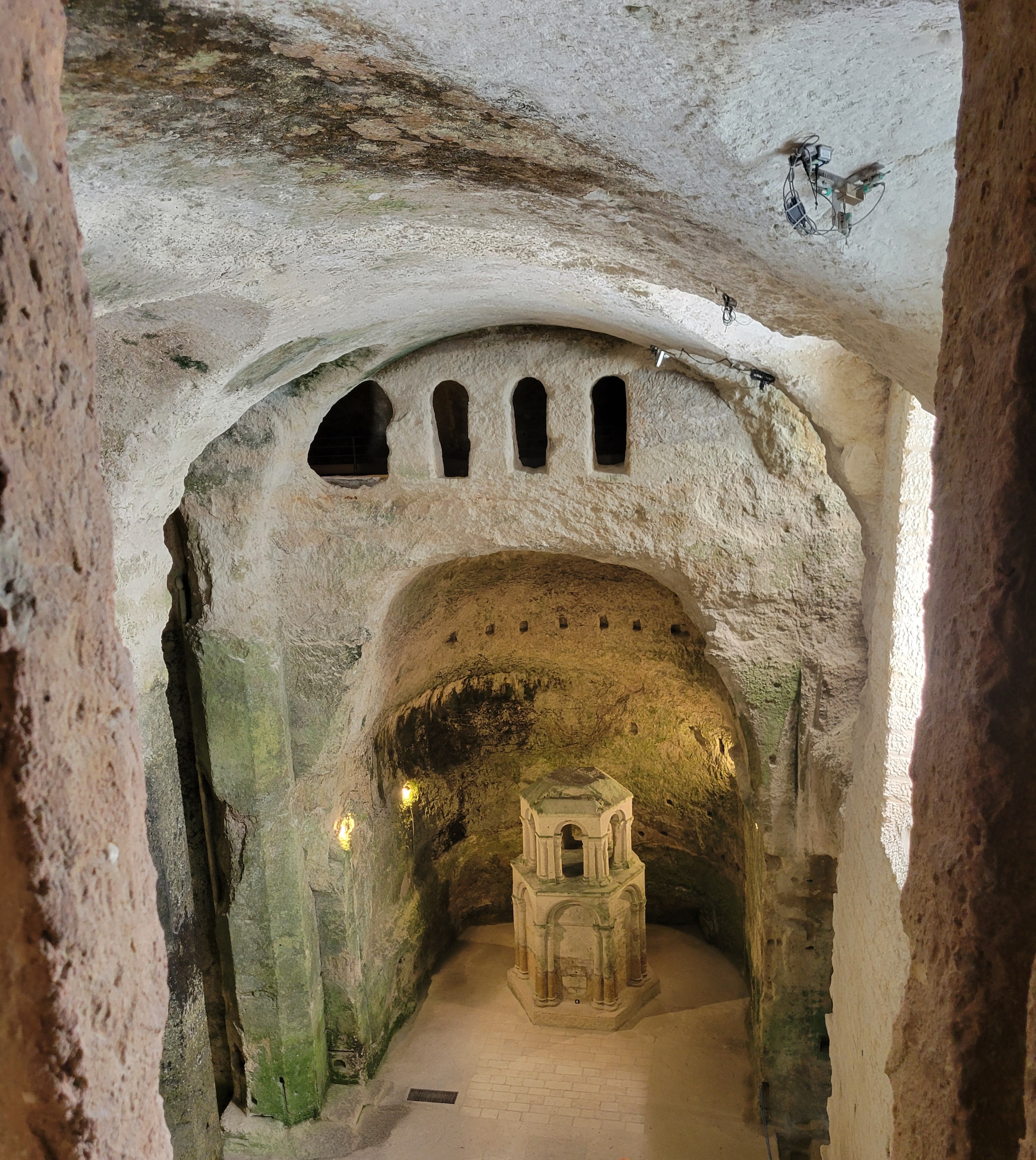
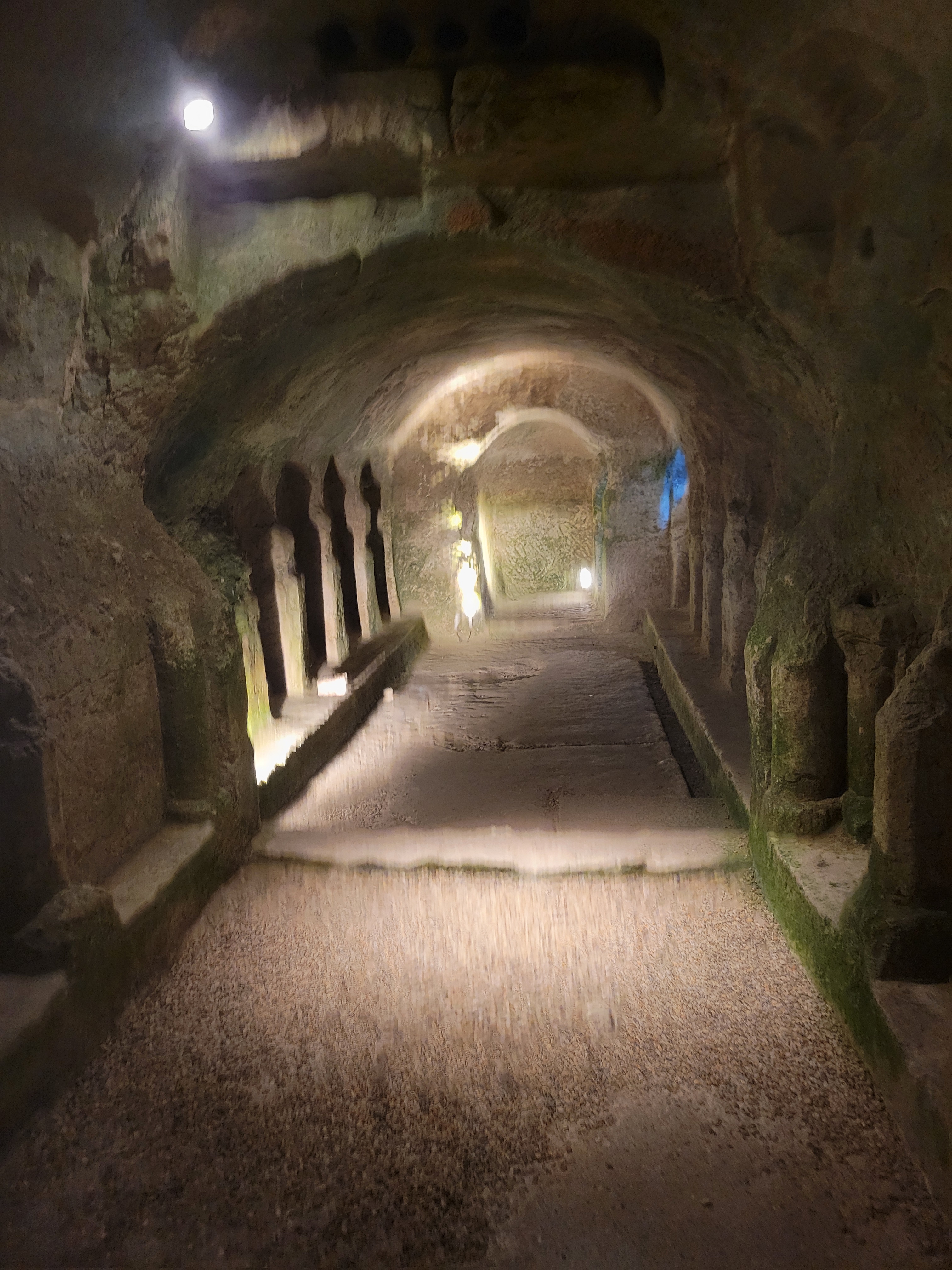
The other being the underground monolithic church of Saint Jean. Carved into the cliff in the 7th century and enlarged by a community of Benedictine monks in the 12th century. The highest point is 20 meters. Tombs were discovered between 1958 and 1961 as it was believed burials were performed in the nave until 1865, this being halted for public health reasons. Up the stone carved stairs the view from the gallery really showed what a feat it had been to carve out such a structure. It is one of the most important such churches in France.

At the foot of the village the meadows lead to the River Dronne where you can find a beach, sports facilities and a campsite. But on such a hot day, I decided instead to have lunch and a huge iced coffee before walking back up a very steep hill to the car and thankfully air con!

If I was having a coffee right now …..

If I was having a coffee right now, I’d be melting in the 32c July heat. Yes, summer has finally arrived in South West France! It seems to have been an eight month rainy season in a lot of countries but I still managed some lovely sunny French’ days out and about.

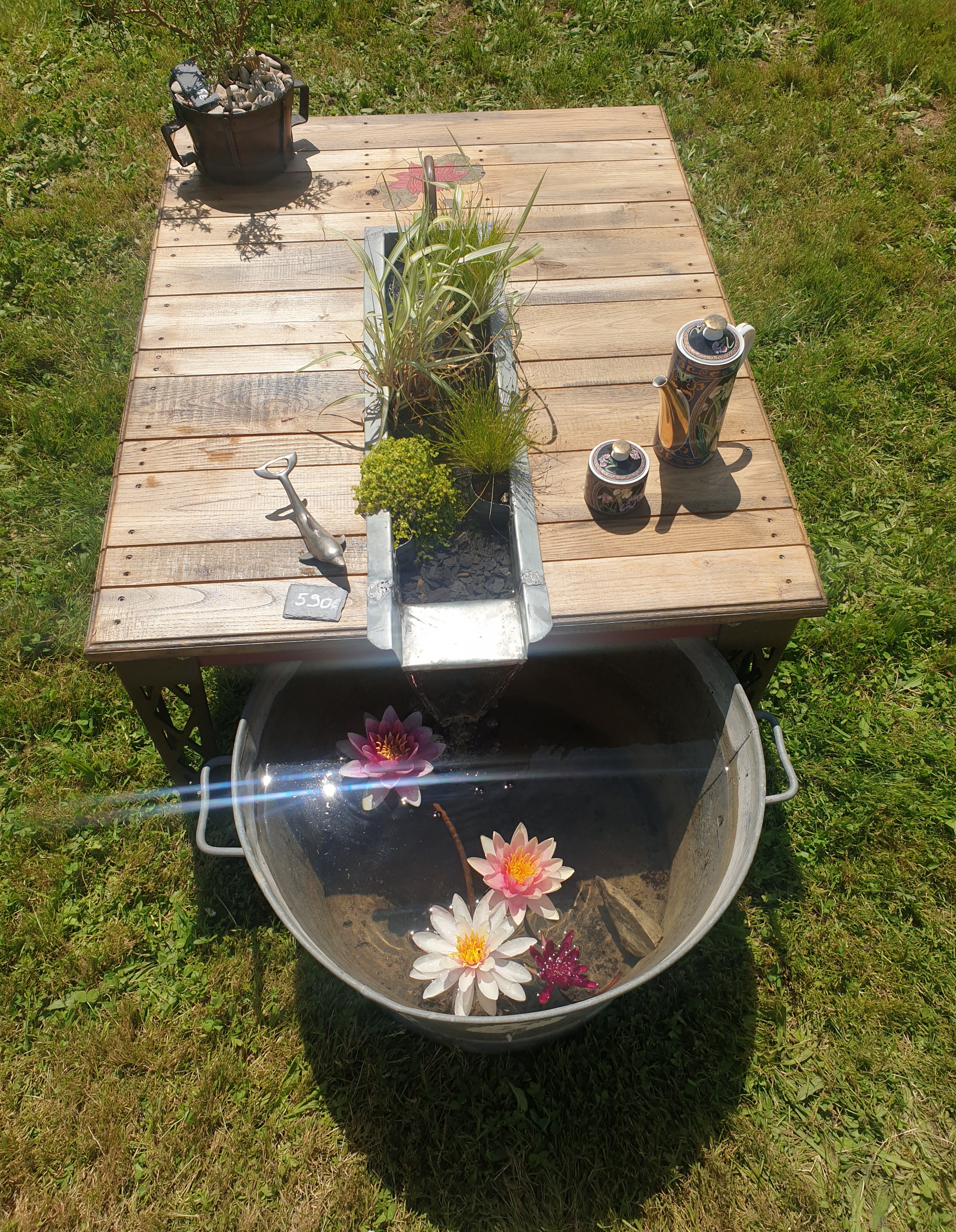
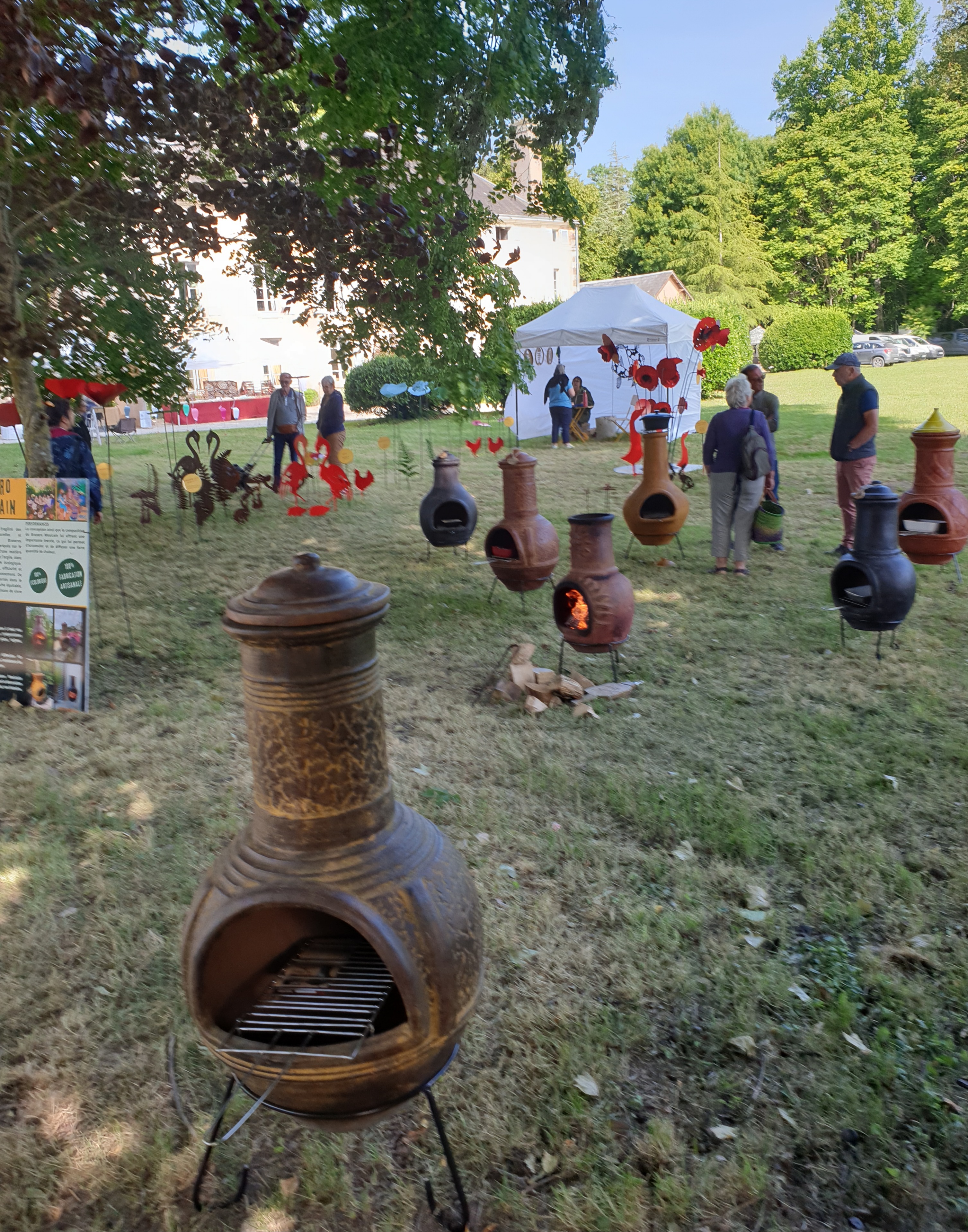
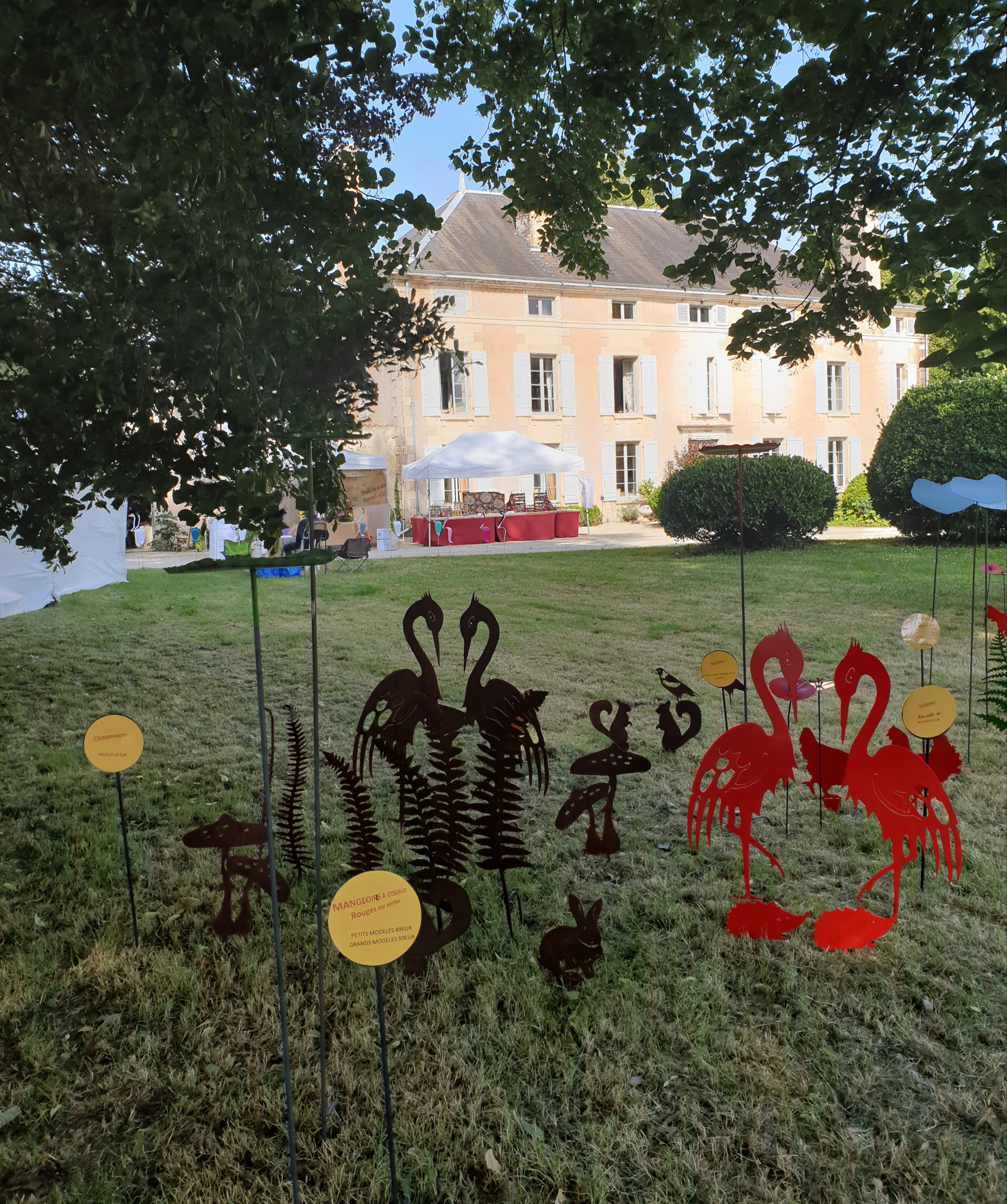
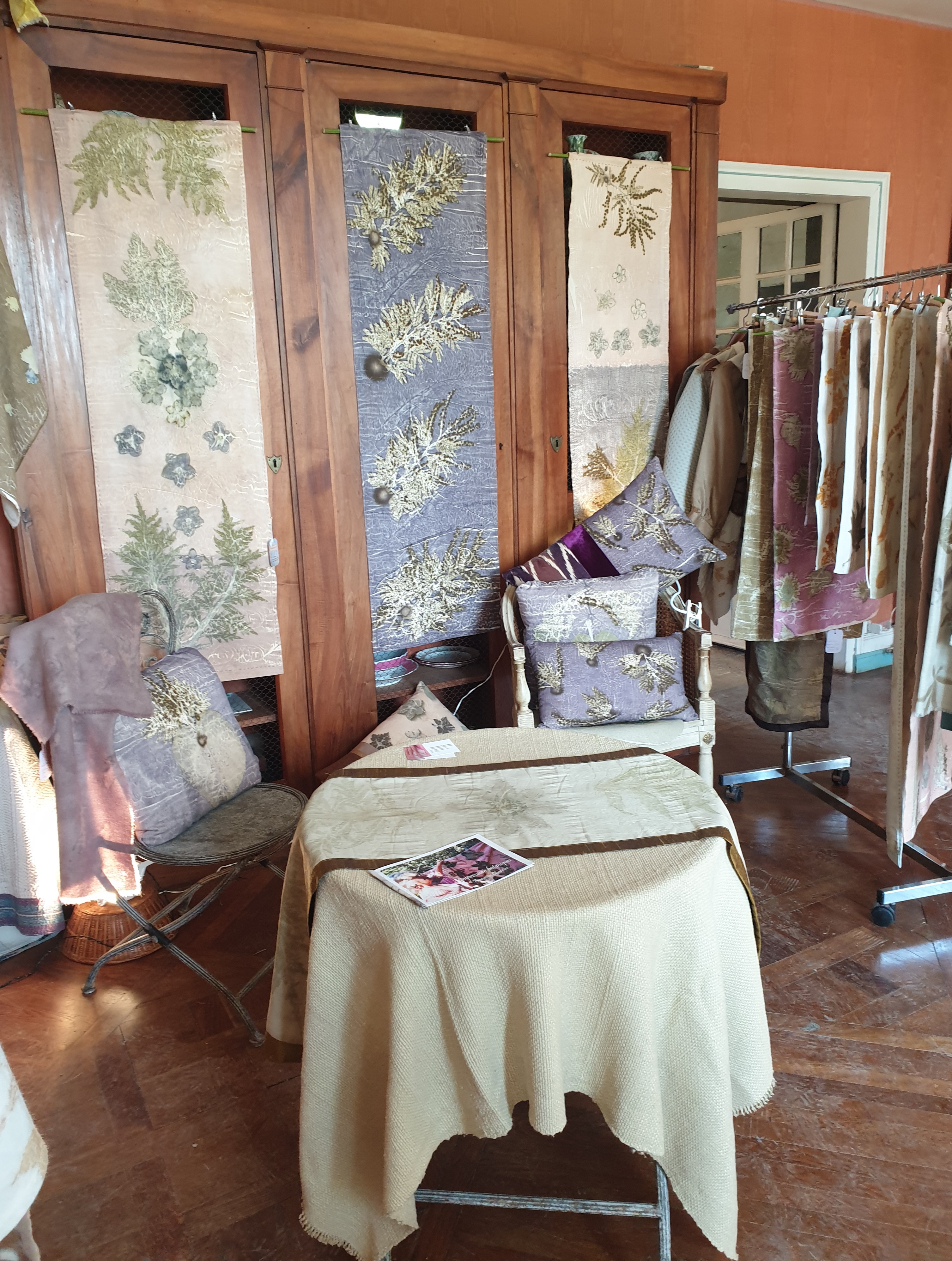
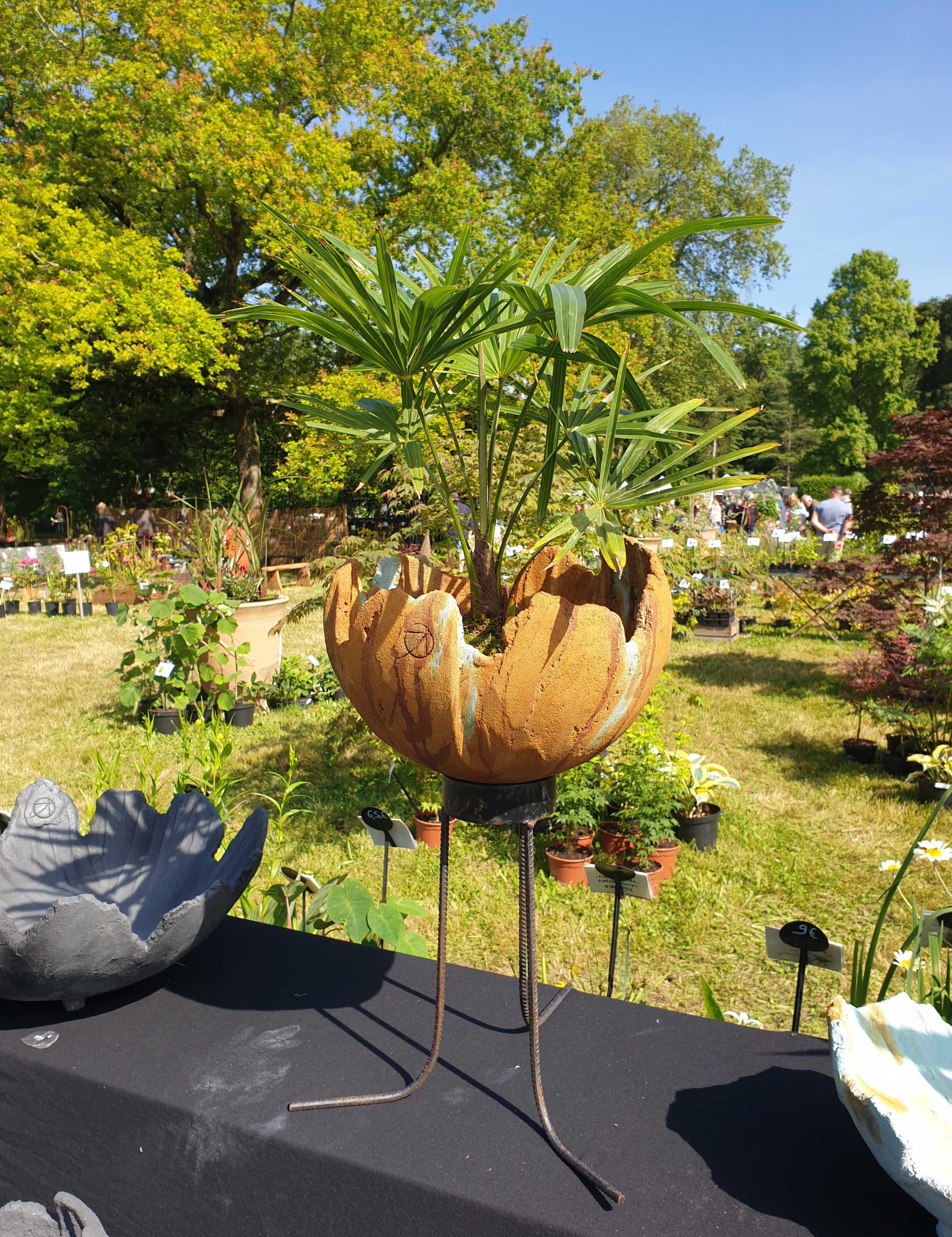
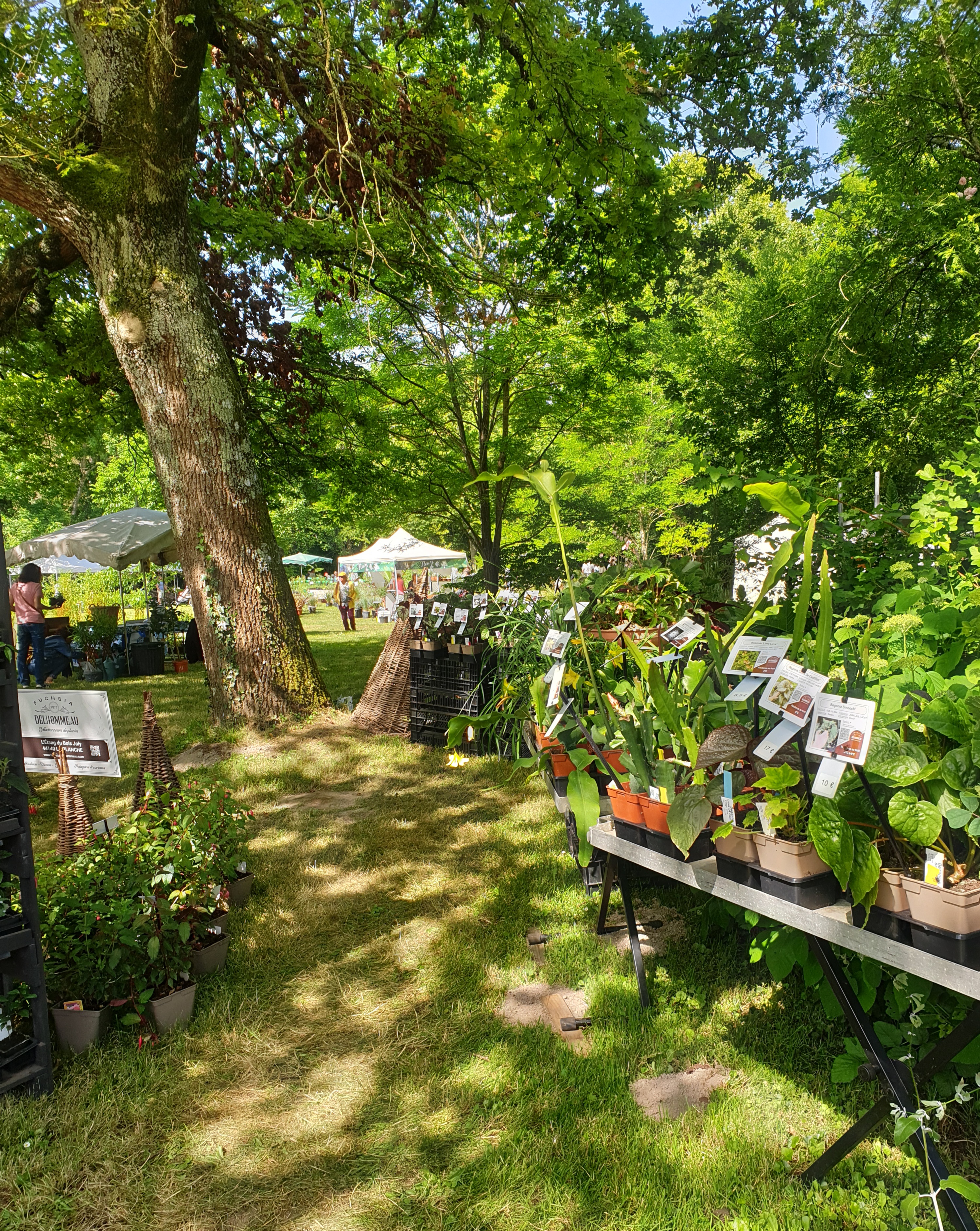
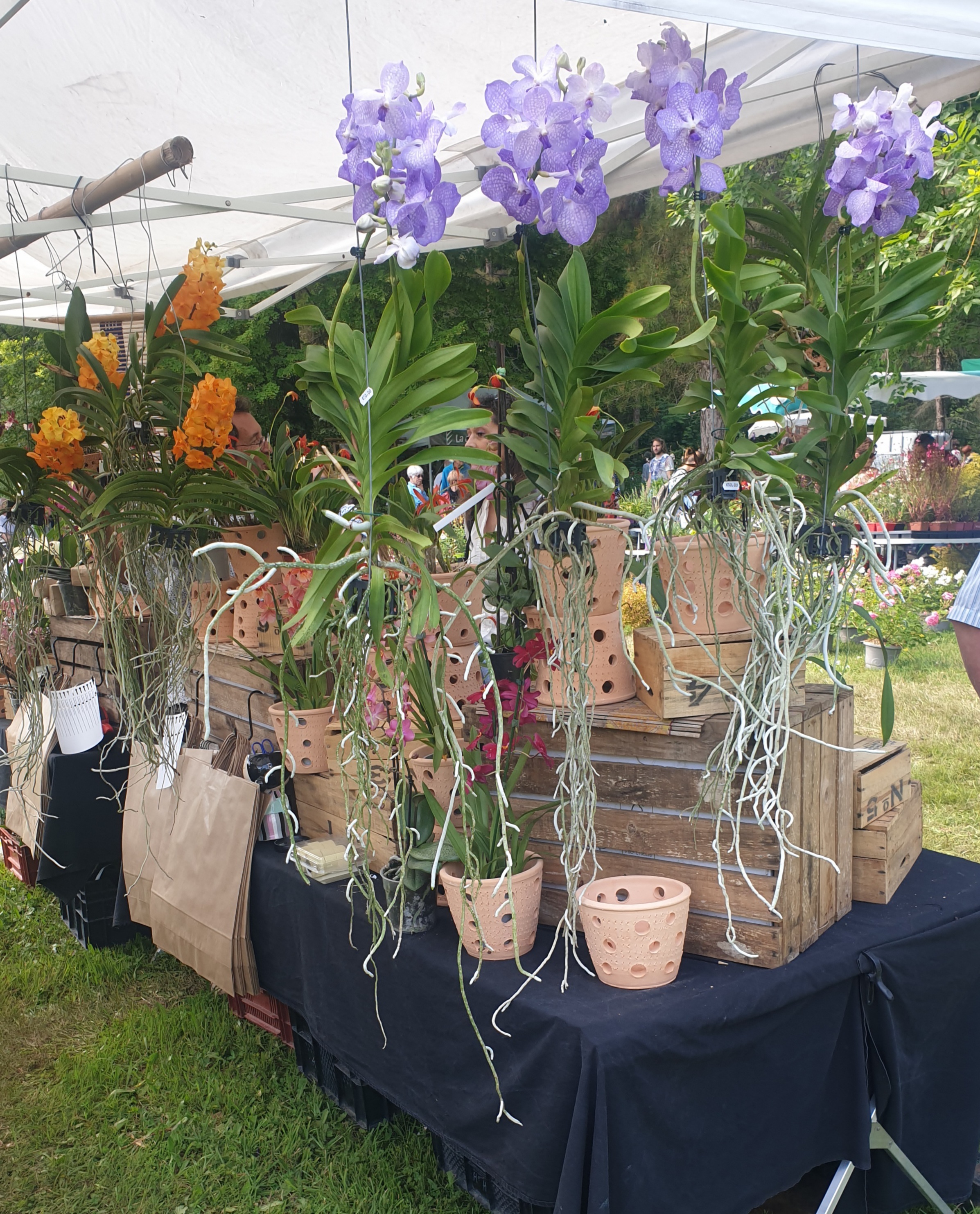
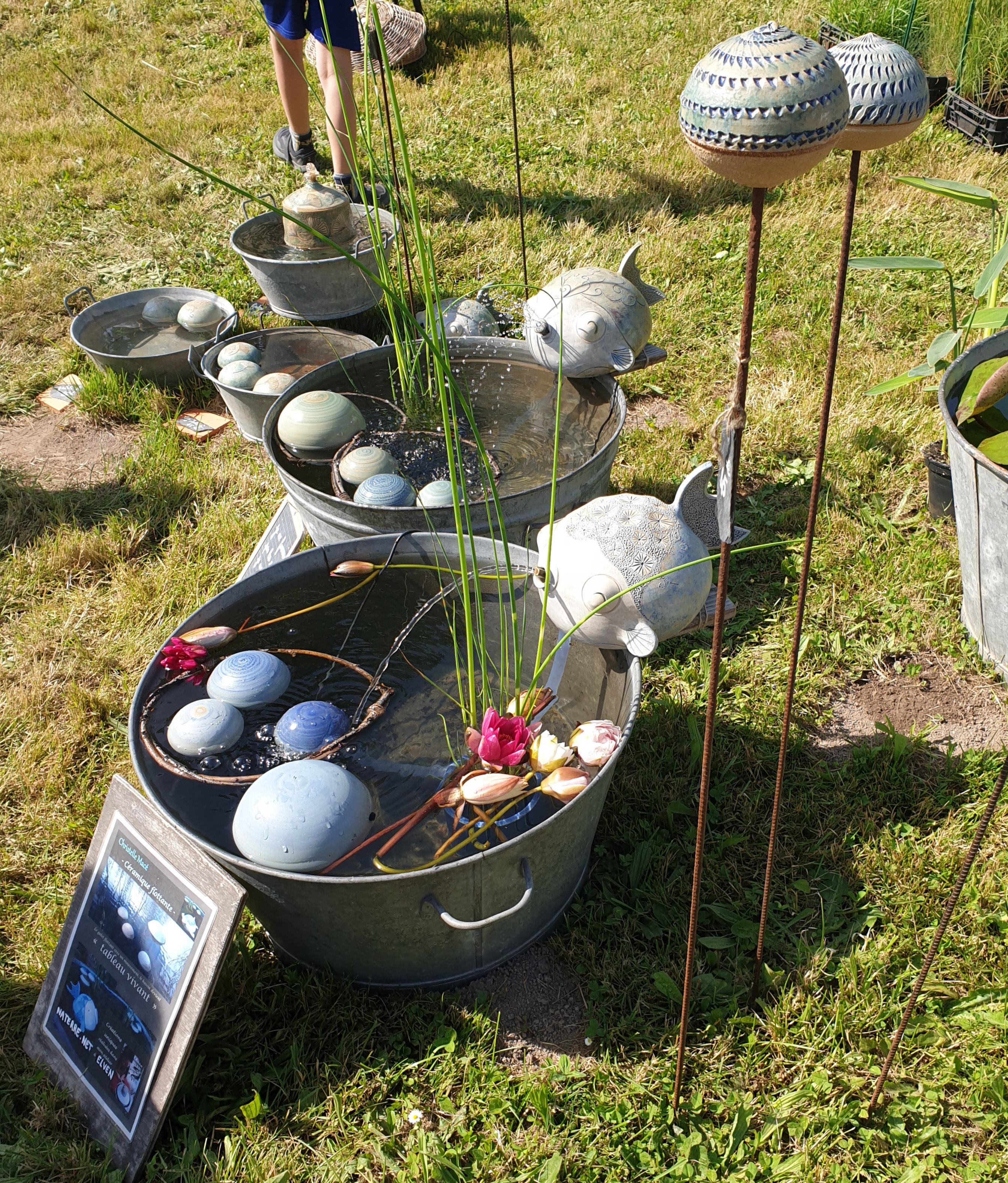
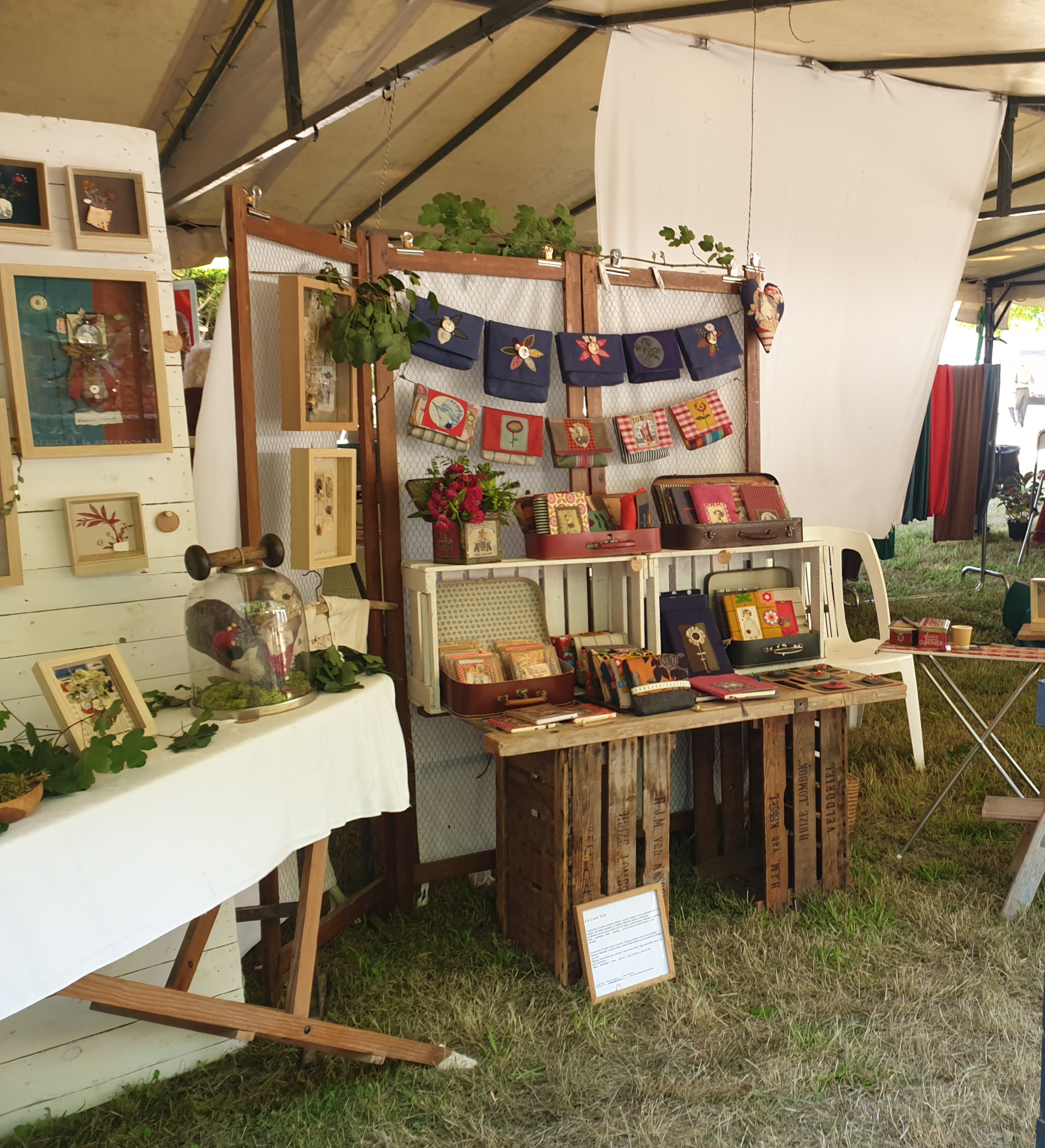
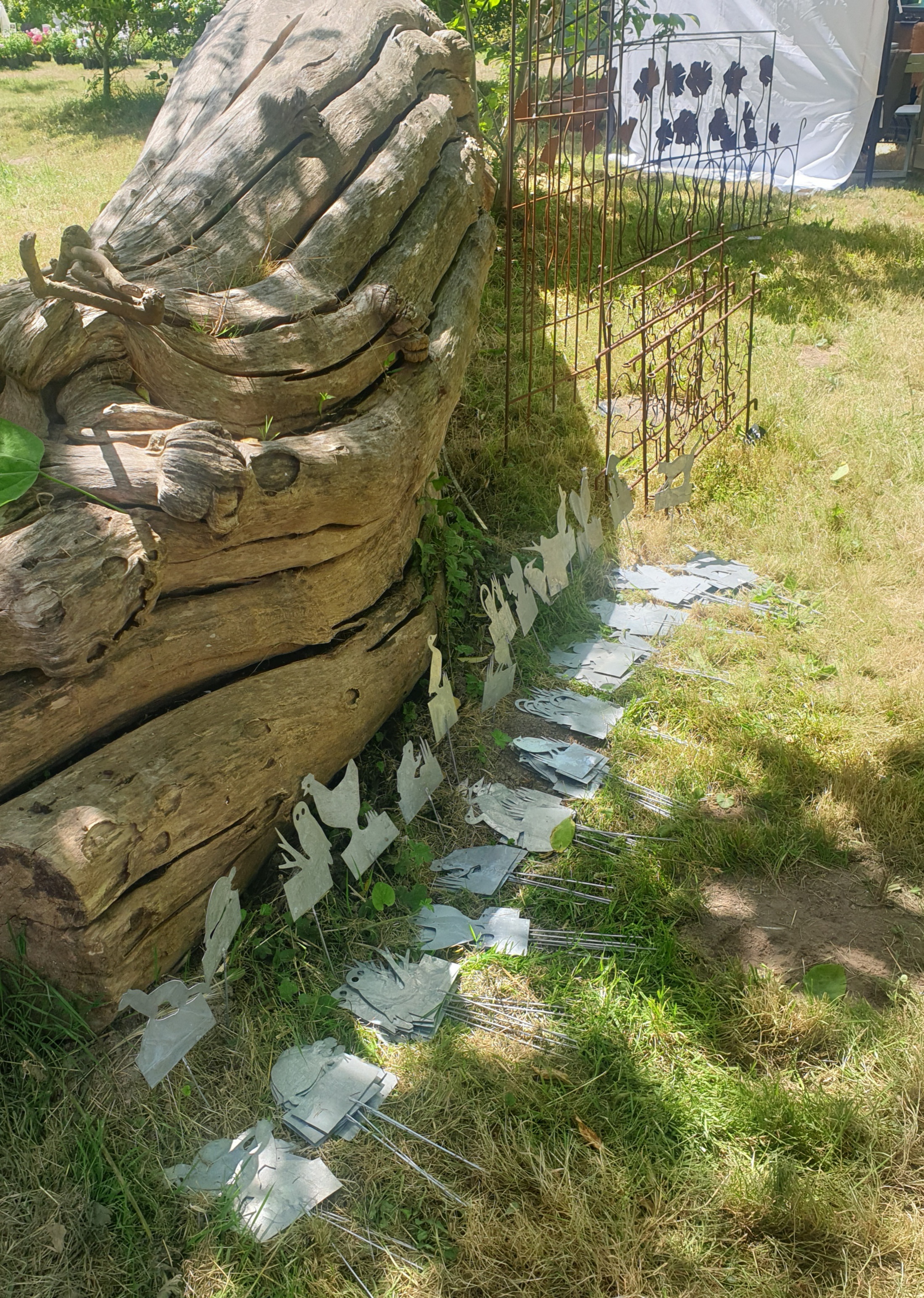
Last month I visited ‘La Fête des Plantes et du Jardin du Domaine de Péré at Prissé la Charrière, just 30 minutes drive from home. This charming estate holds this event in June and October with over 100 exhibitors from France, Belgium and England. Horticulturalists, botanists, garden designers plus a selection of arts and crafts (respecting our planet). Also a fab range of food carts catering for everyone’s taste.

The current château was built in the early 19th century, although the estate has been in ten successive generations of the Bastard de Crisney family since the 18th century. It has a 20 hectare wooded park and 100 hectares of farmland.

I start my visit inside the château where ceramics, jewellery, paintings, leather goods etc were very tempting.

Then stepping outside I felt a real festival vibe! Also felt I should have worn a floral maxi dress and huge floppy hat!

I strolled around the stalls in the stunning grounds several times and of course bought a wisteria to plant outside our house. So French. I wish I’d bought one of the plaited willow trees above but next visit!

The rose stalls were very busy, so not easy to capture in the photos just how beautiful the selection of roses were on sale.

I have lots more ideas for our garden now and it was one of the best sort of Sunday mornings in my book. Roll on October.