Discovering more beautiful places …..

I’m back and my poor little blog has seriously been ignored. I have do not have a good excuse! I wrote this back in August and now in November, I finally publish it! I also can’t believe we have lived in France for over four years. Of course, I’m still out and about discovering lovely places.

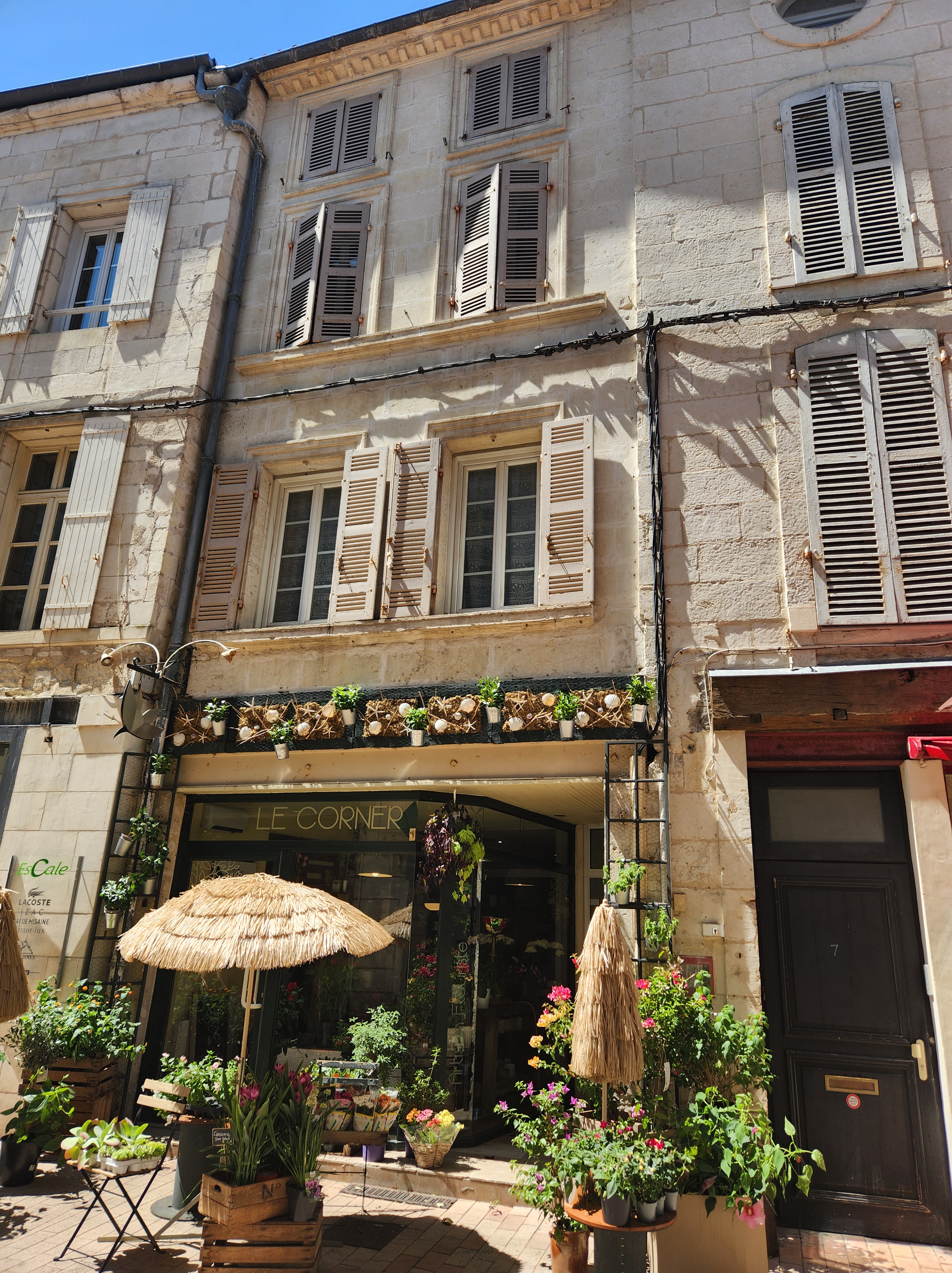
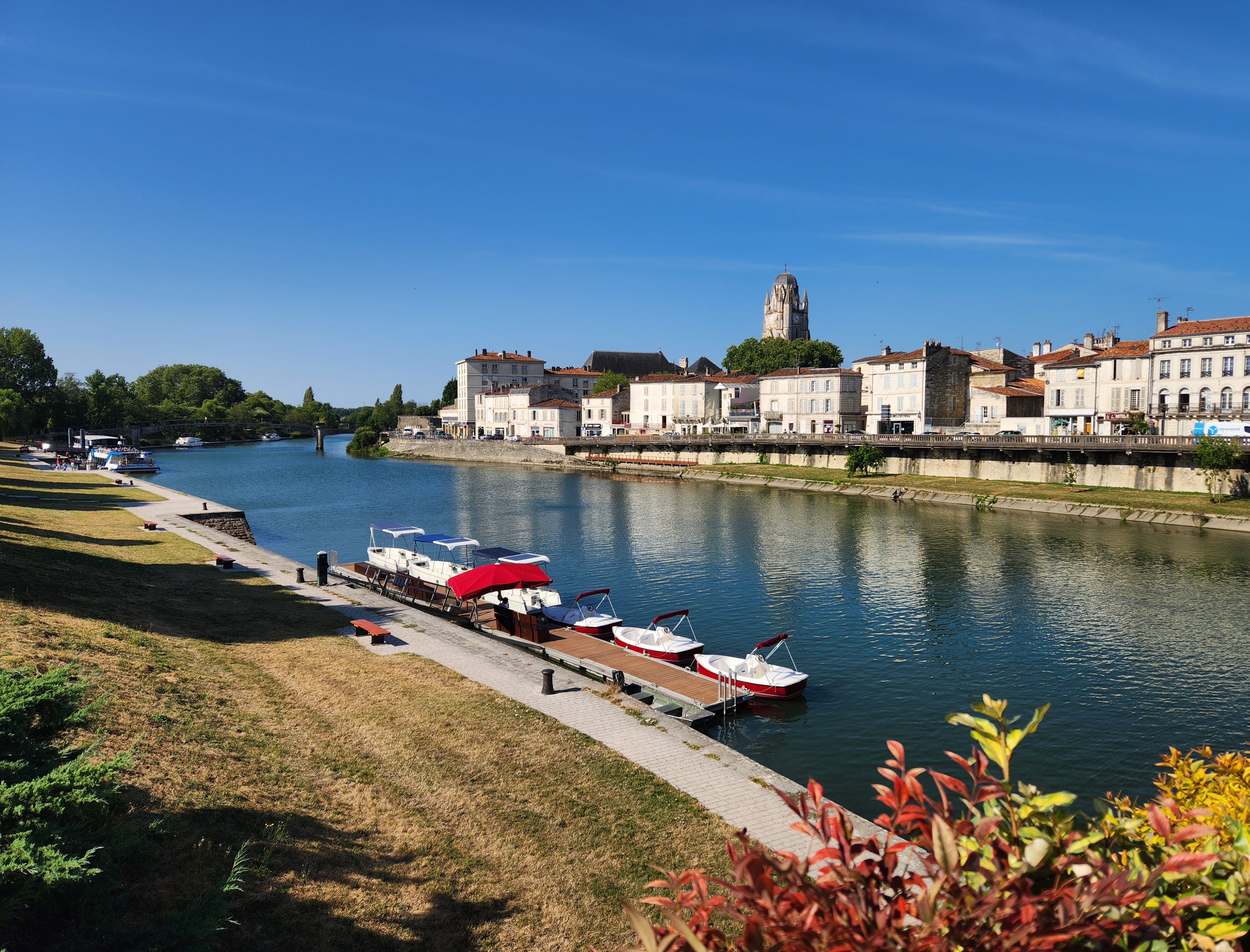
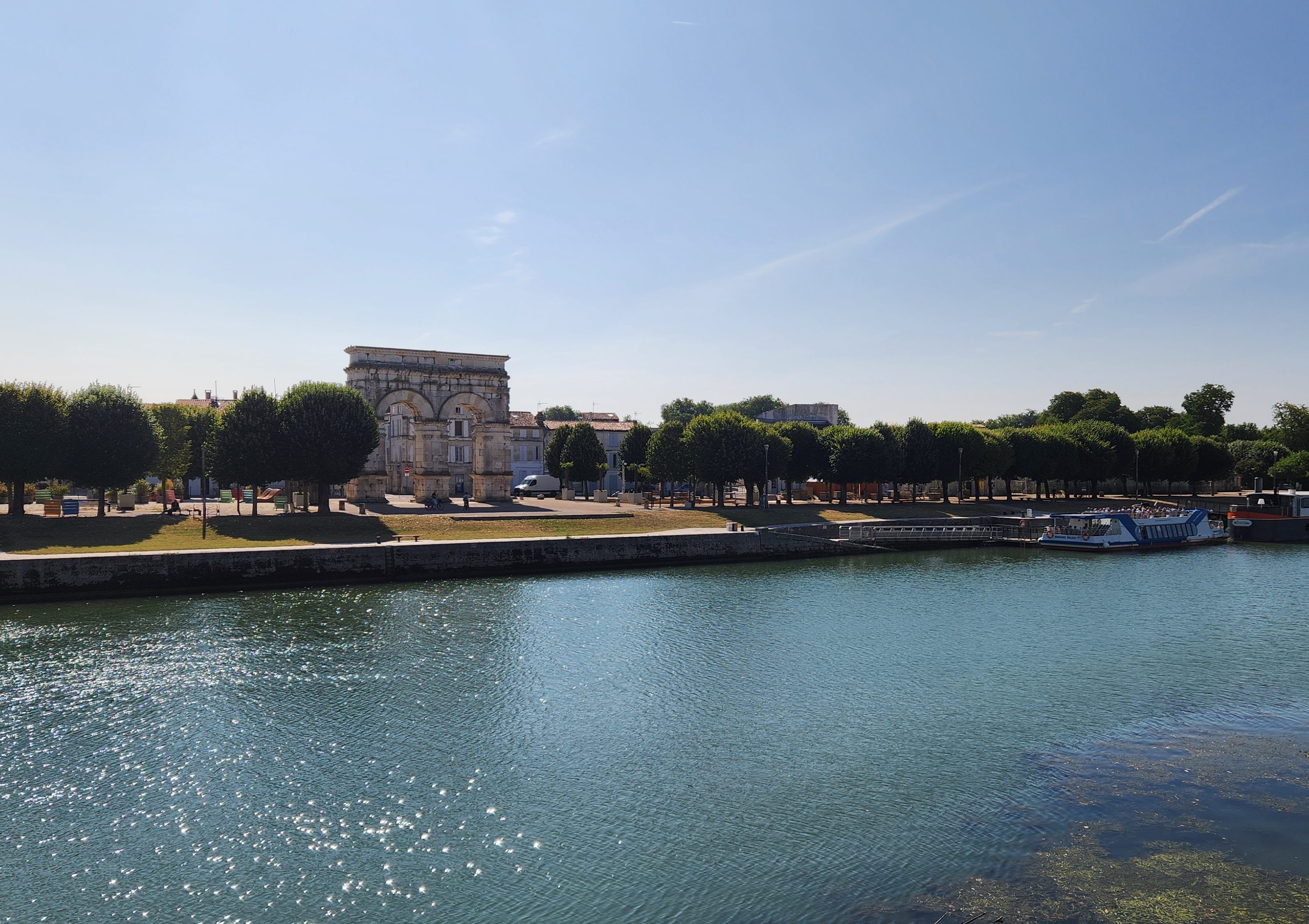
In July, my ‘blog buddy’ Carolyn and I spent the day in Saintes, Charente Maritime. Starting with a stroll in the morning sunshine along the Bernard Palissy Bridge to the old town with a good view of the Arch of Germanicus, a Roman arch constructed around 18-19 AD.
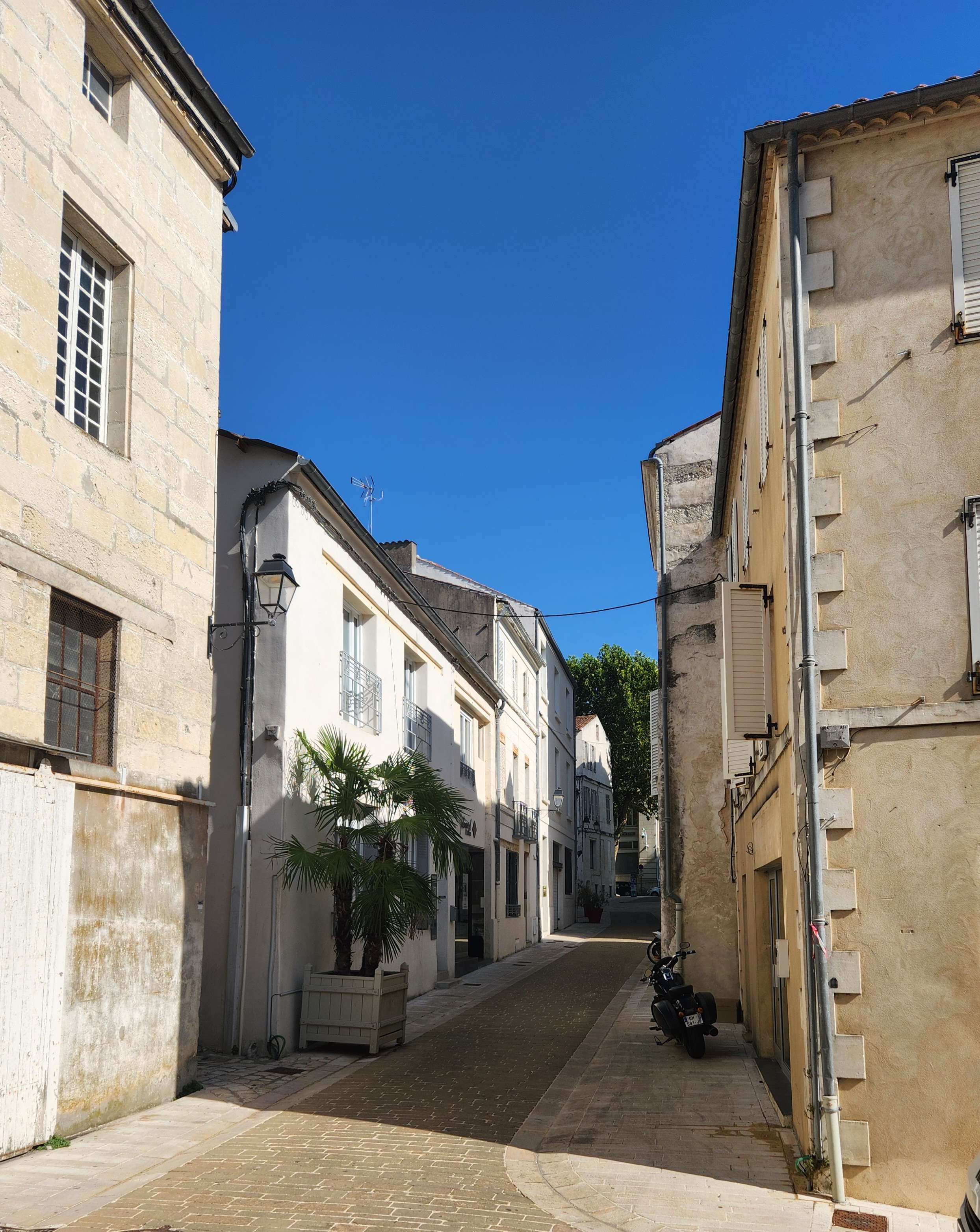
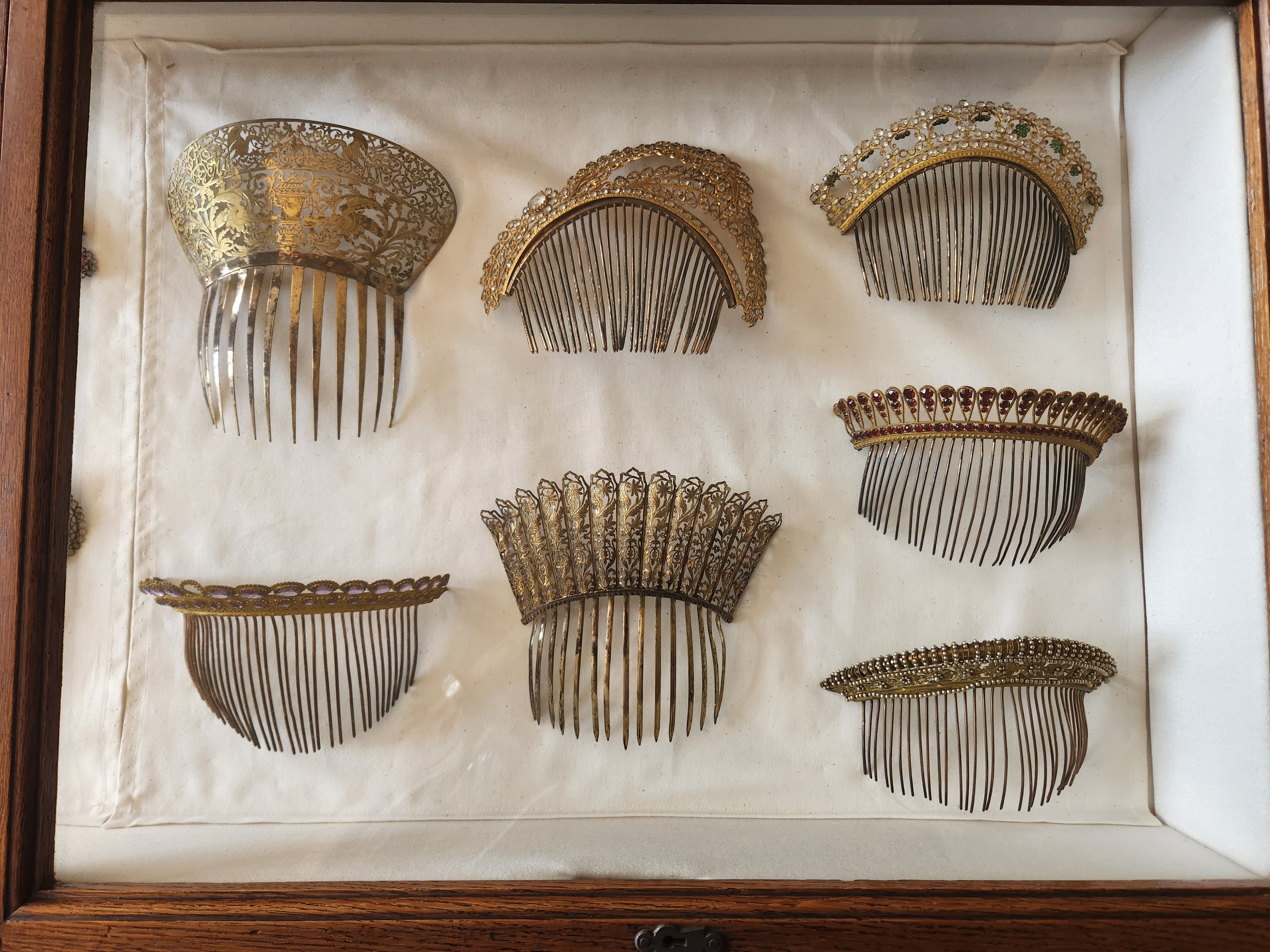
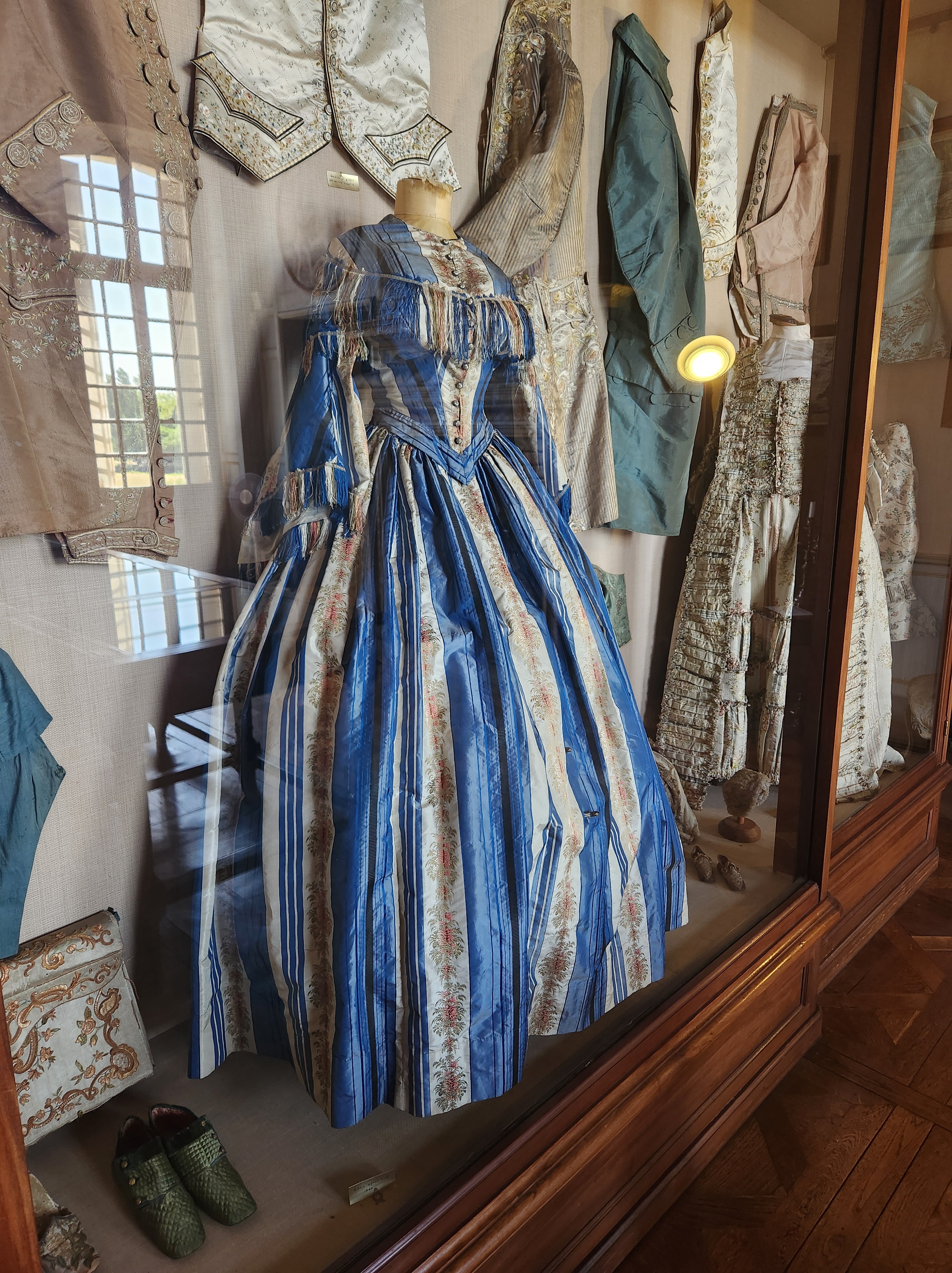
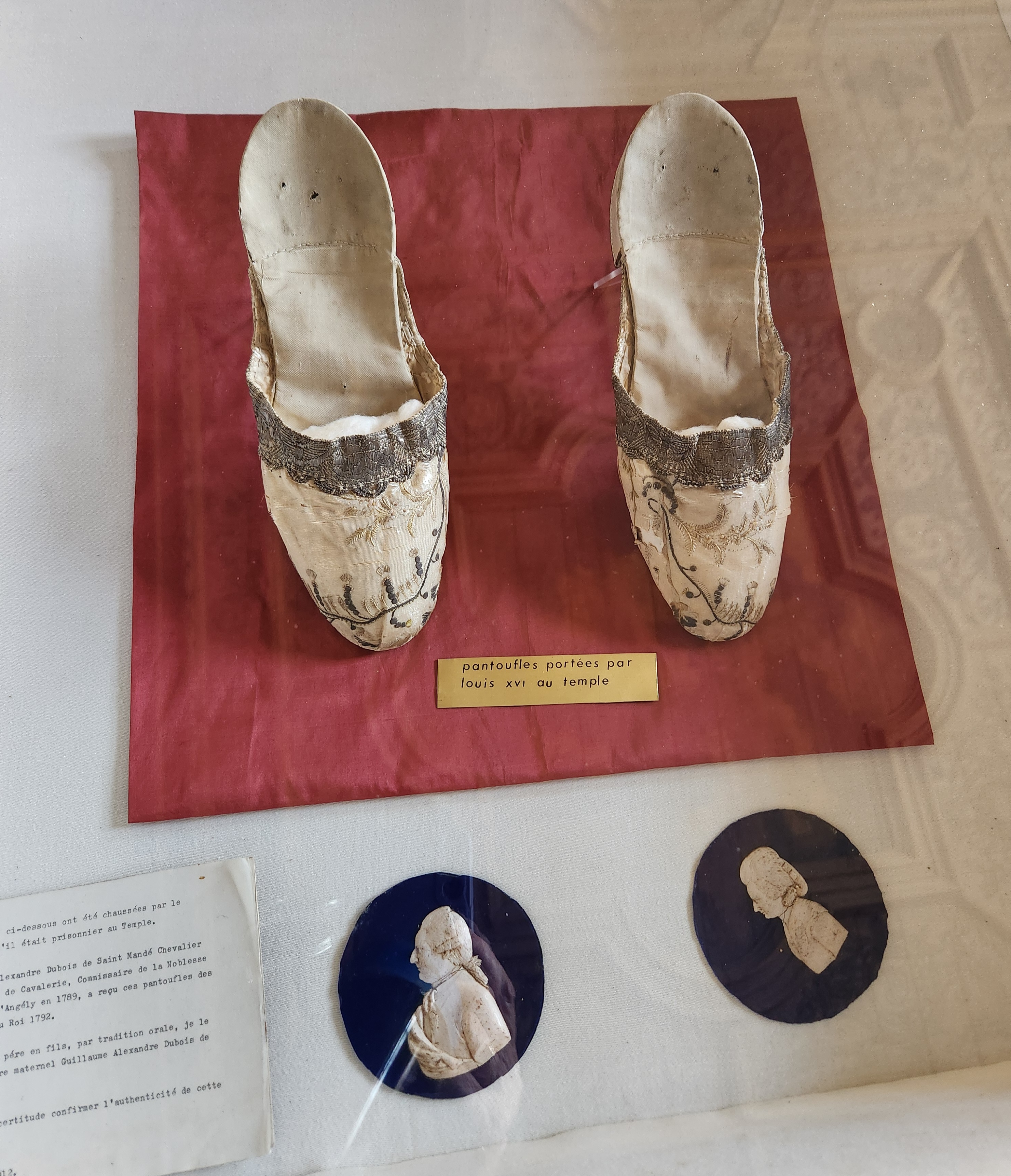
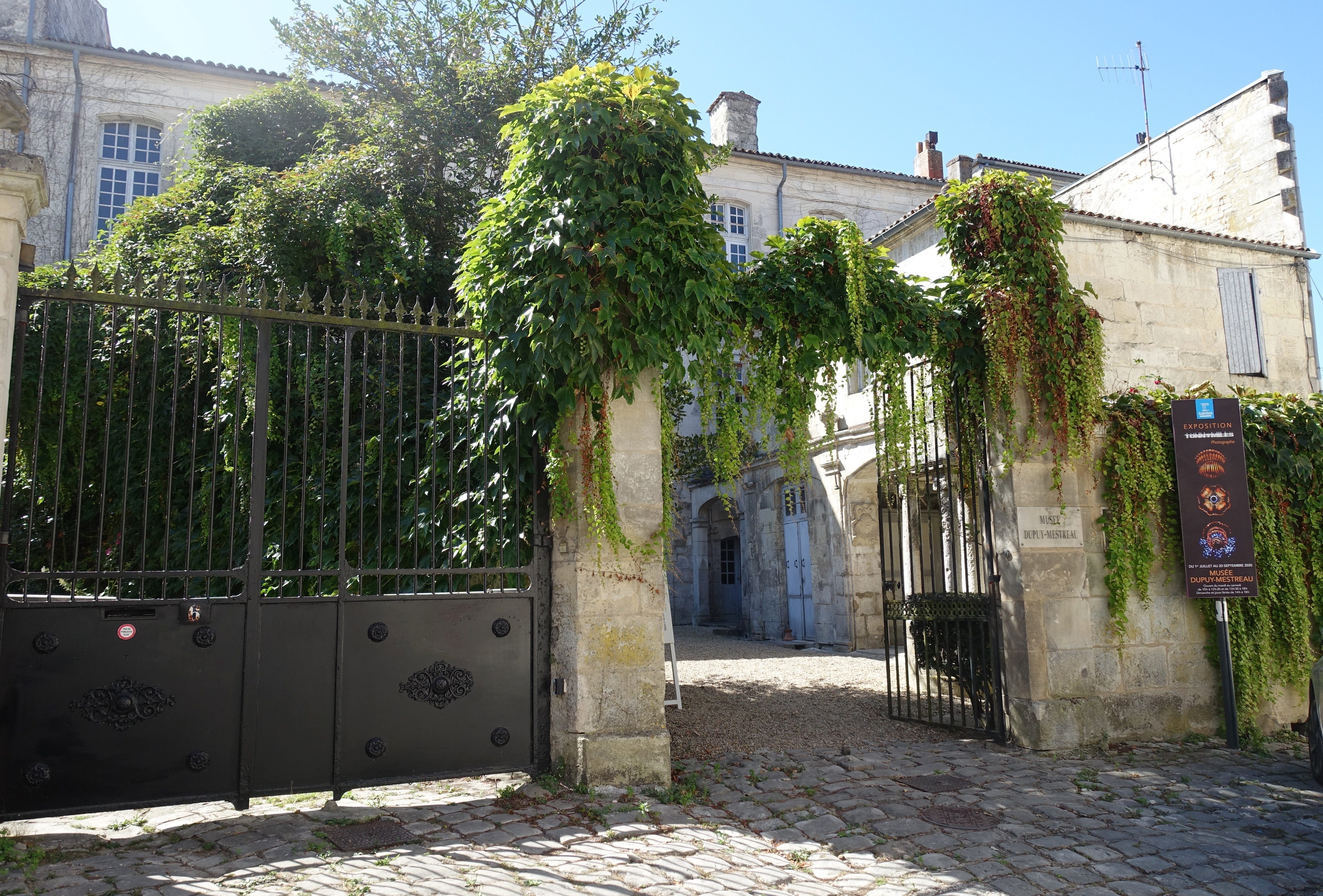
After a much needed coffee, we visited the cultural museum Dupuy Mestreau. This small, intimate museum featured a collection of artefacts and showed the historical significance of Saintes and the surrounding area.
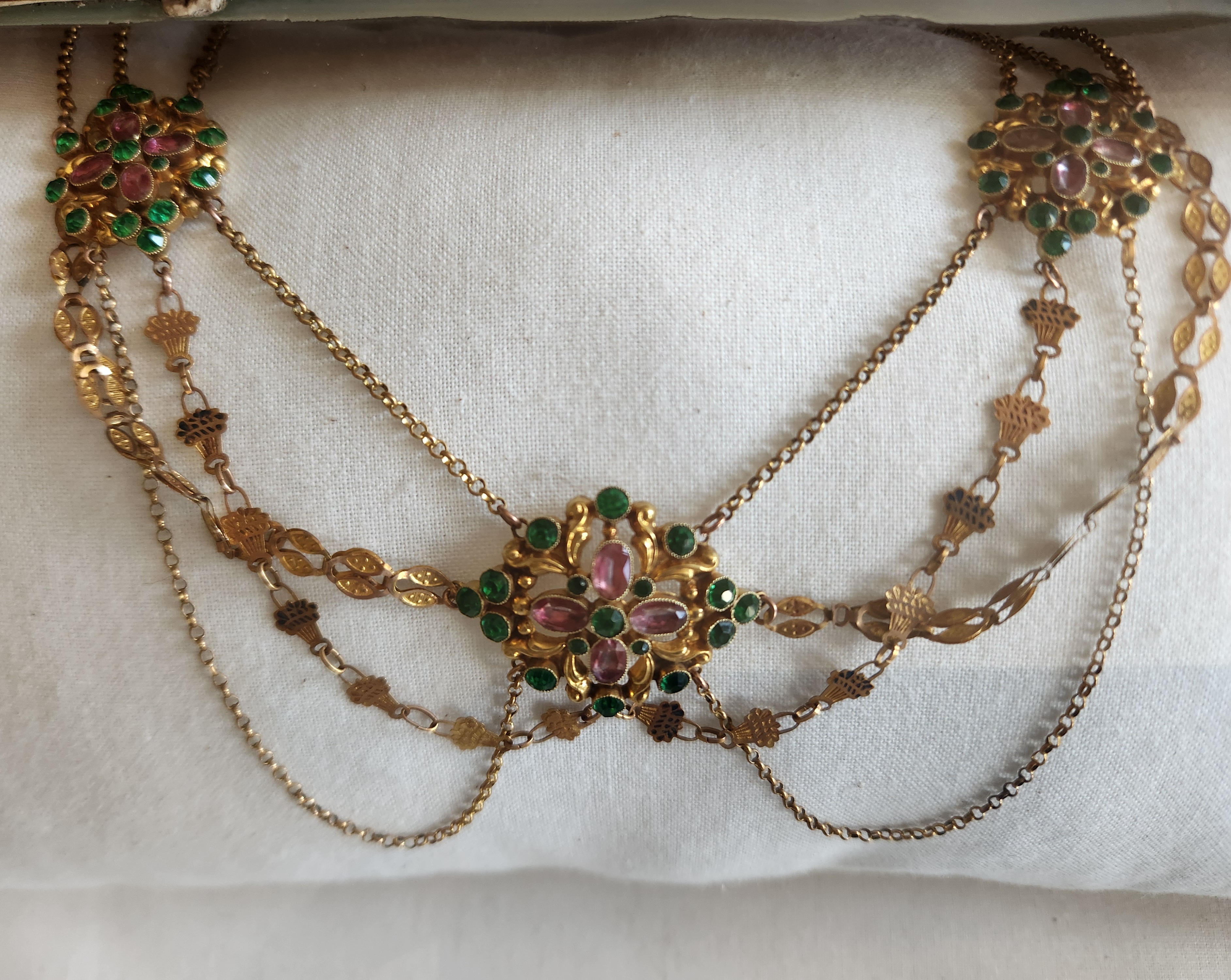
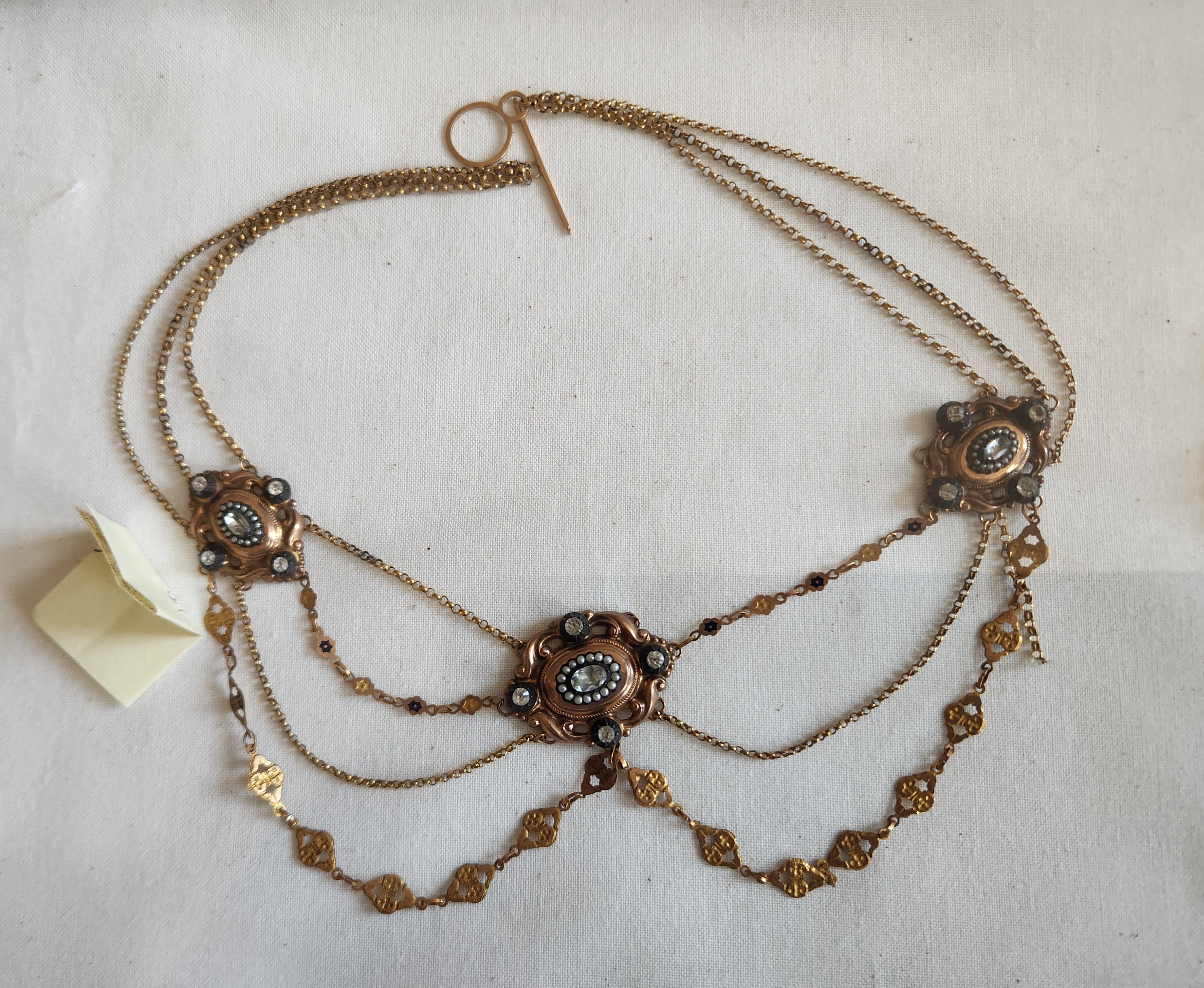
There was a display of pretty ‘colliers d’esclavage’ better known as ‘slavery necklaces’. The fashion for this type of necklace emerged in the first half of the 17th century among the prosperous French peasantry, particularly in Auvergne, Normandy, Poitou, and Saintonge. This trend extended across France during the second half of the 19th century. The necklace consisted of three chains symbolising one for the past, one for the present and one for the future. Sometimes, a fourth chain was added for the eternal union of the spouses or their first child. The materials used varied according to the family’s wealth. Traditionally, a young man would give this type of necklace to his fiancée when the couple were formally introduced to their parents. A sign of love and the sincerity of their commitment. The ‘slavery’ label applied may also suggest that, at the time, marriage was perceived, metaphorically, as a form of slavery. A wedding song from Poitou proclaimed, ‘To set up house is nothing but certain death… Farewell to pleasures, farewell to happy days; I am in slavery.’
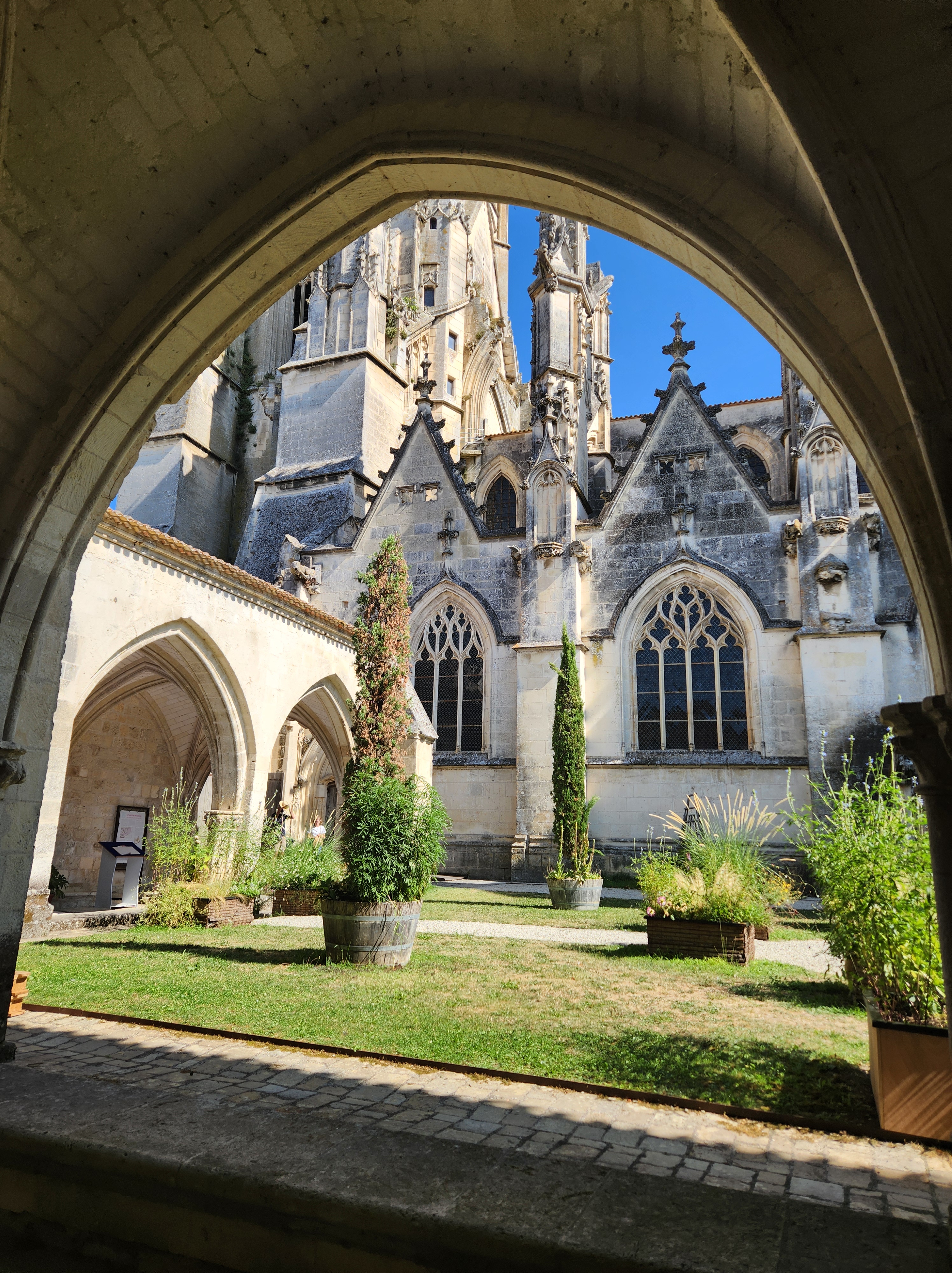
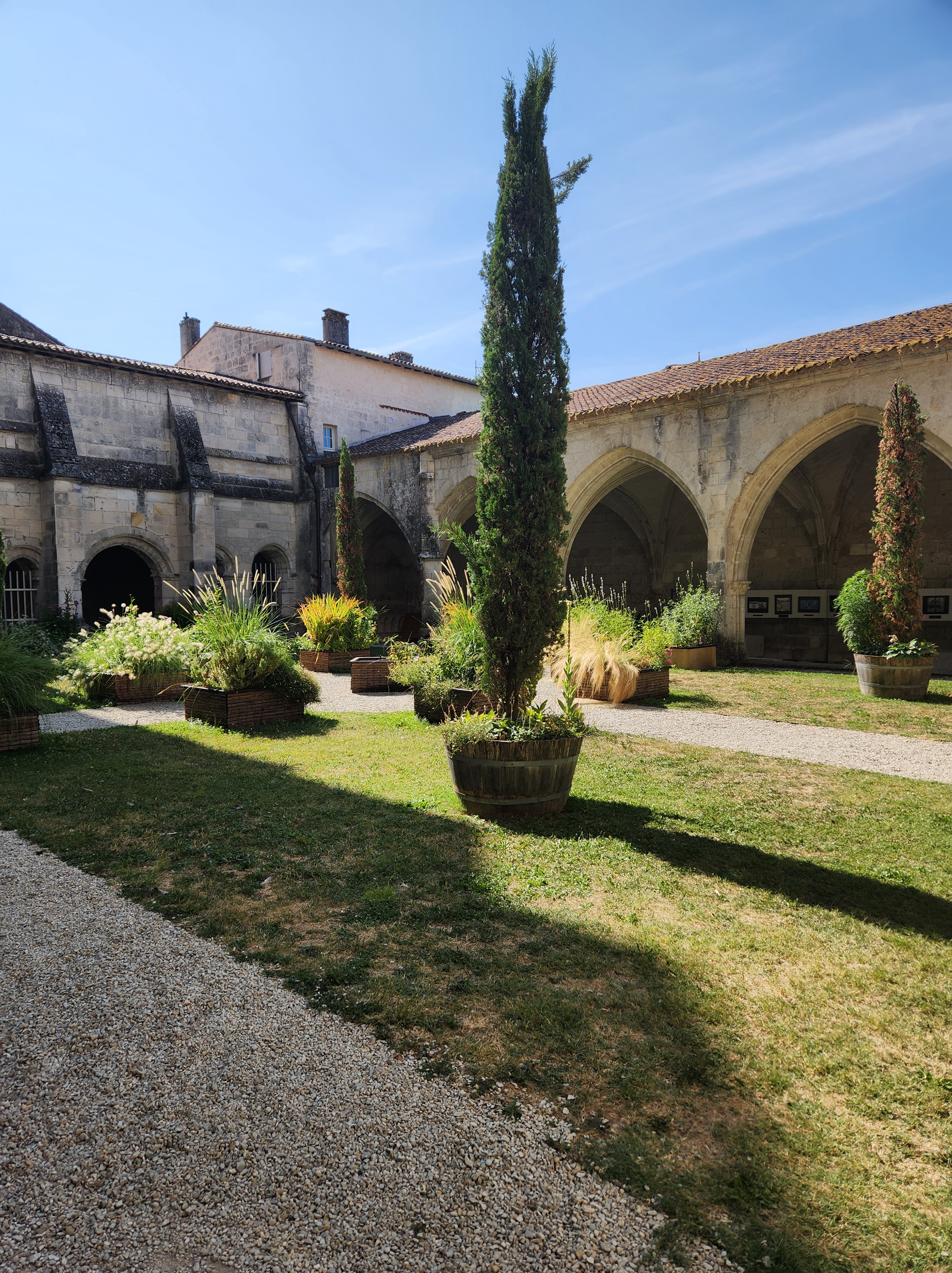
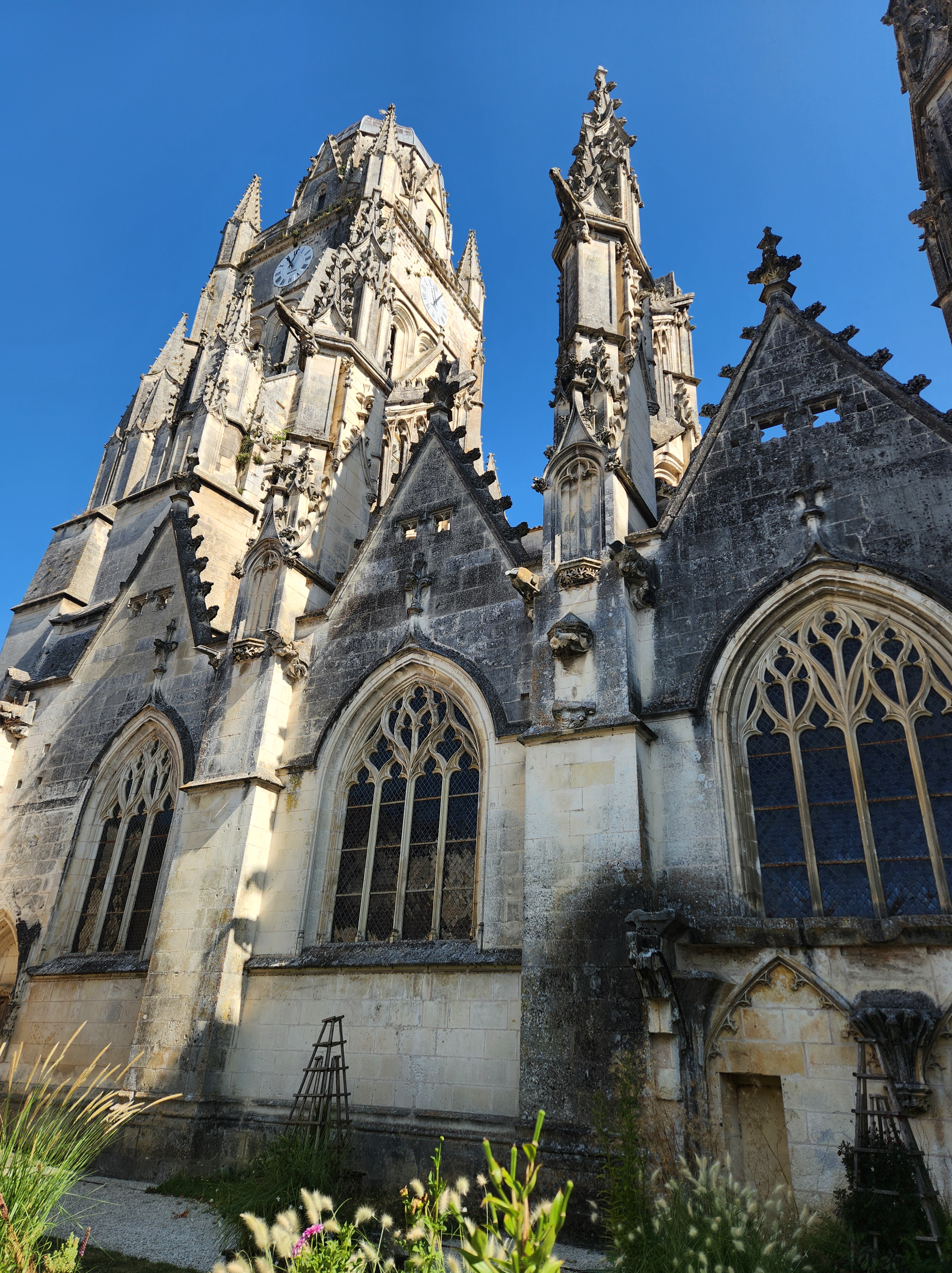
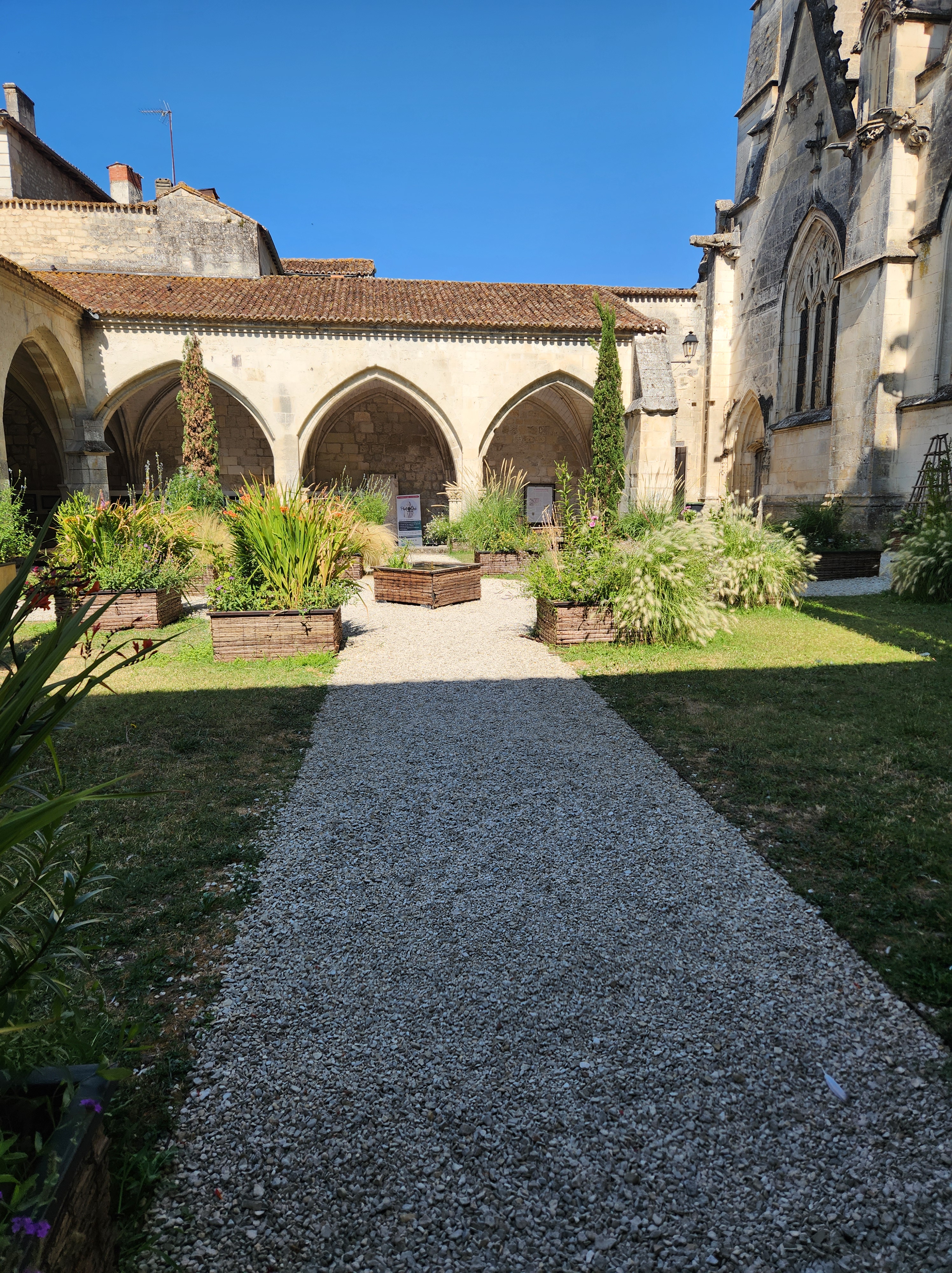
Saintes Cathedral grounds showed Gothic elements. The construction started in the 12th century and was finished in the 17th hence a mix of architectual styles.
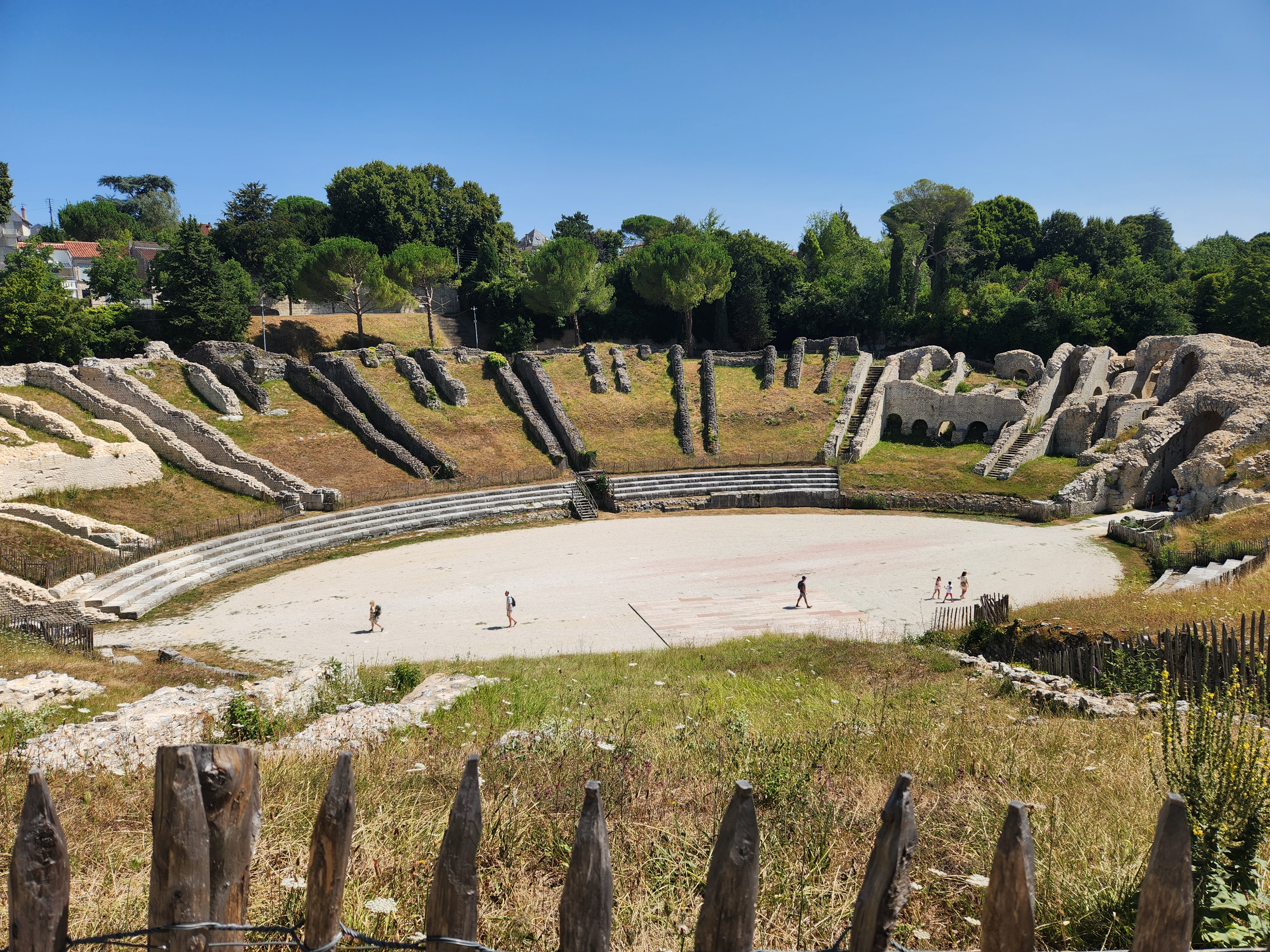
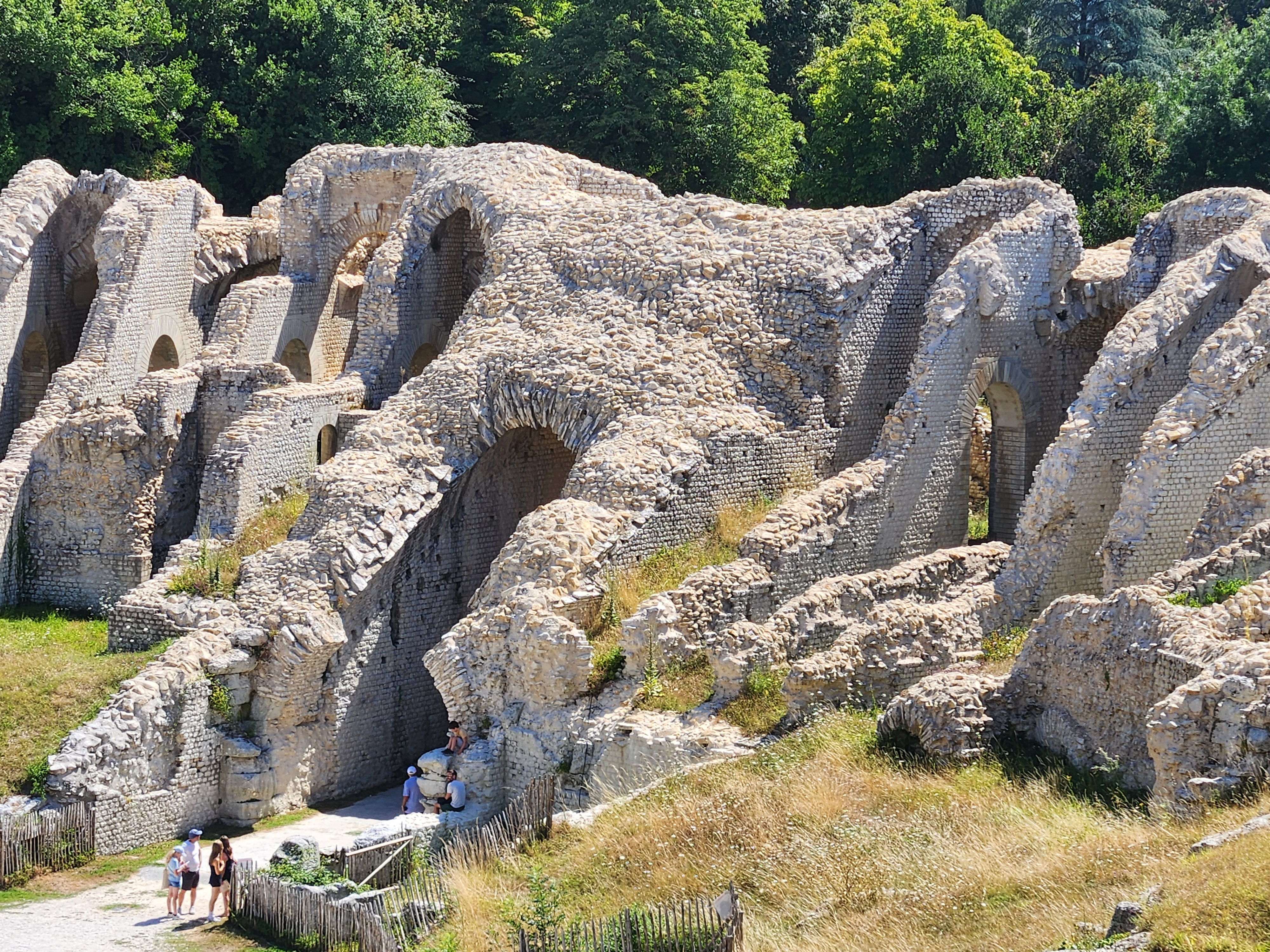
The main tourist attraction in Saintes is the amphitheatre built around 40-50 AD, during the reign of Emperor Claudius and believed about thirty years before the Colosseum in Rome. In 1906 work started on clearing several meters of sediment. But 1982 saw serious flooding which caused landslides. So, in 2021 a three year restoration project started to preserve what was left of the amphitheatre. There is a tour you can take but on very hot day, and a lot of walking, a late lunch and cold drink beckoned!
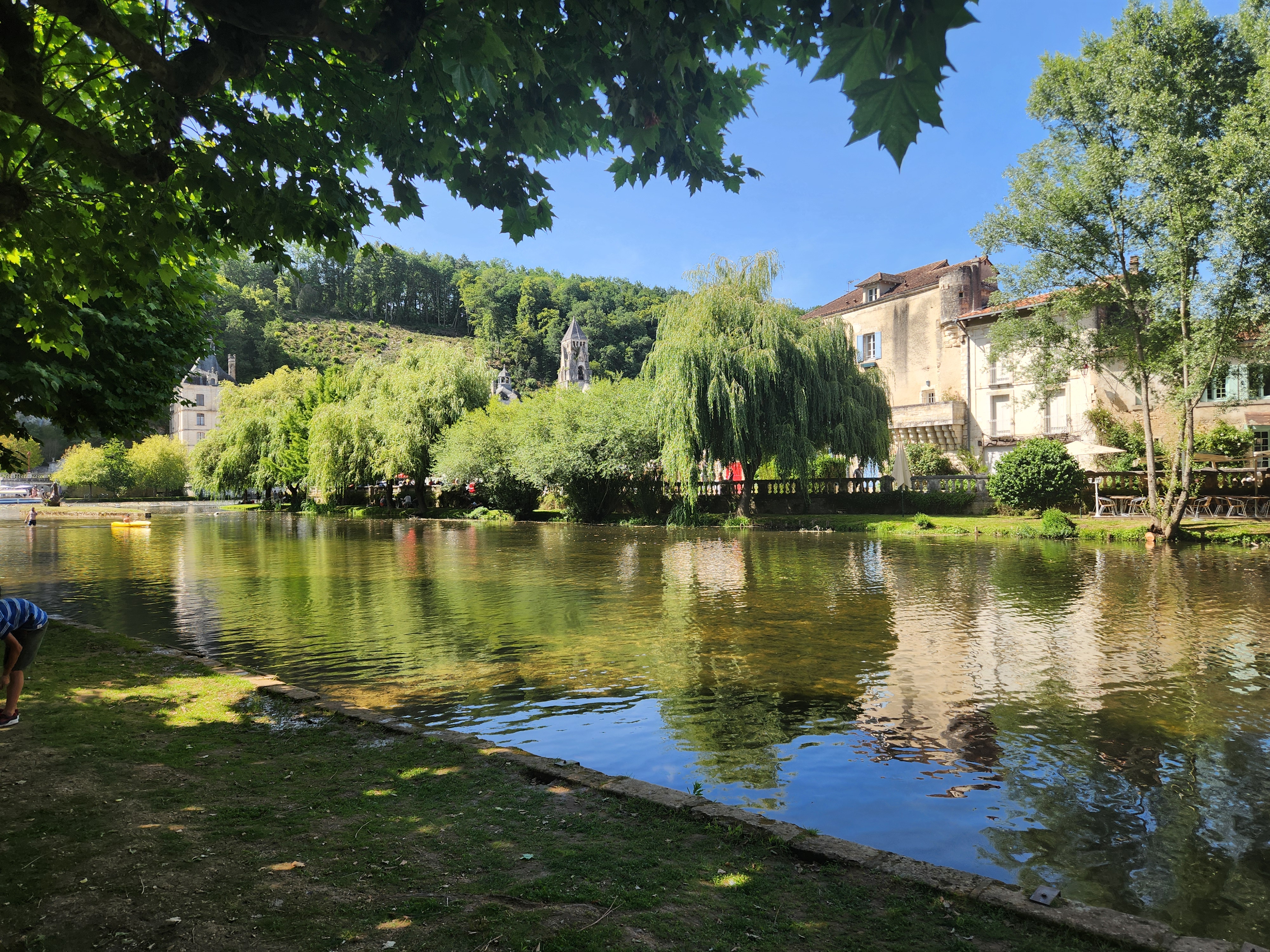
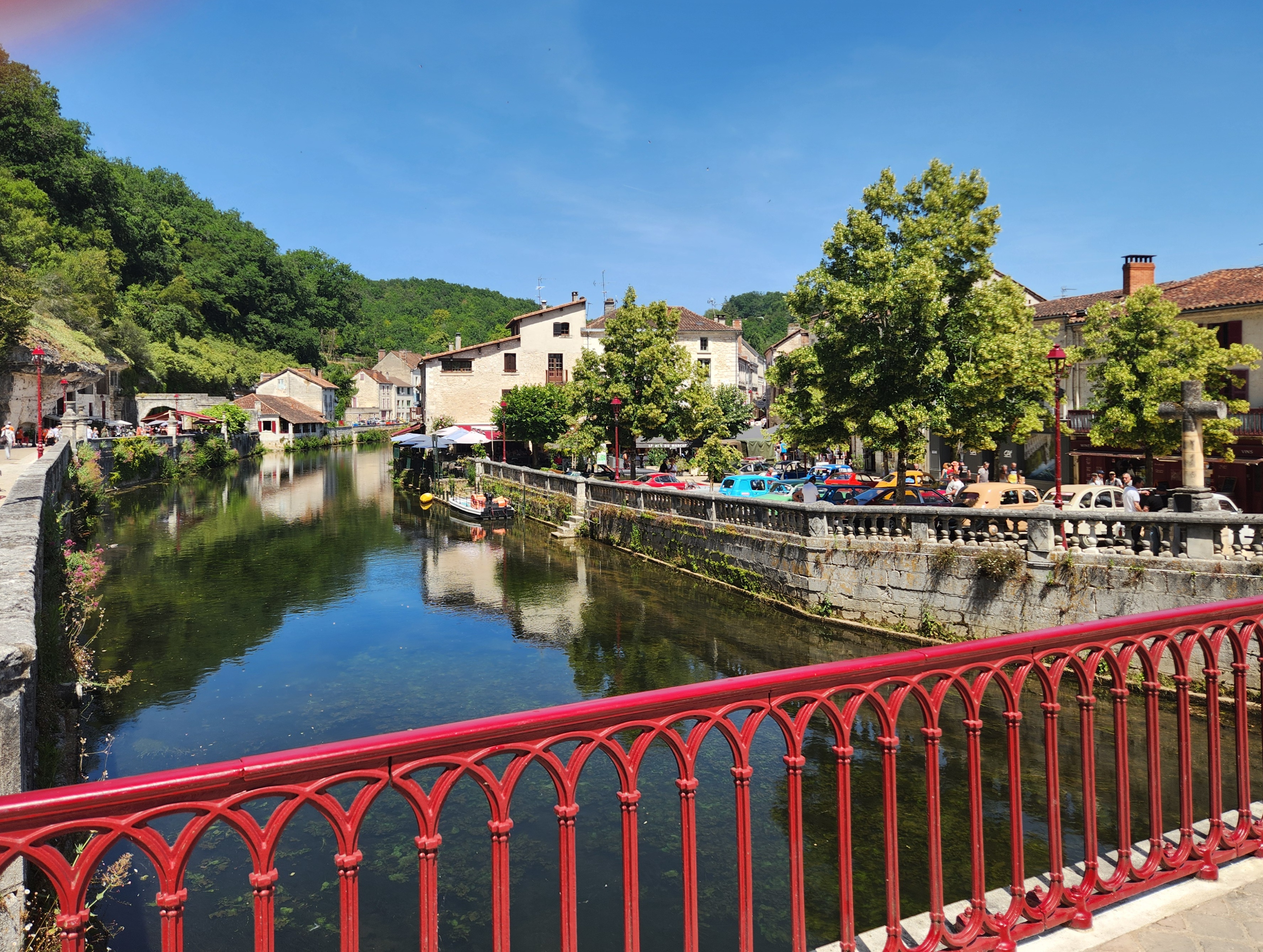
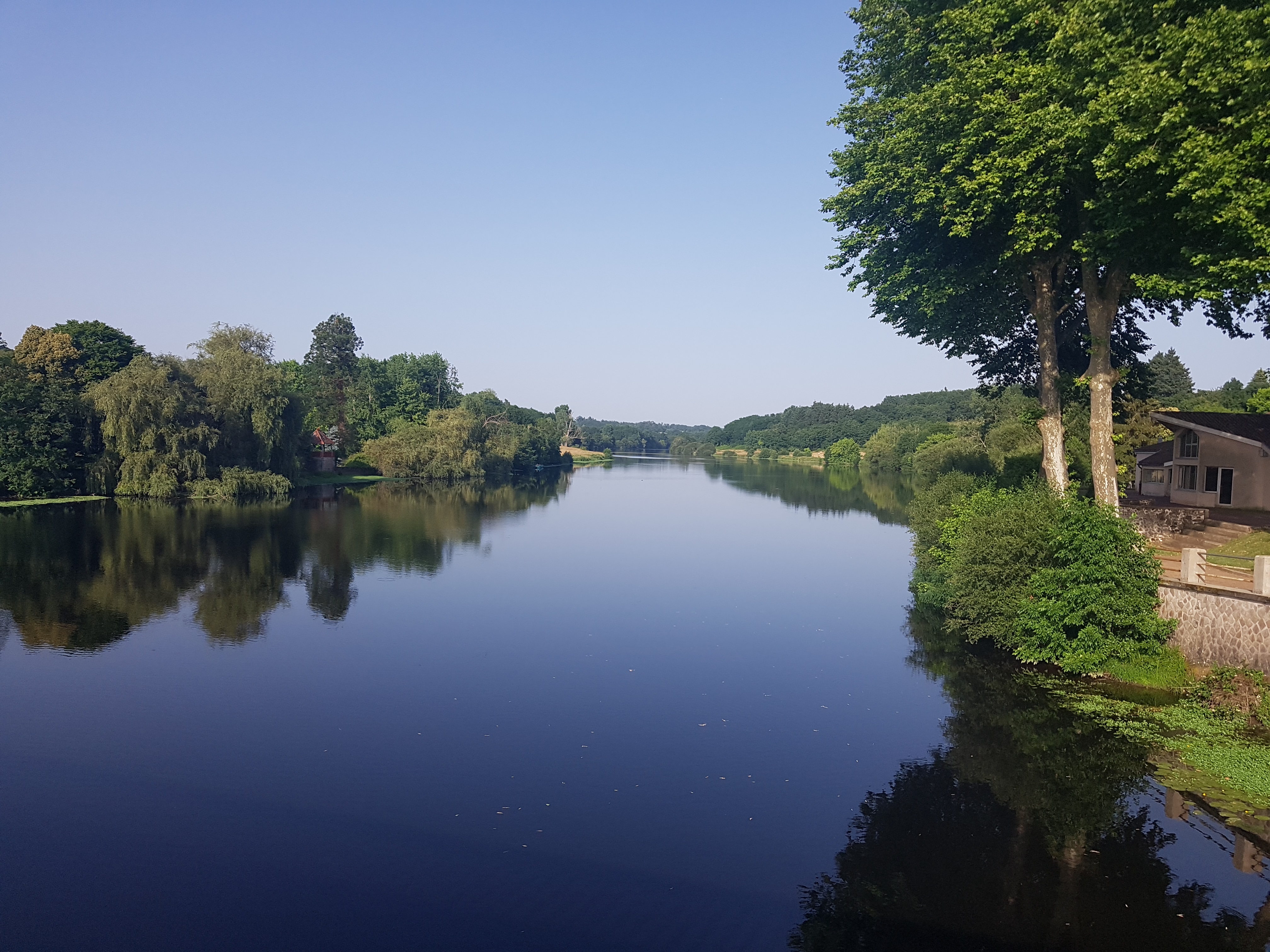
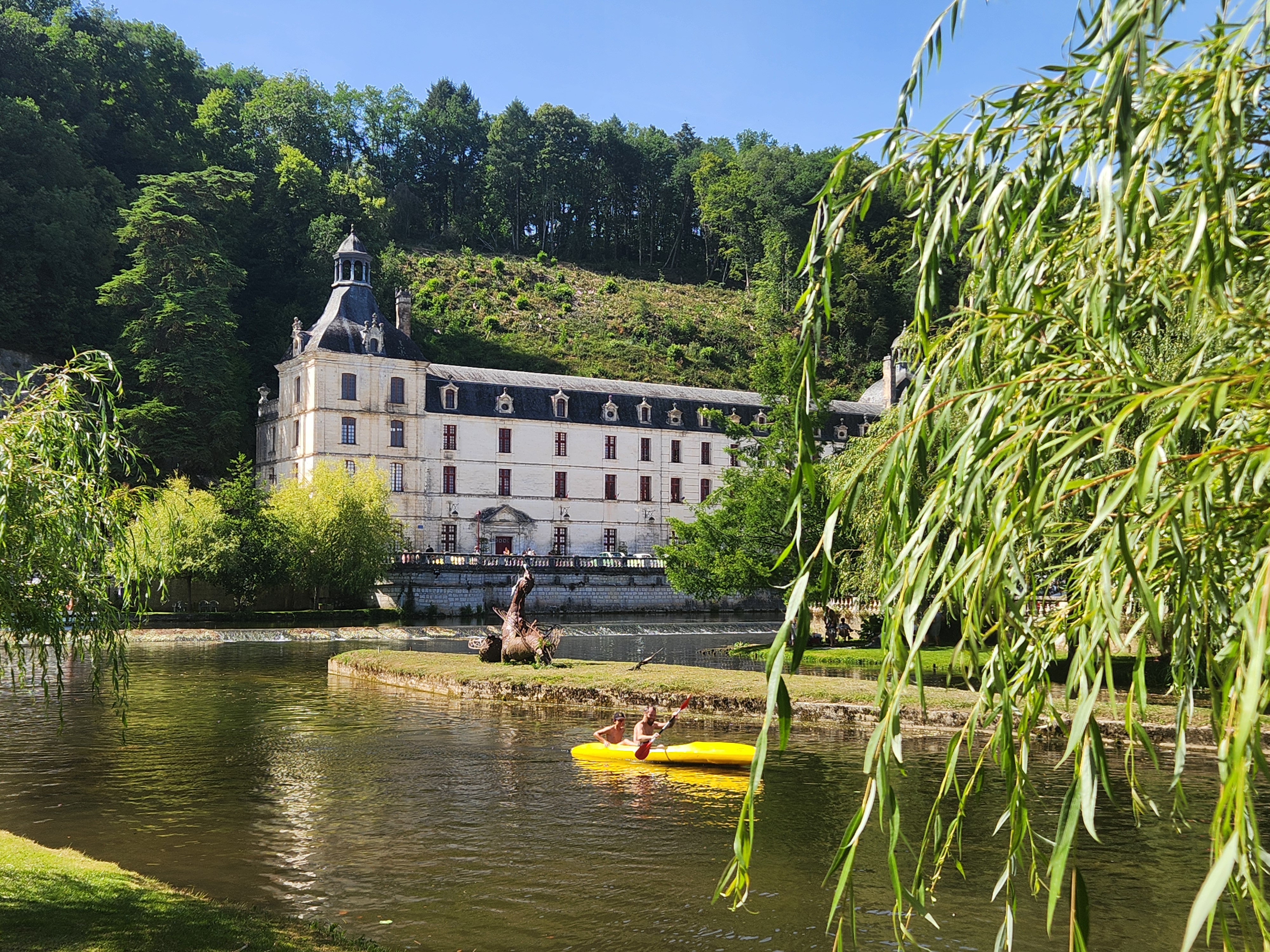
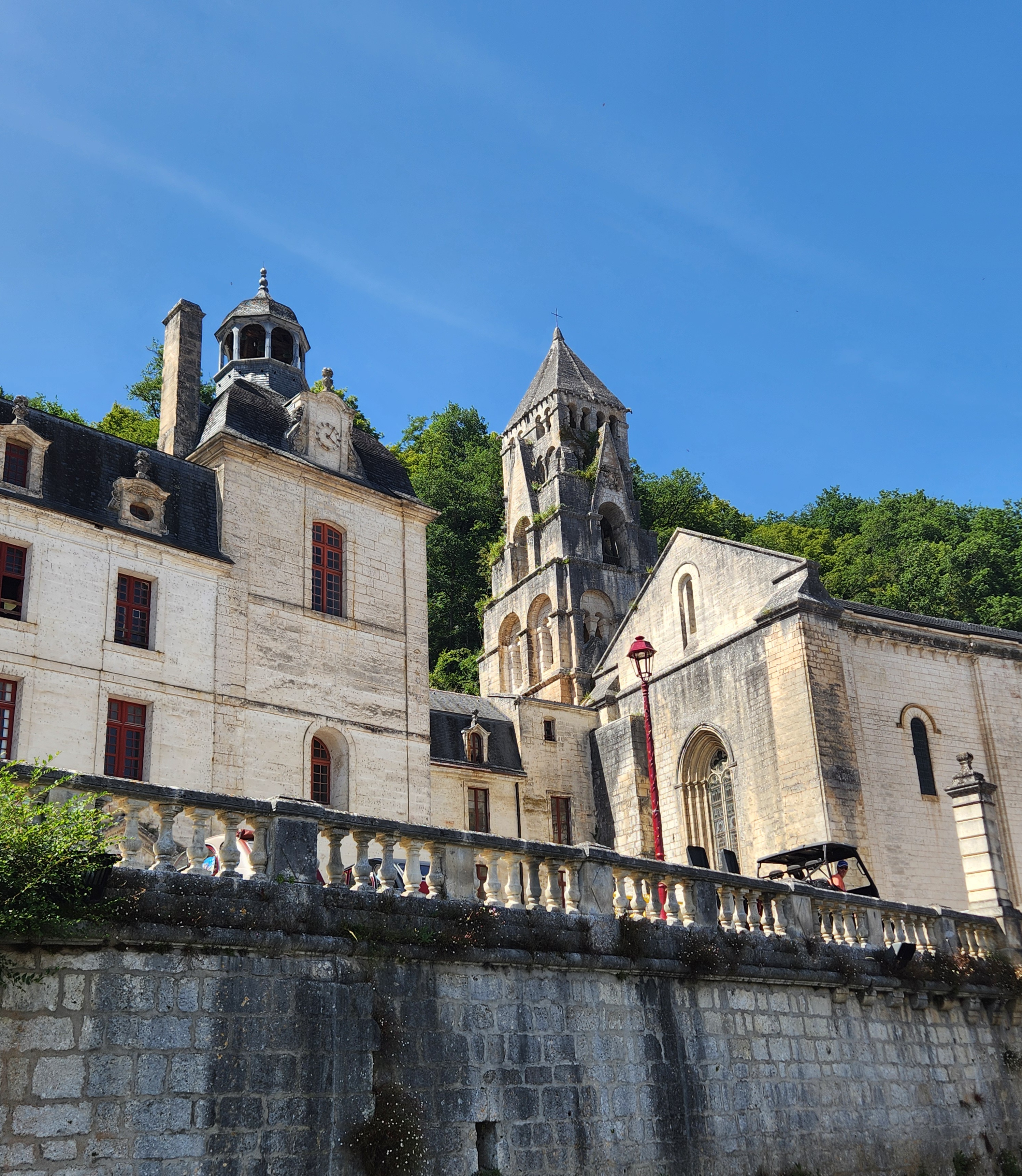
In June, I took an organised trip to Brantôme in the north of the Dordogne. Set on the river Dronne, Brantôme is very pretty, with a backdrop of steep wooded slopes and the Benedictine Abbey. Unfortunately, I didn’t have time to visit the abbey, which was founded by Charlemagne in 769 and the most historical highlight of the town.
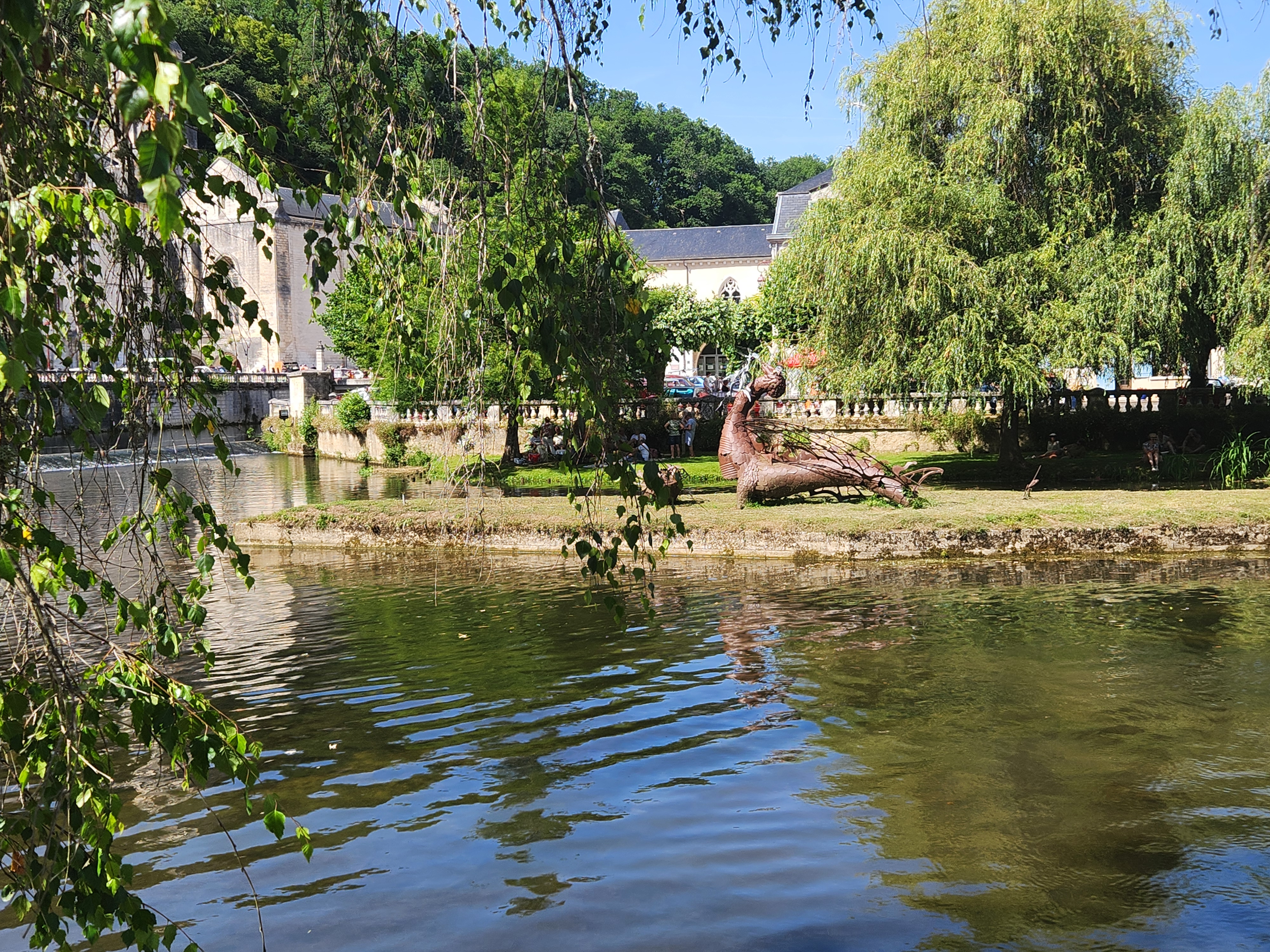
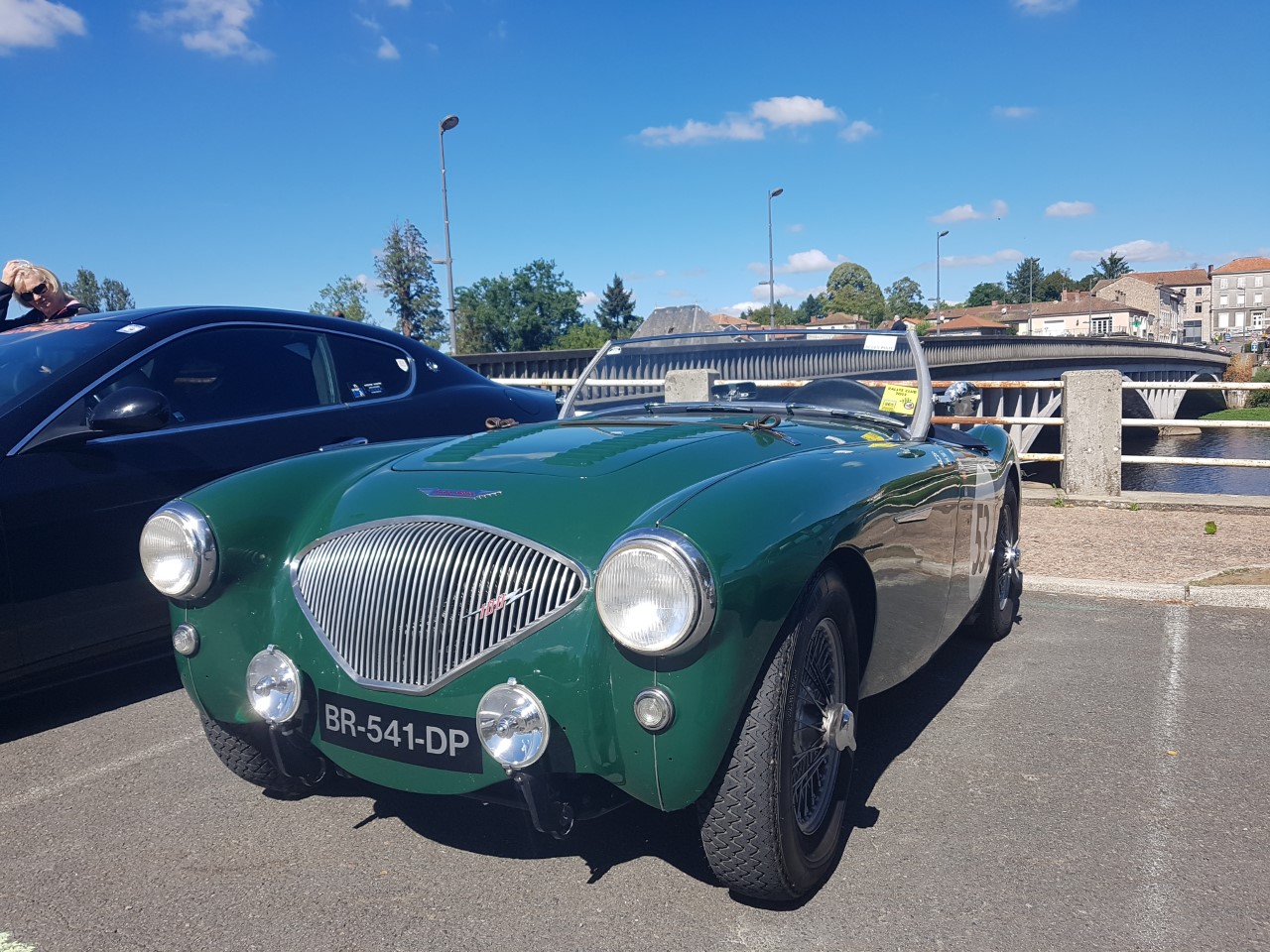
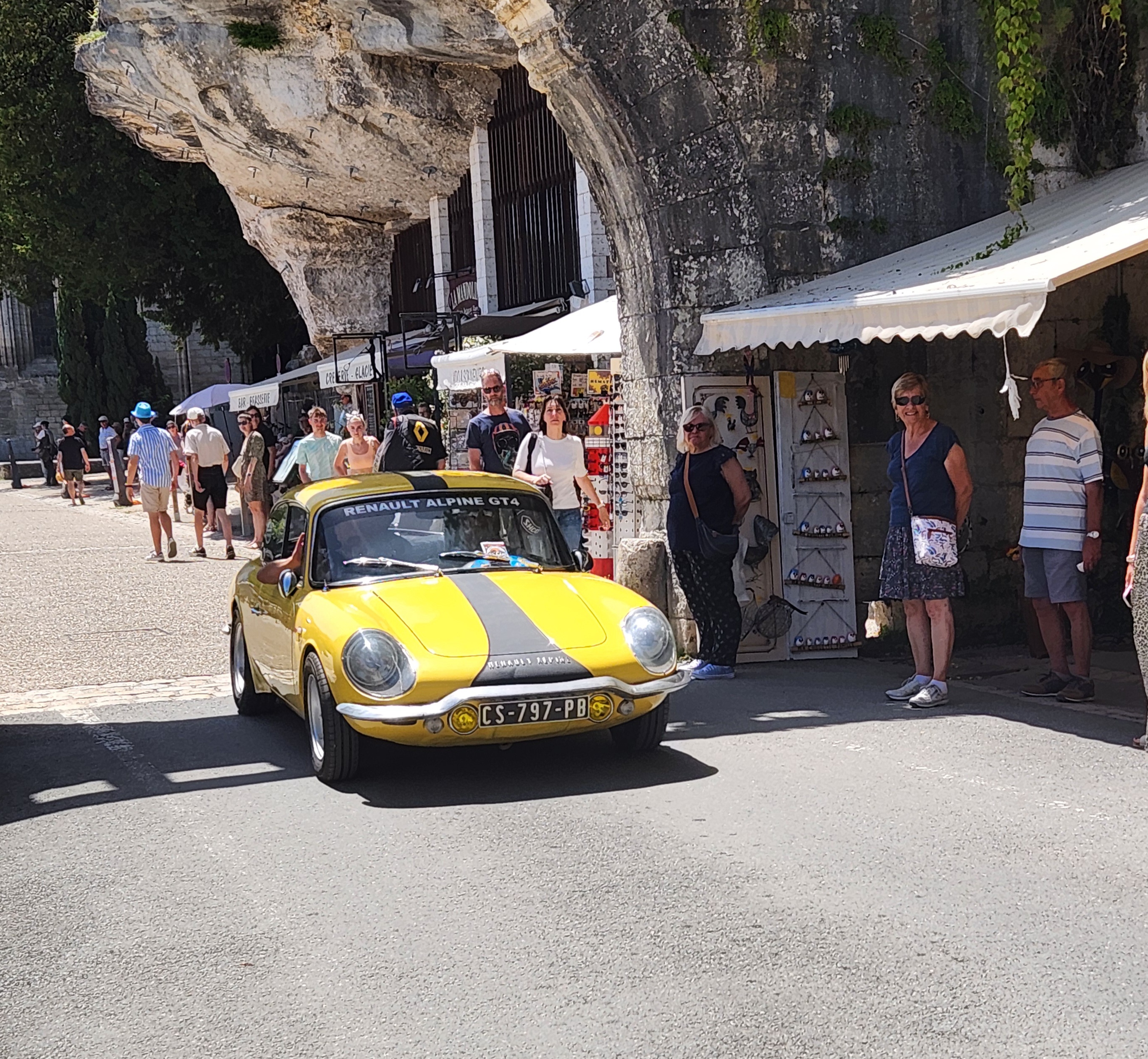
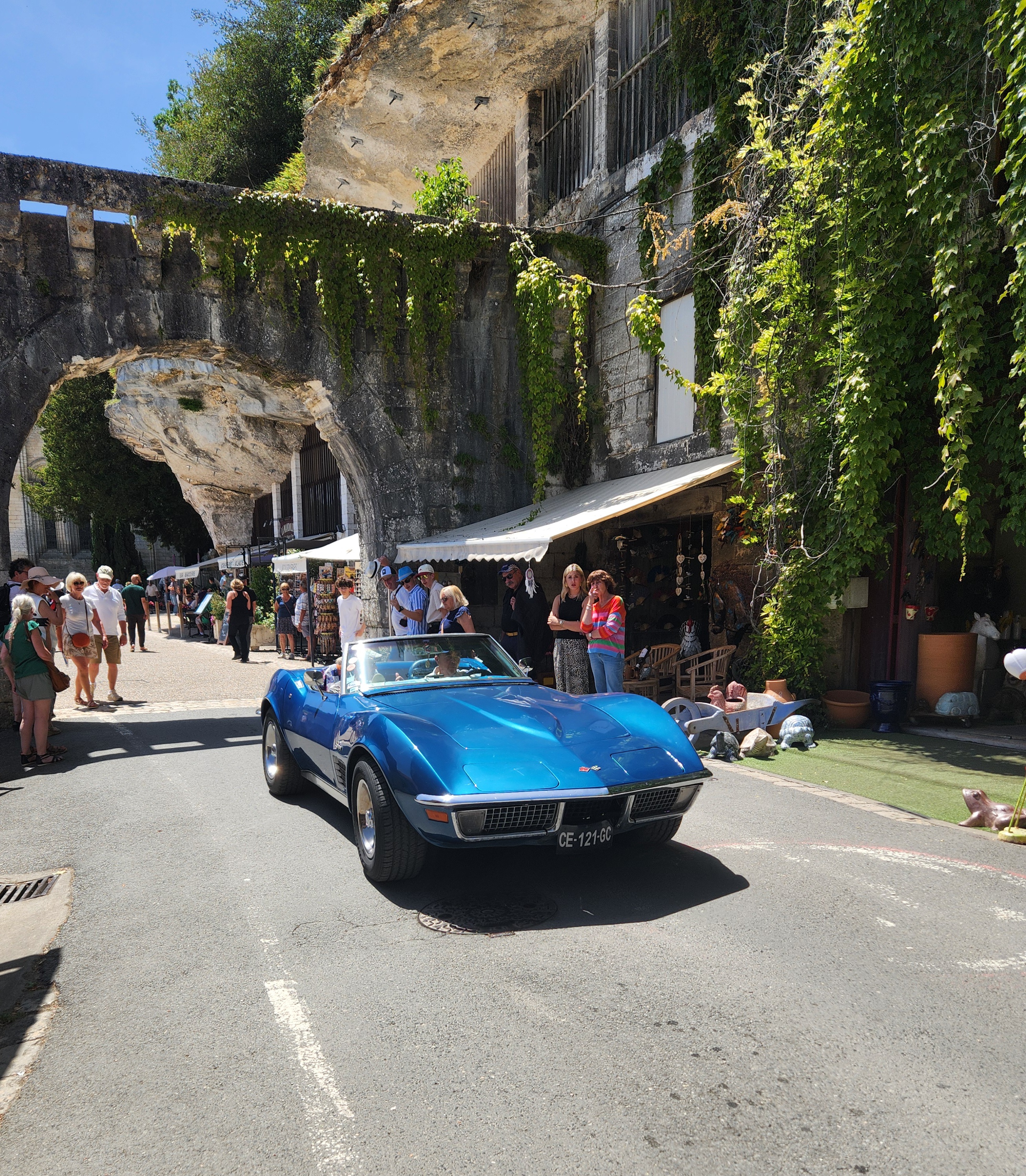
Brantôme was really busy with tourists plus there was a Classic Car meeting on, which added a festival summer vibe!
The riverside restaurants were buzzing and plenty of cold drinks were needed in the sunny 33°C. People out in canoes, kids and dogs swimming in the river, just lovely.
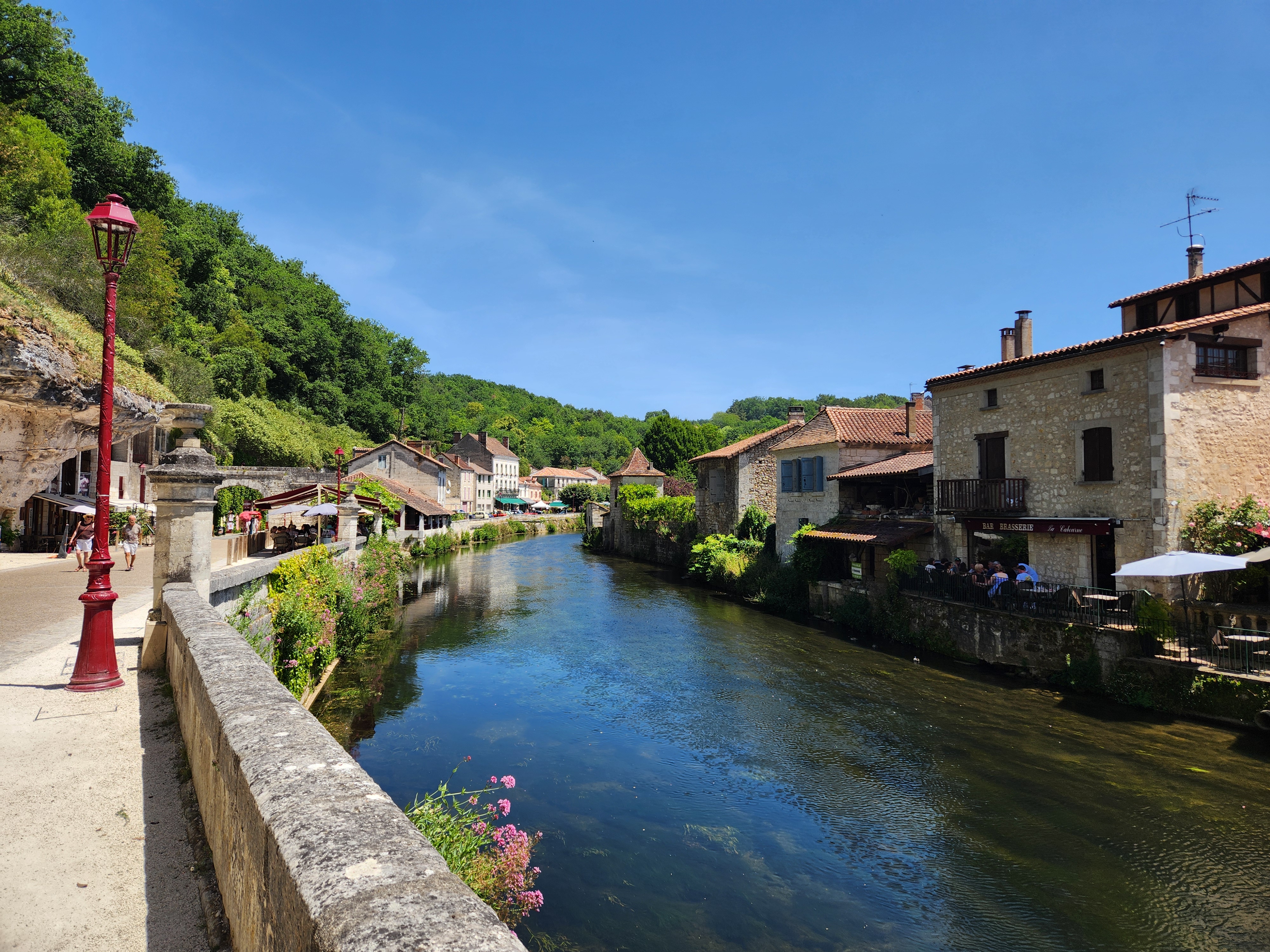
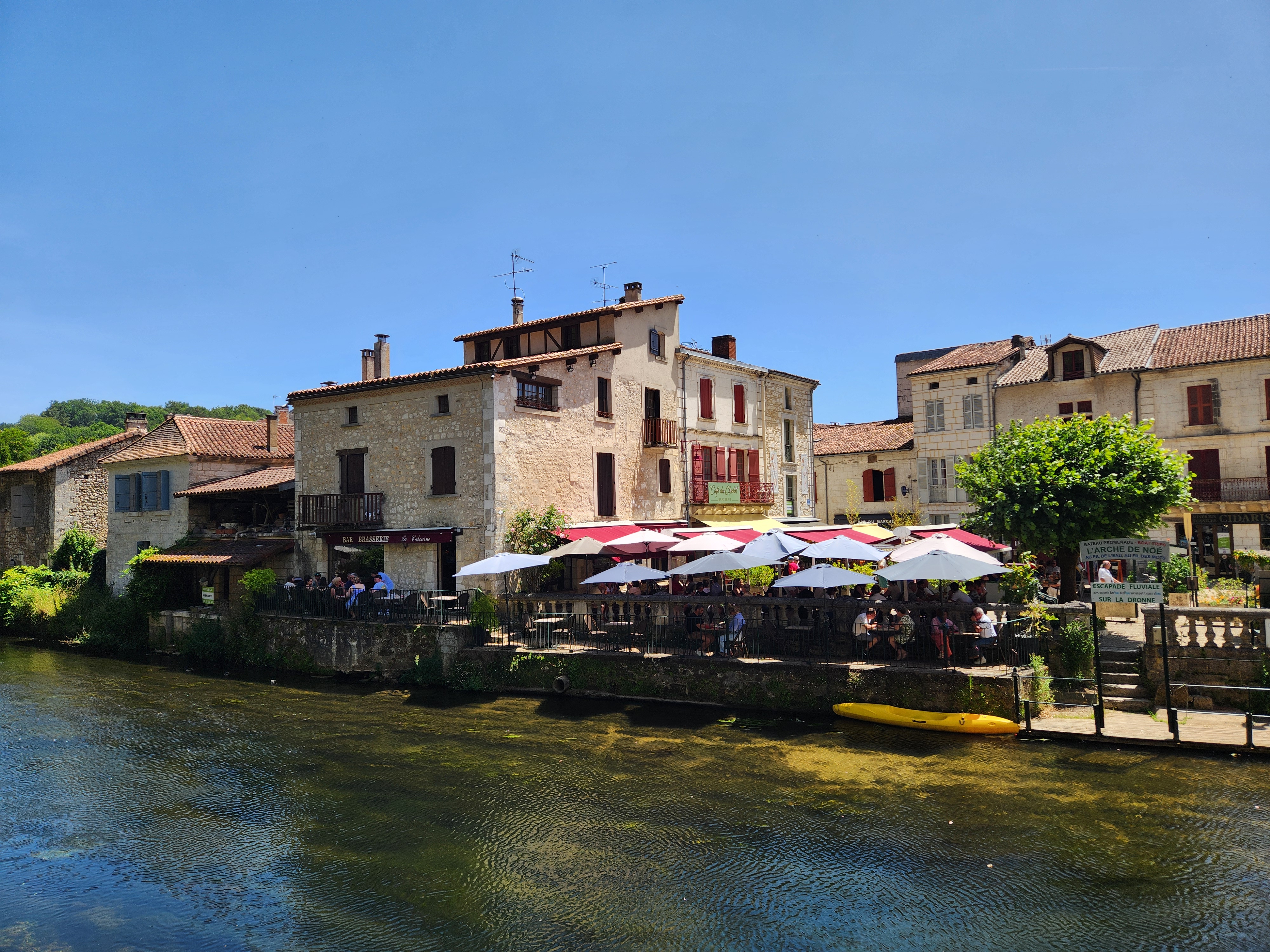
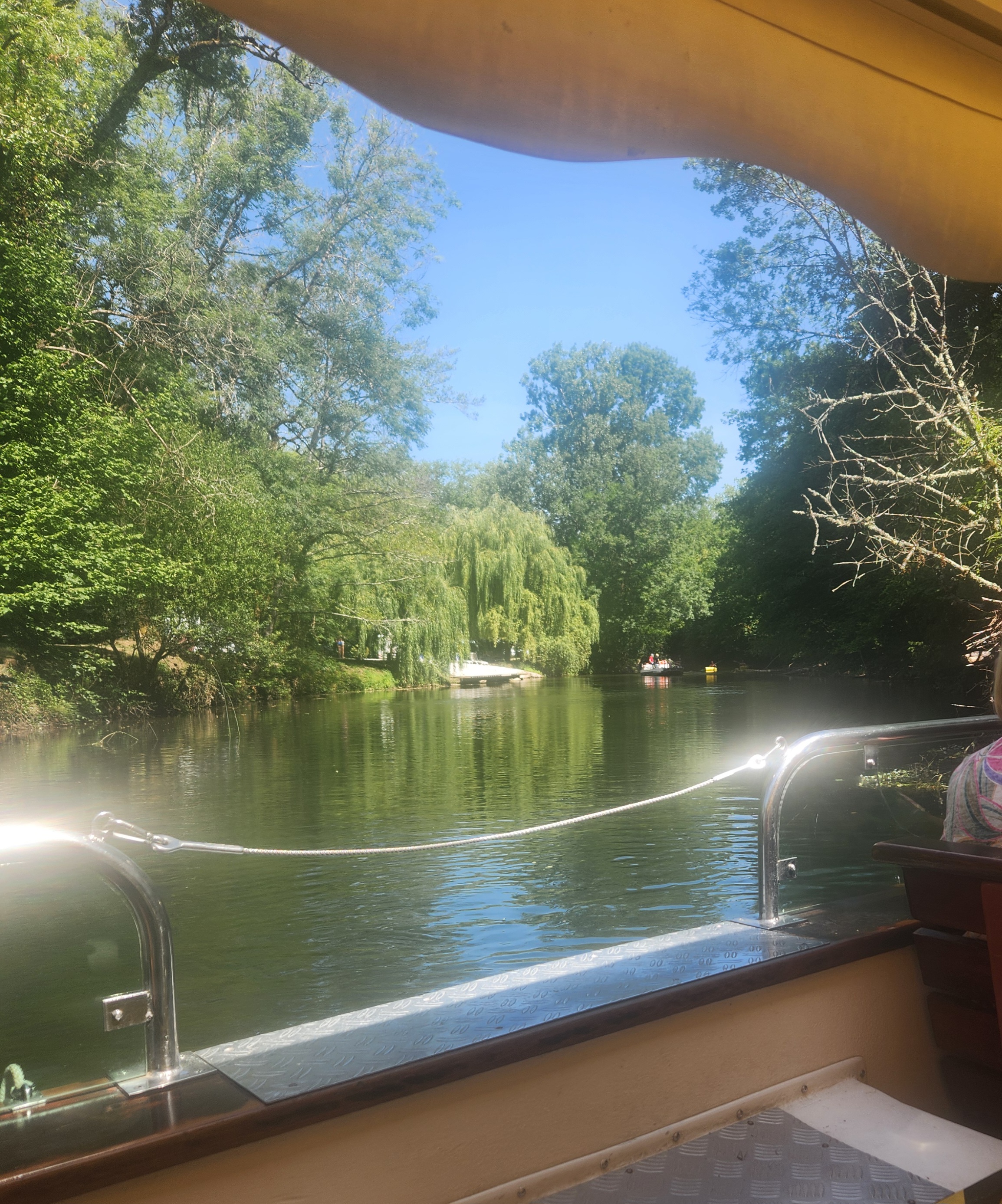
After a leisurely lunch and a wander, it was time for our riverboat trip. We passed by the remains of old rounded tower of the castle attached to the Abbey in the 16th century. On the opposite side the old Millers Ford. There were also the remains of a once planned hotel in the 1930’s. The project was rejected by the historical monuments act.
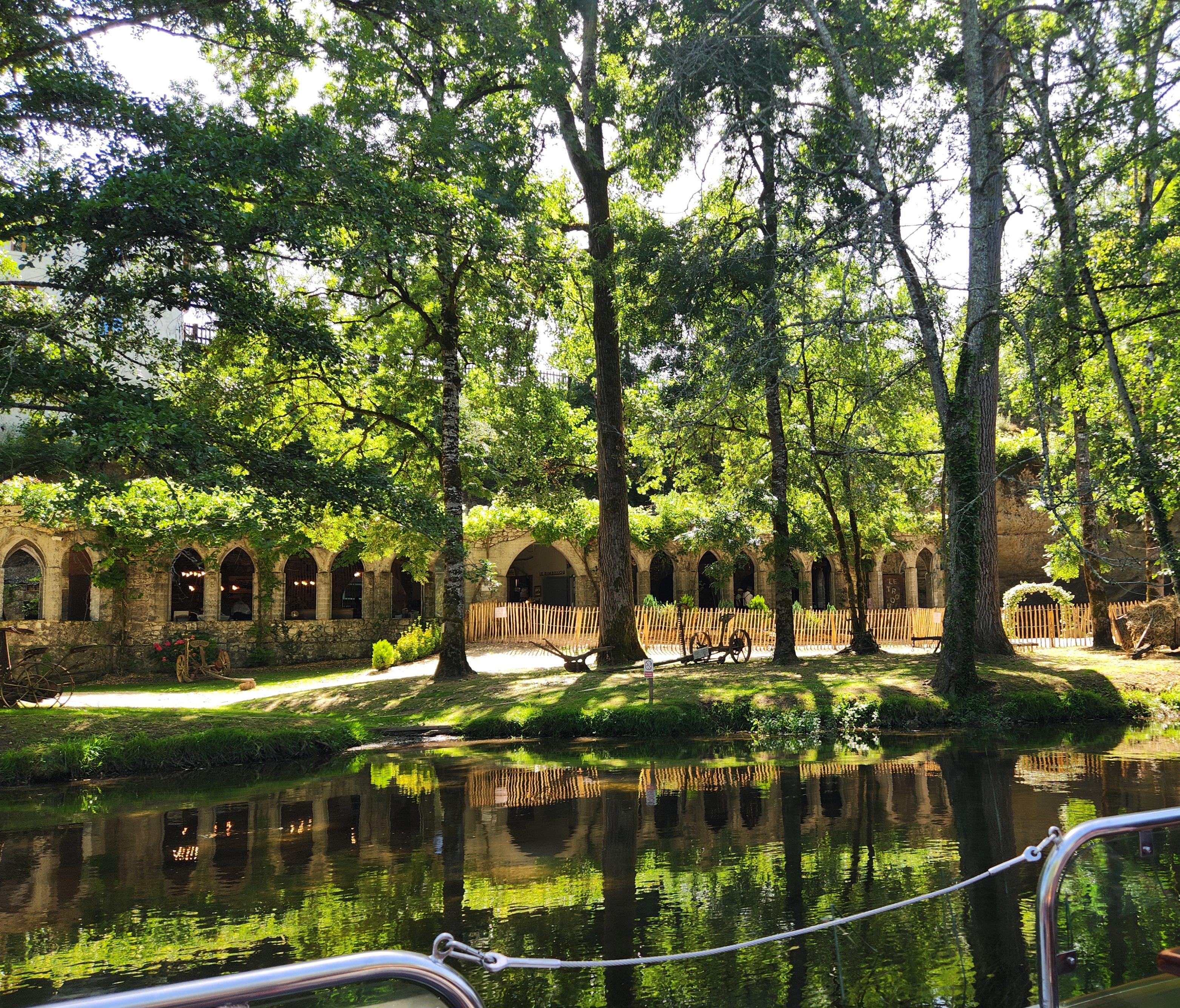
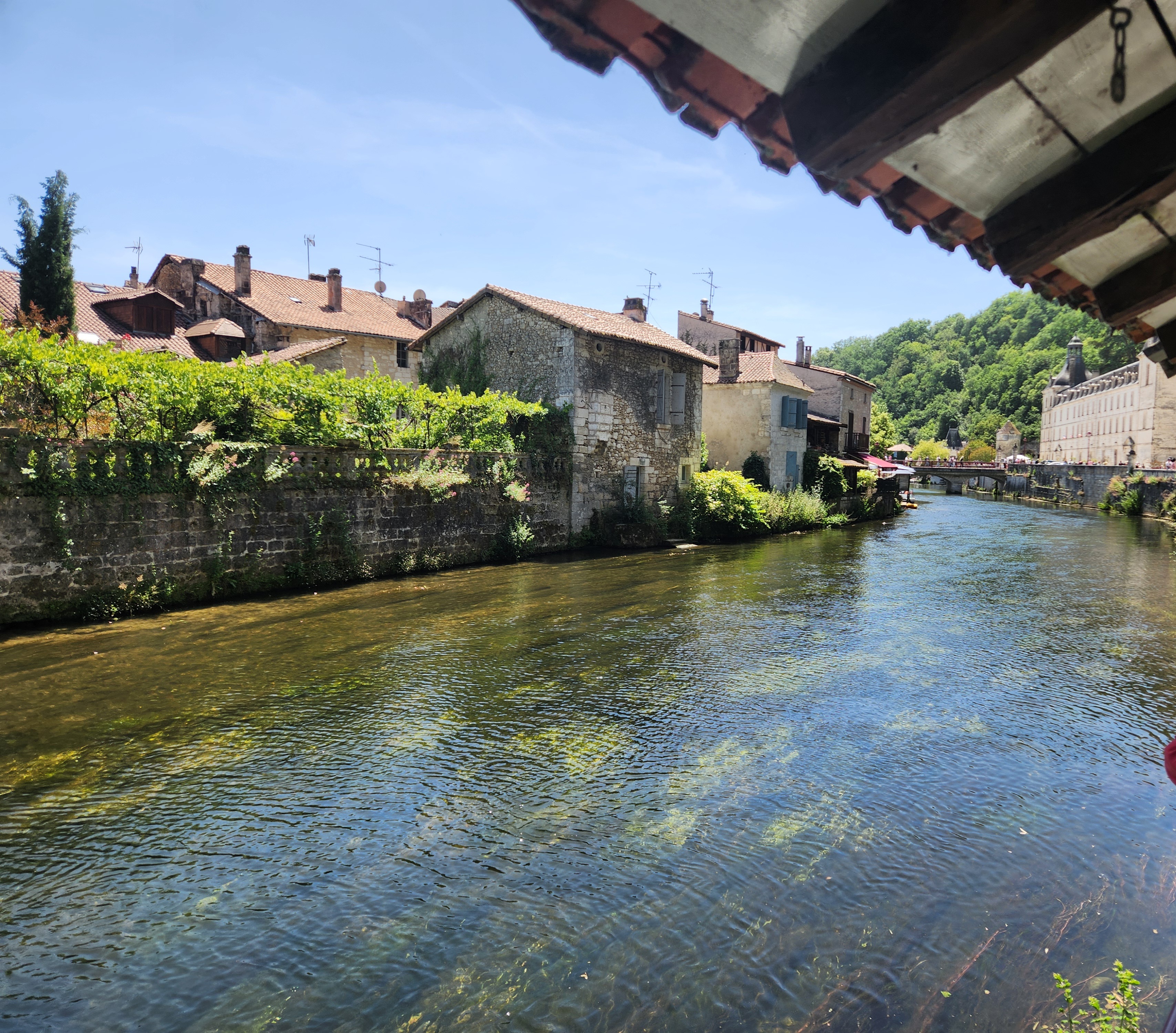
Further along the river it was so peaceful, cool and picturesque. Eighty percent of the watercourse of La Dronne is classified as Natura 2000, which is a network of protected areas across the EU. The water was so clear with apparently an abundance of trout, pike, zander and more. Some migratory birds, herons, moorhens and mallards nest there.

I will definitely re visit Brantôme to enjoy more of the town and I think out of season when it will be quieter.
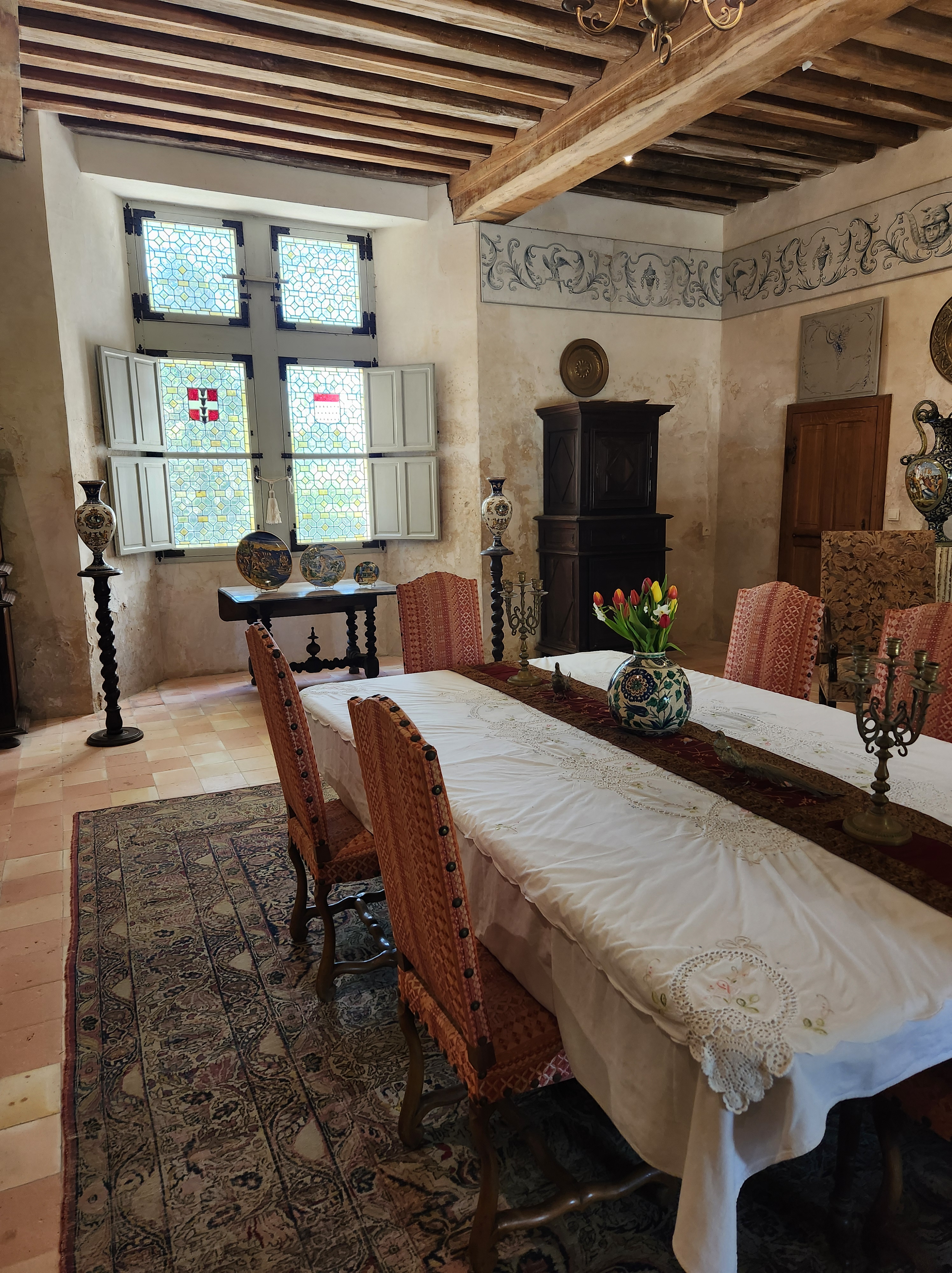
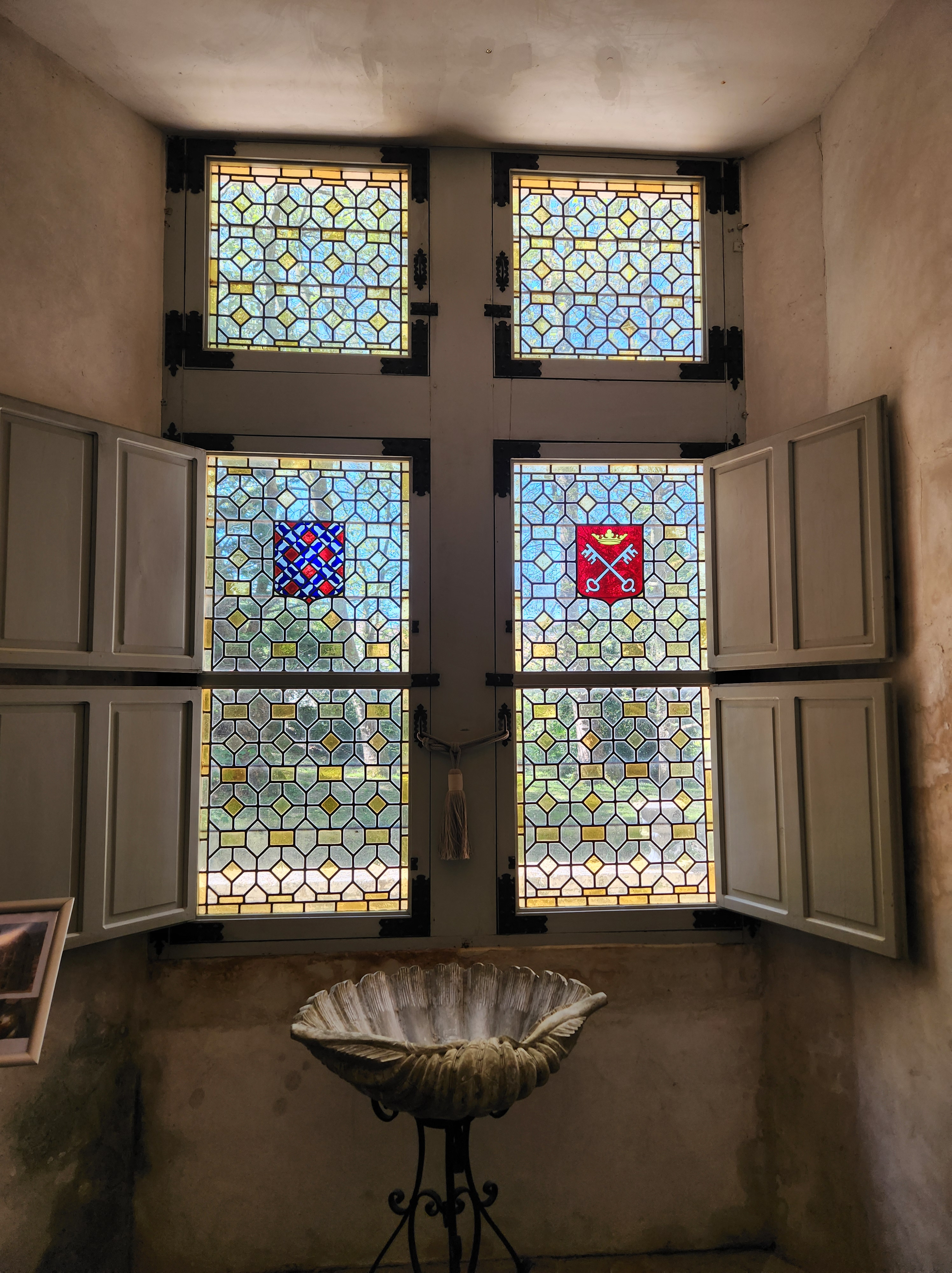
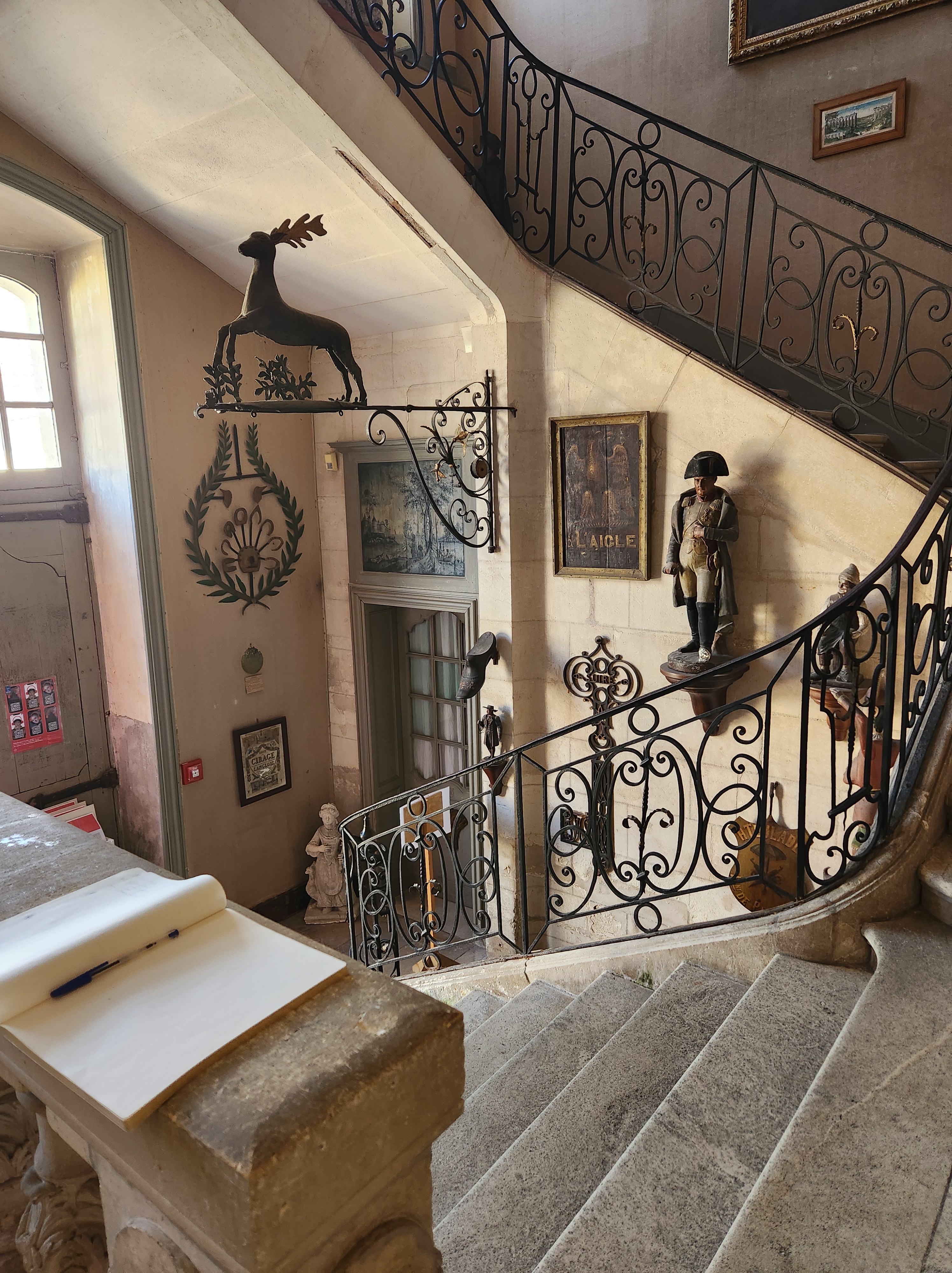
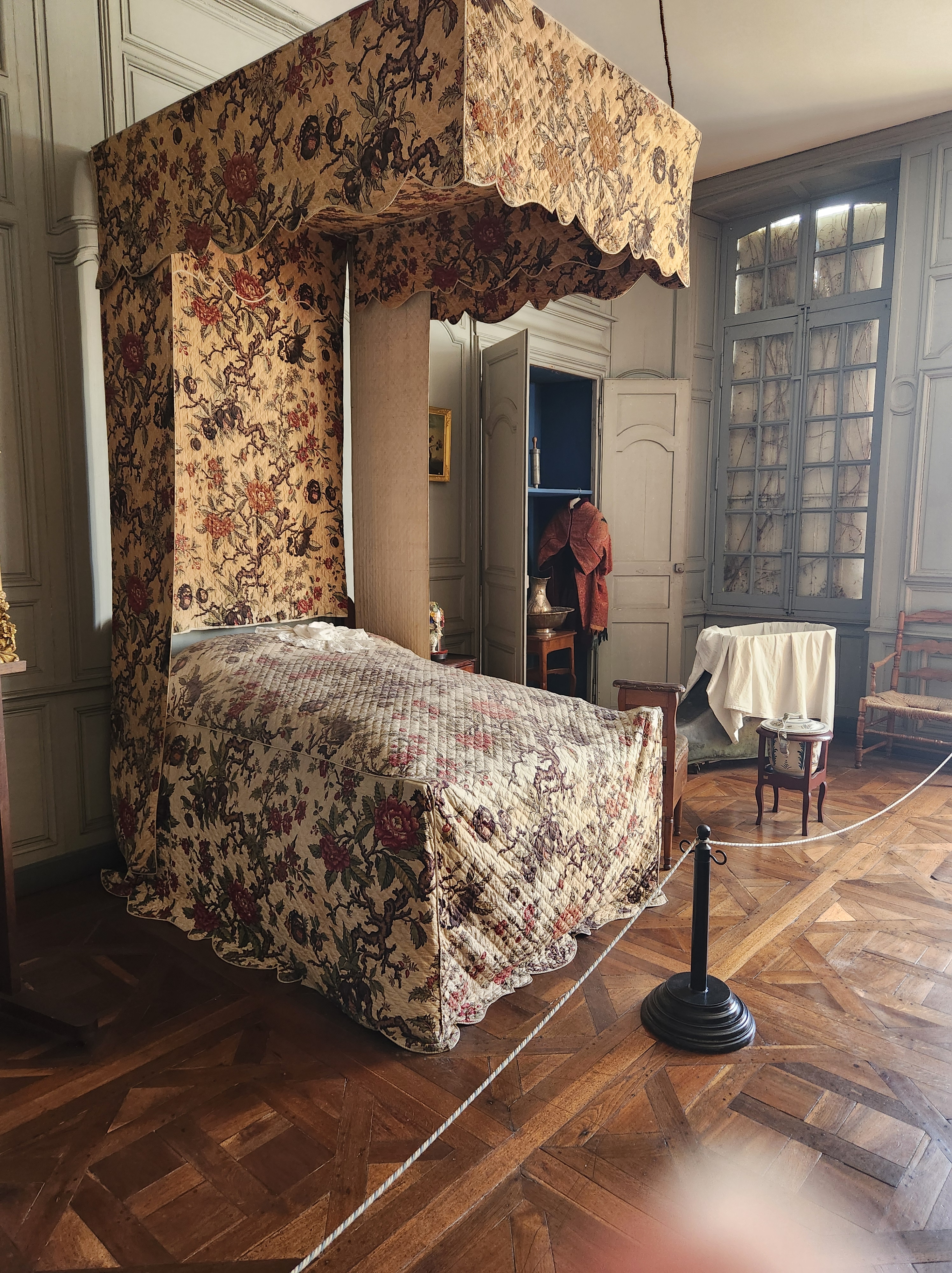
Early in spring, I took an afternoon tour at Château de Dampierre – sur -Boutonne, in the Charente Maritime.
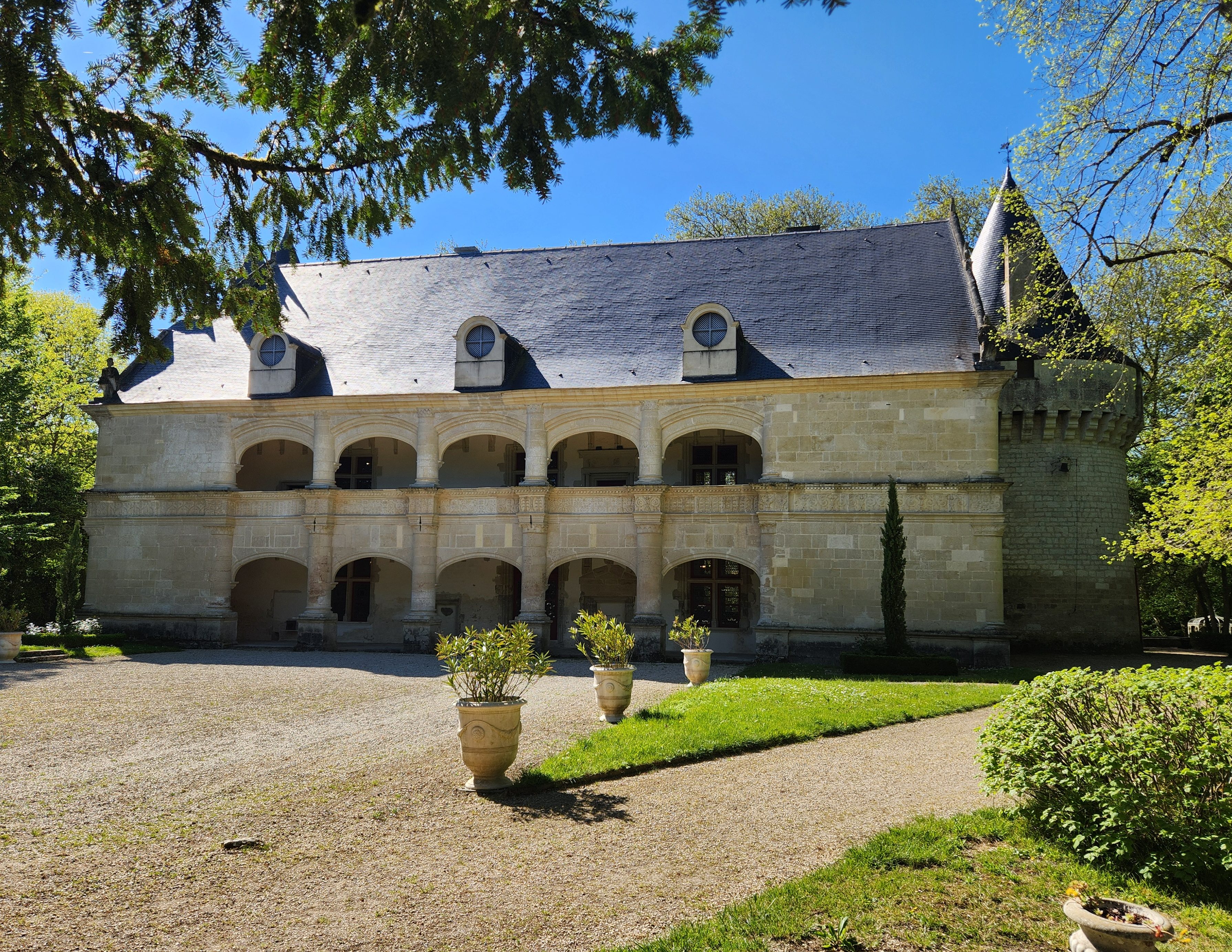
The château has a very rich and long history dating back to 995 when the village church was the château chapel. (Visit the website chateaudampierre.fr) It is an interesting read especially about all the influences with the structure of the château and how it has evolved over centuries.

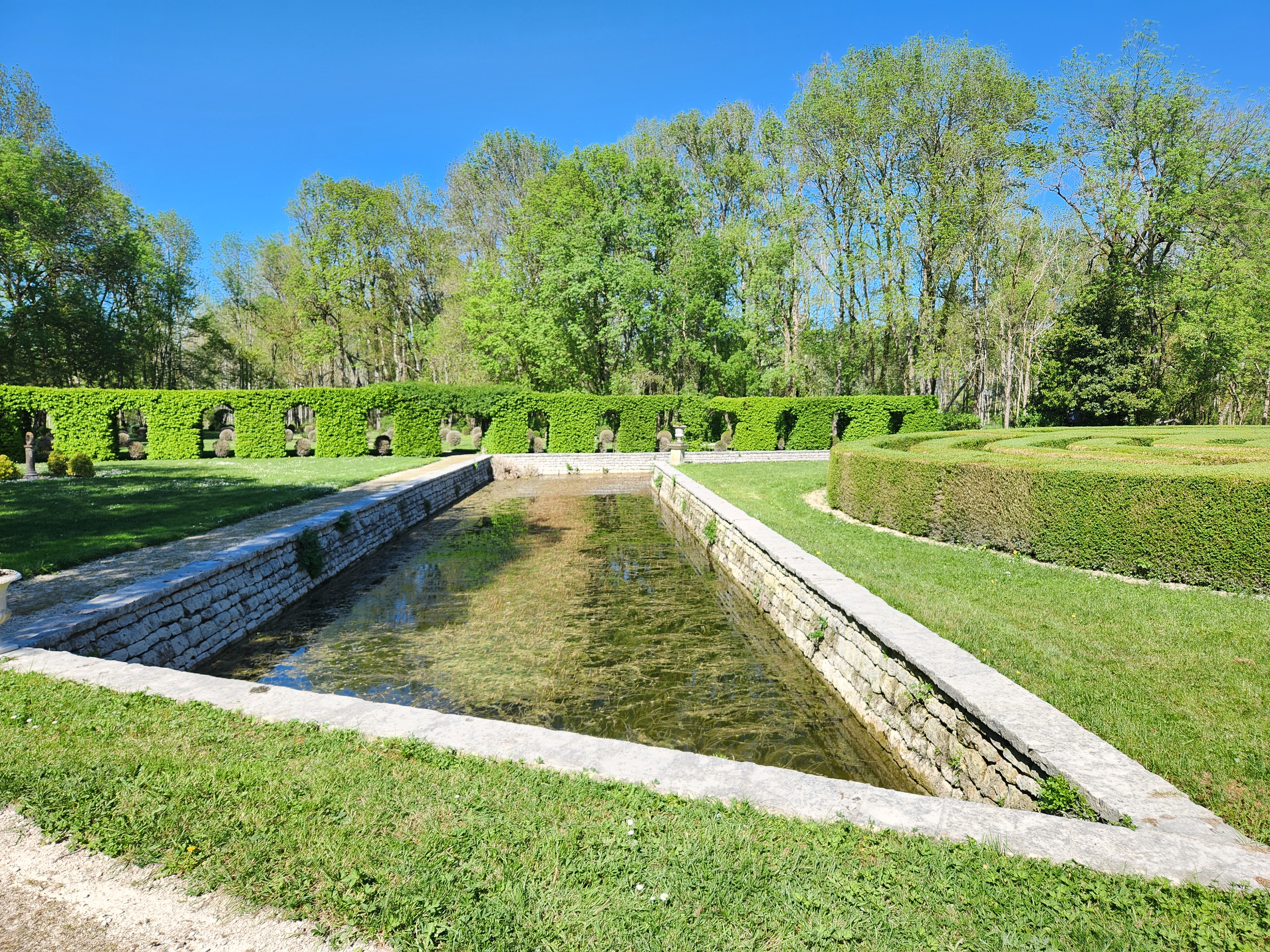
In 1495, François de Clermont returned from Italy and was so impressed with the art of the Renaissance he decided to abandon his old fortified château and build on the site of a former priory of the Knights Templar (south tower), a residence in the style of Italian palaces. This is the origin of the current château located on the two islands surrounded by the water of the Boutonne, the main tributary of the Charente.
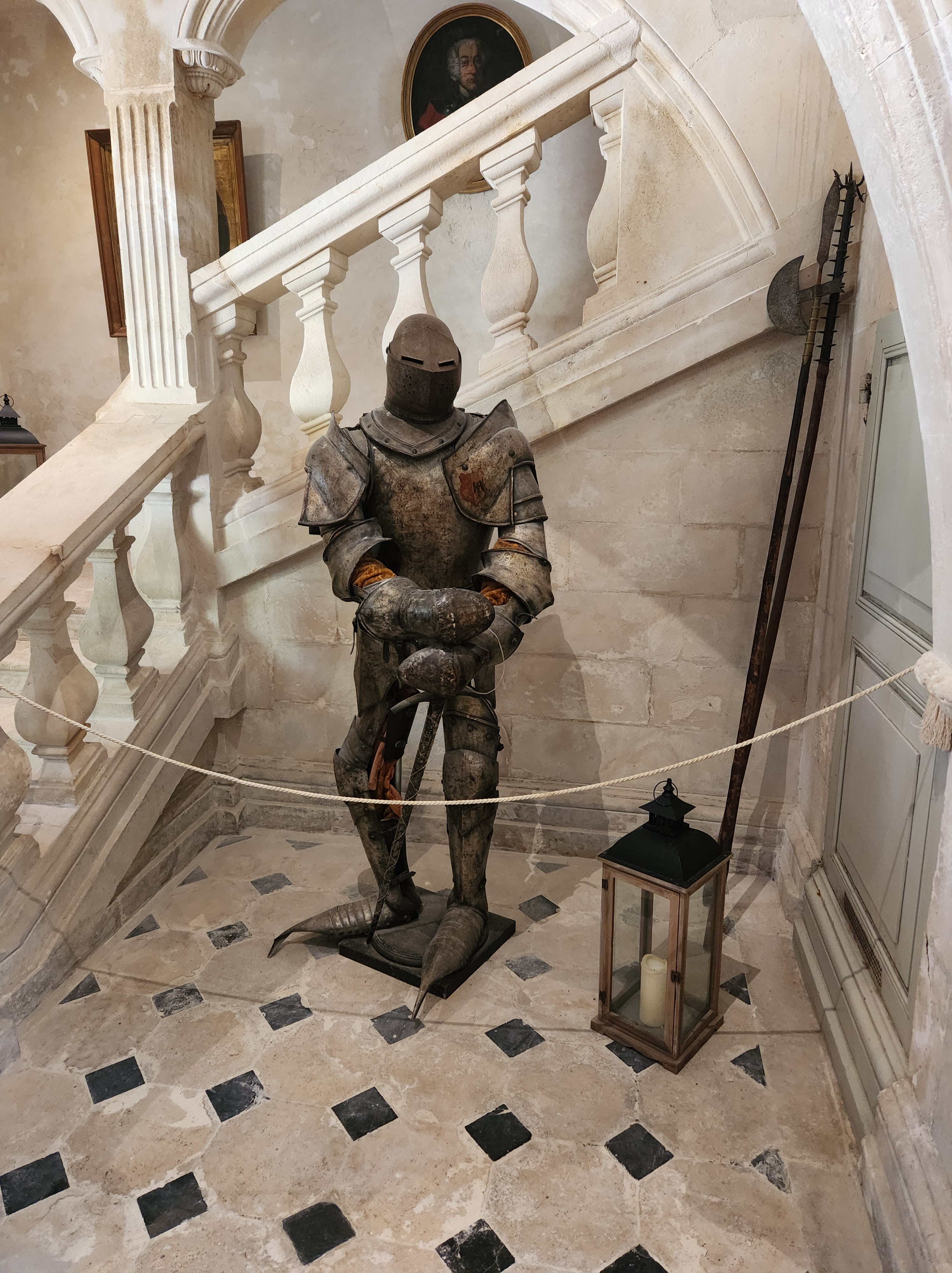
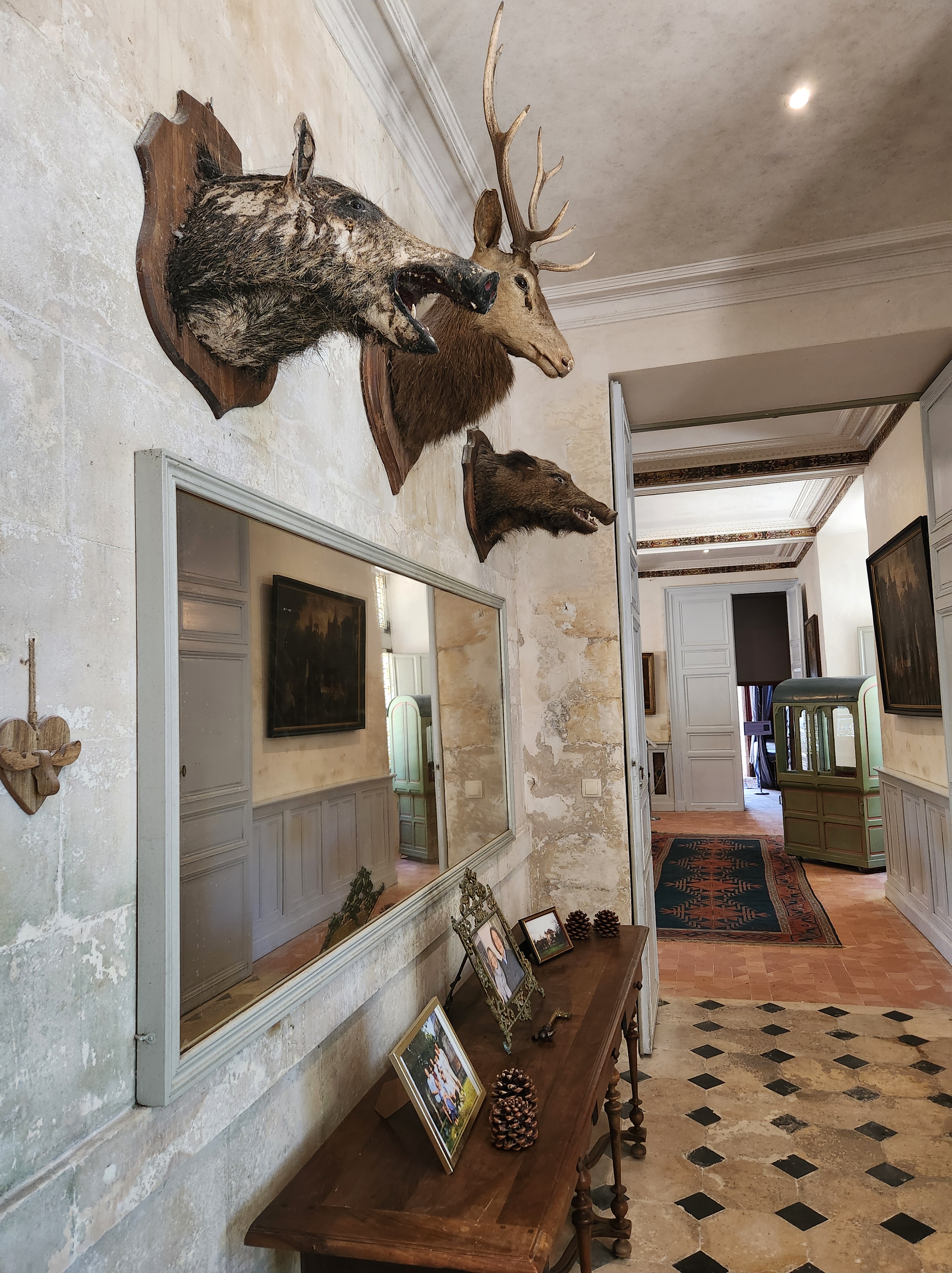
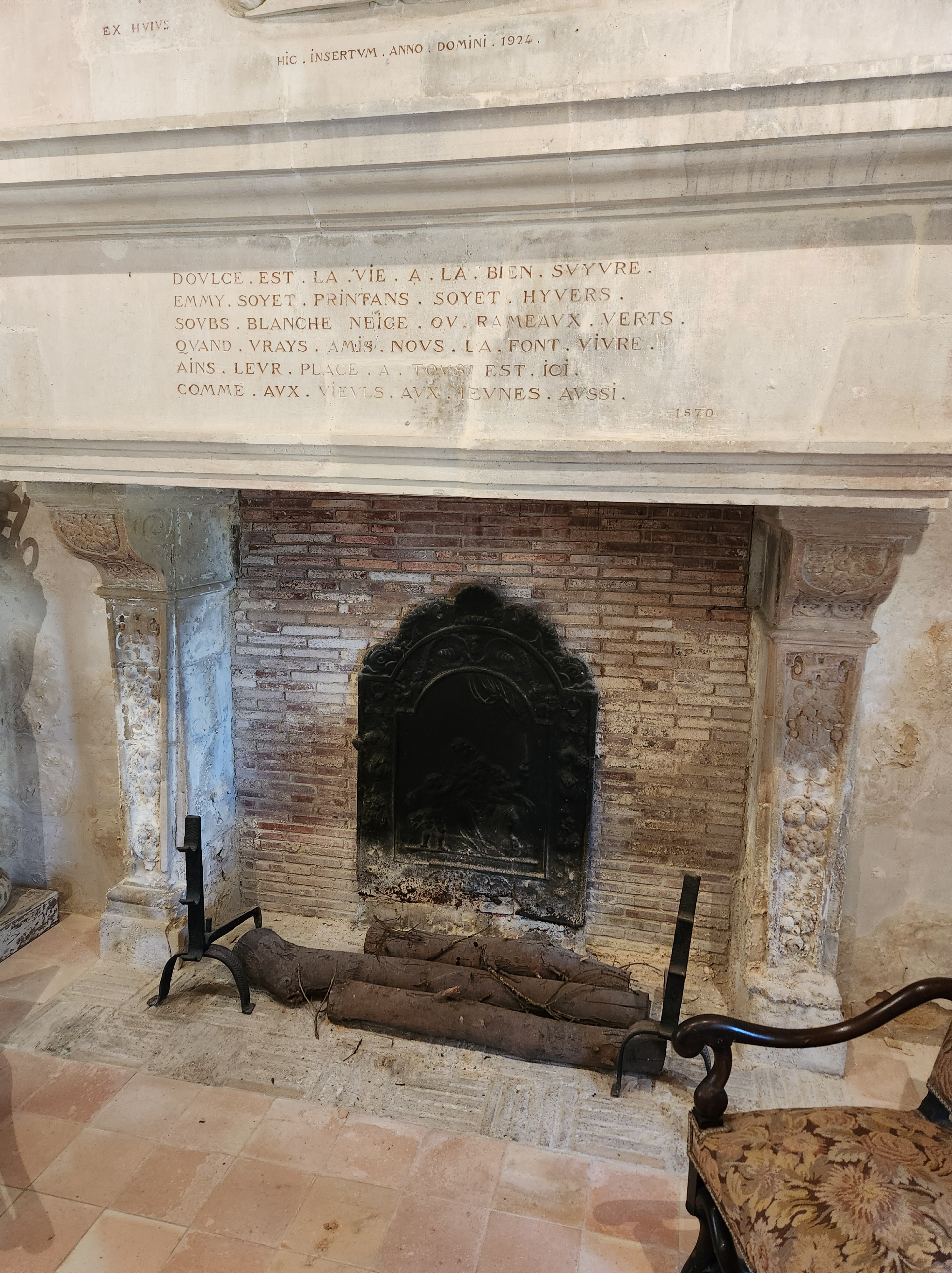
There is a Renaissance poem inscribed on the façade of the castle
Si tu viens partager notre lumiere blonde, salut!

Mais si tu veux la partager longtemps,

Ne viens qu’avec ton coeur,

N’emporte rien du monde

Et ne raconte pas ce que disent les gens.

Translated…

If you come to share our blonde light, hello!

But if you want to share it for a long time,

come only with your heart,

takes nothing of the world,

and don’t tell what people say.
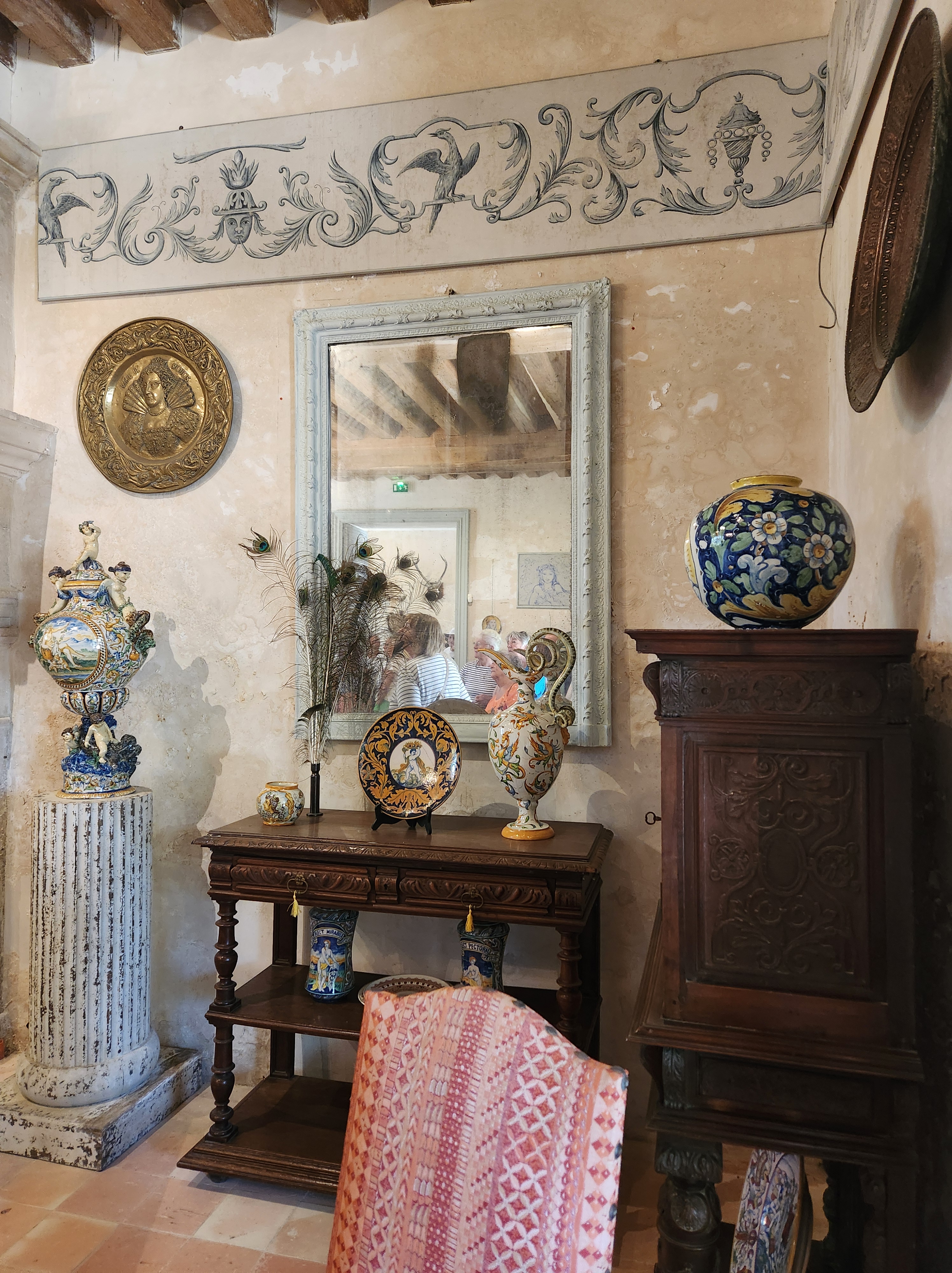
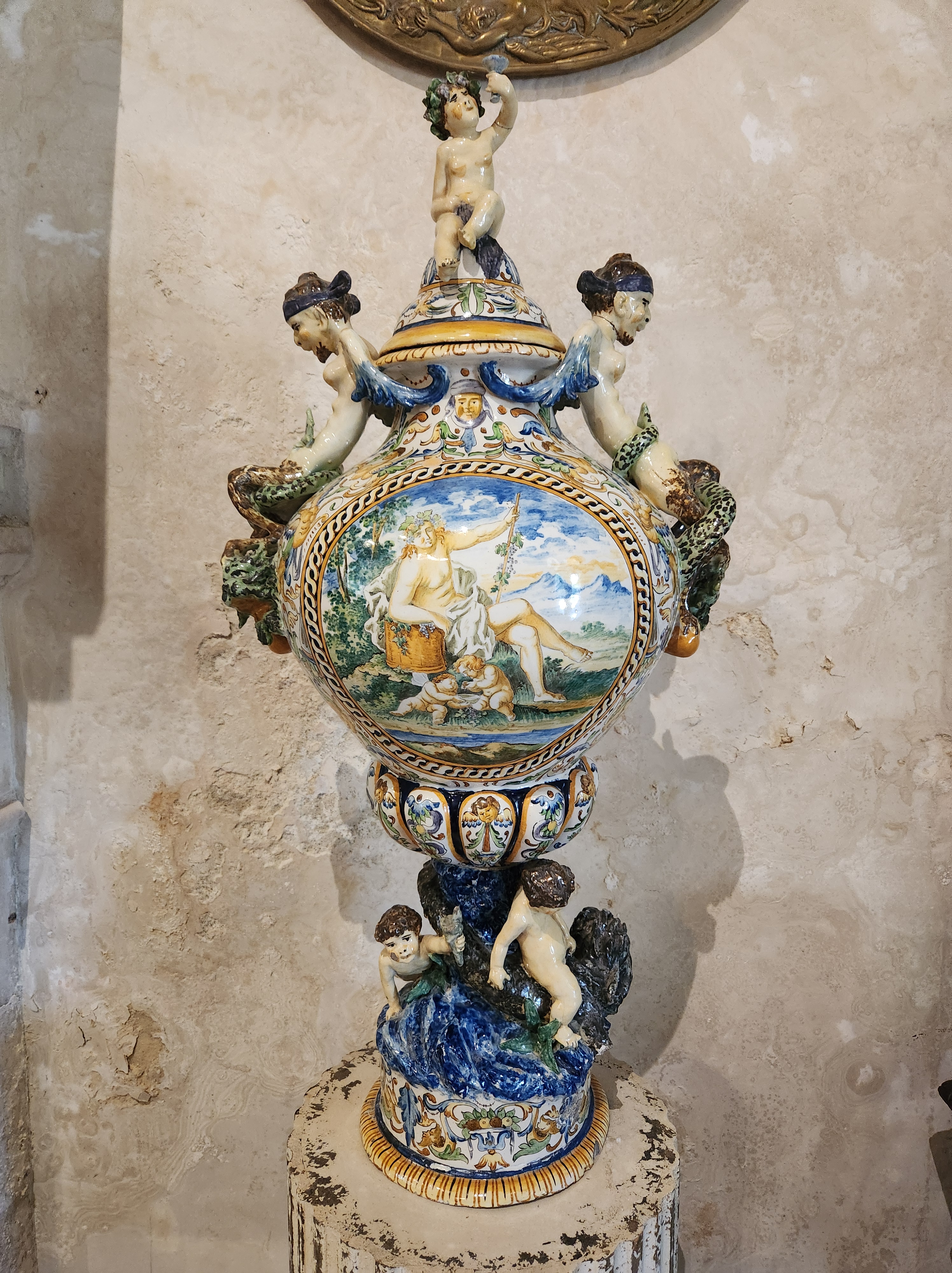
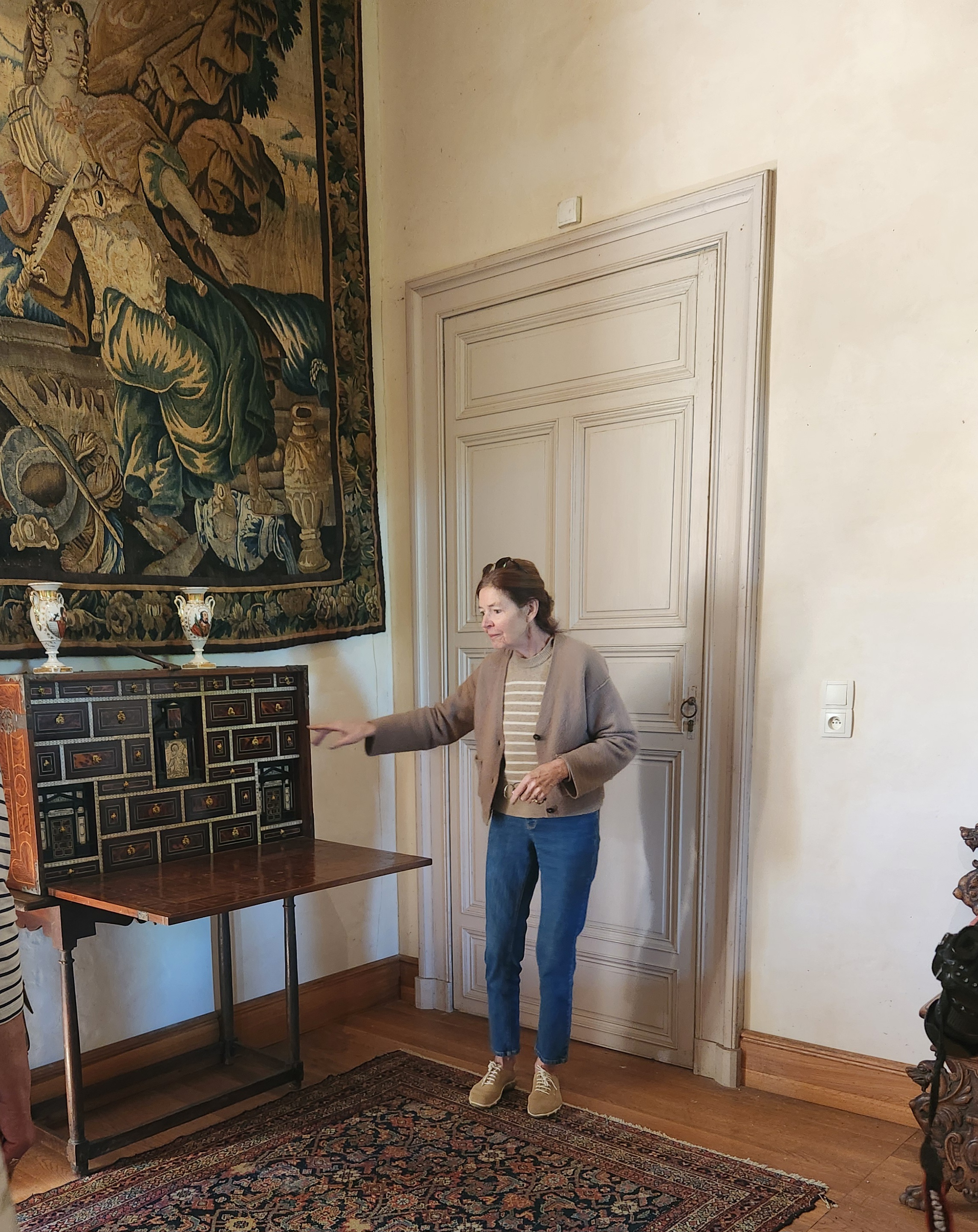
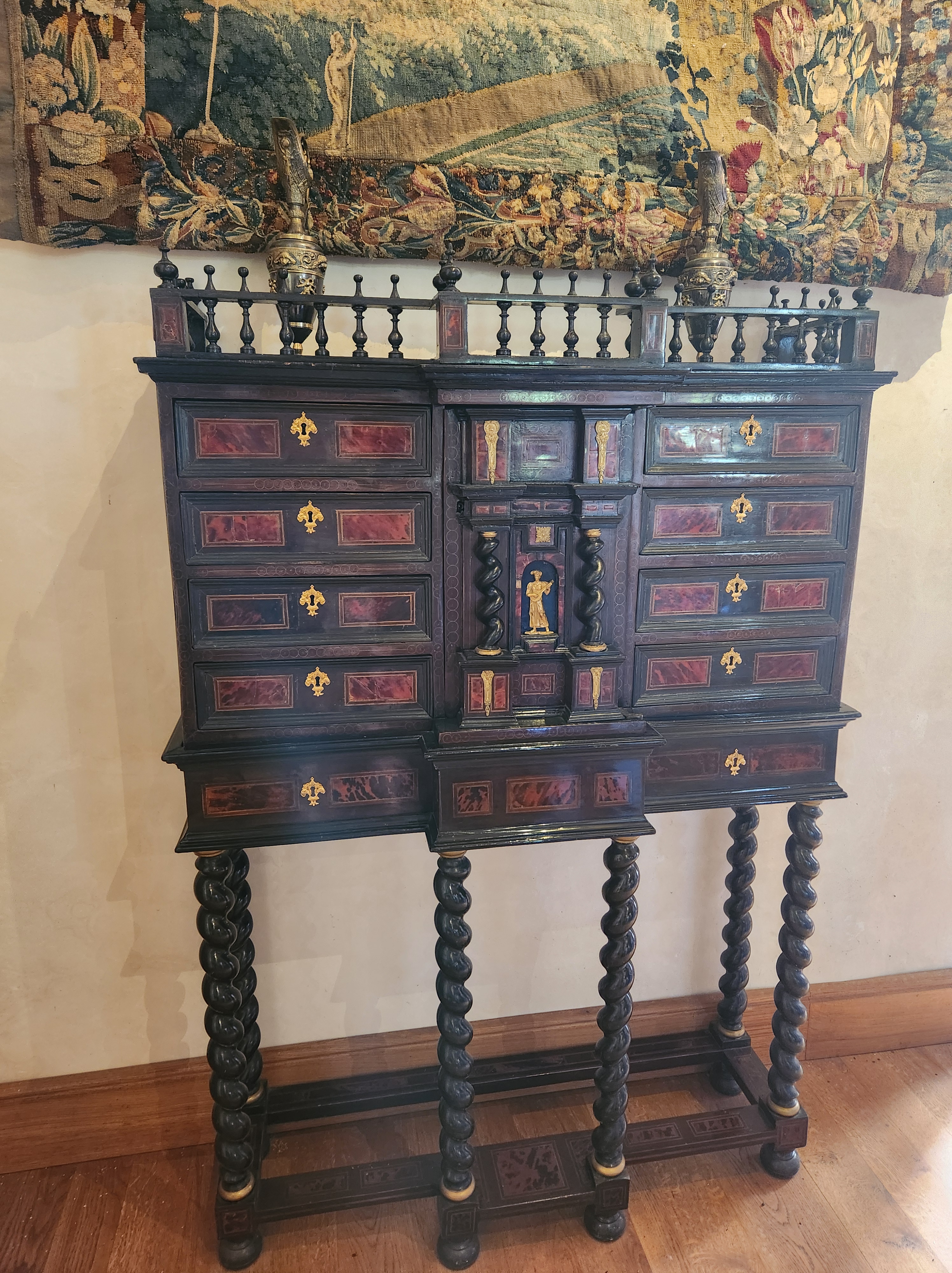
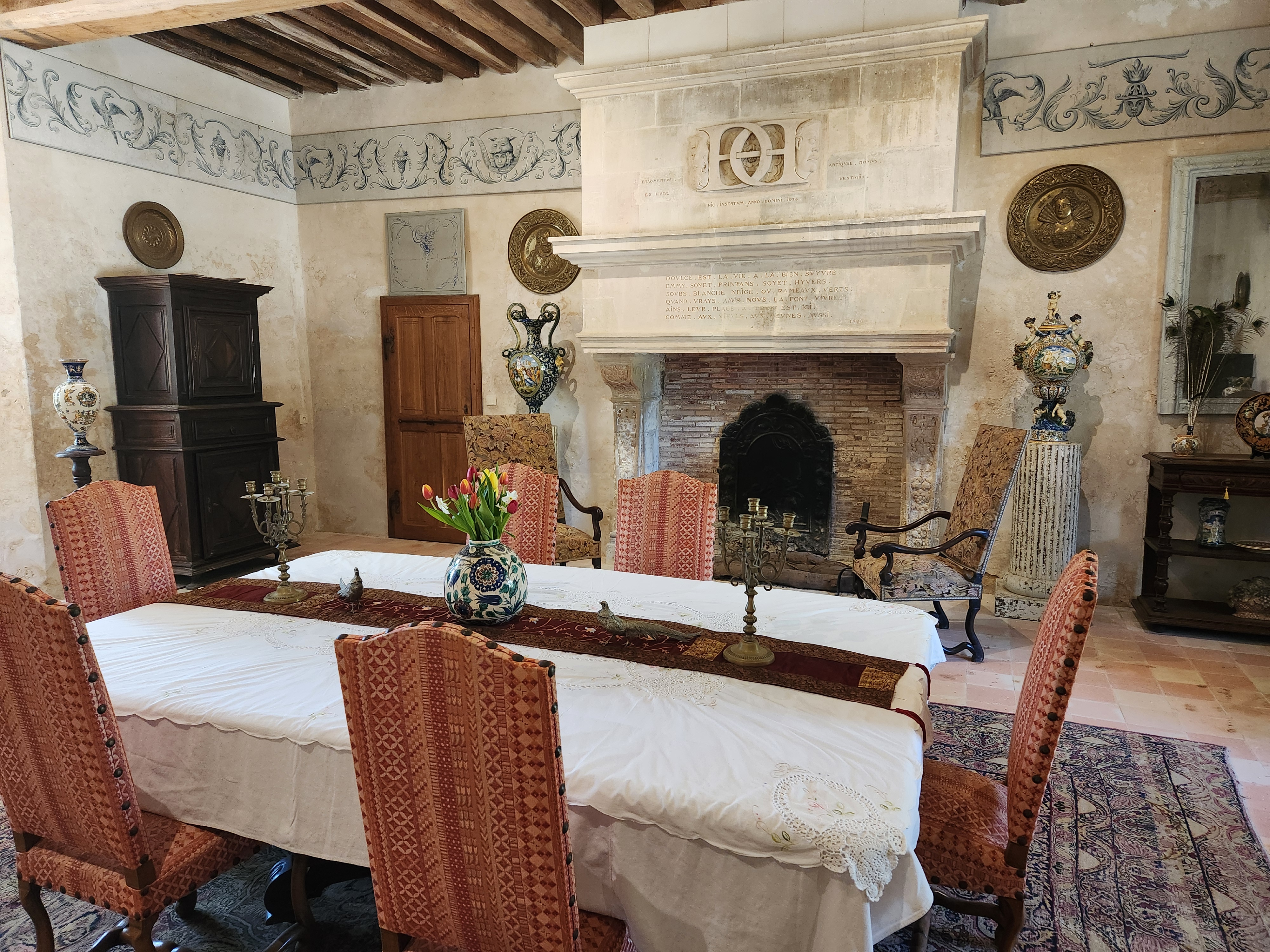
The rooms were decorated beautifully but with the age and fragility of some of the pieces of furniture, it was requested no photos/flash lights.

Further down in the generations of owners, Jeanne de Vivonne, who married Claude de Clermont, had the double gallery (1545-1550) added with its renowned ribbed vault of sunken panels with emblematic and alchemical emblems
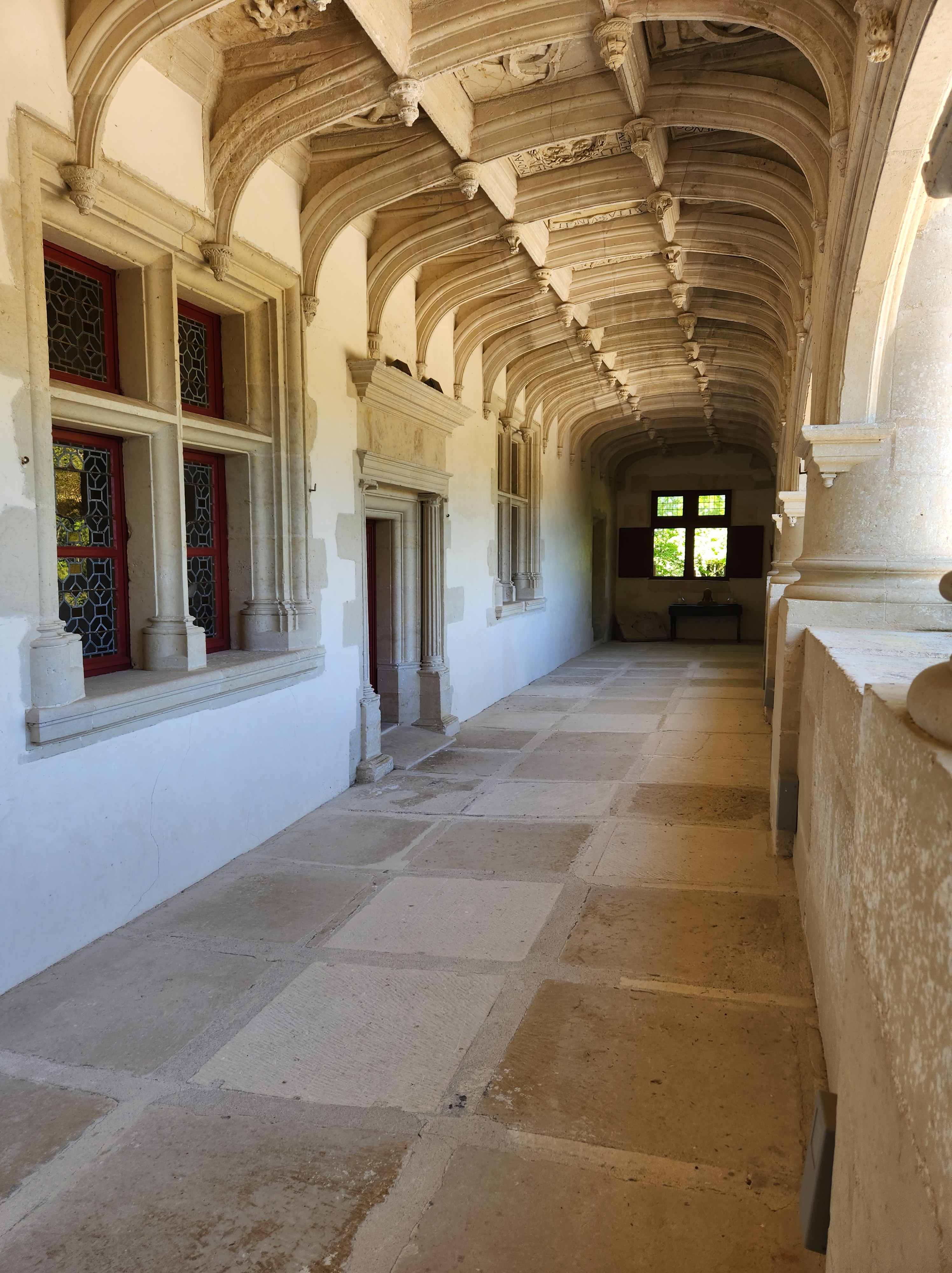
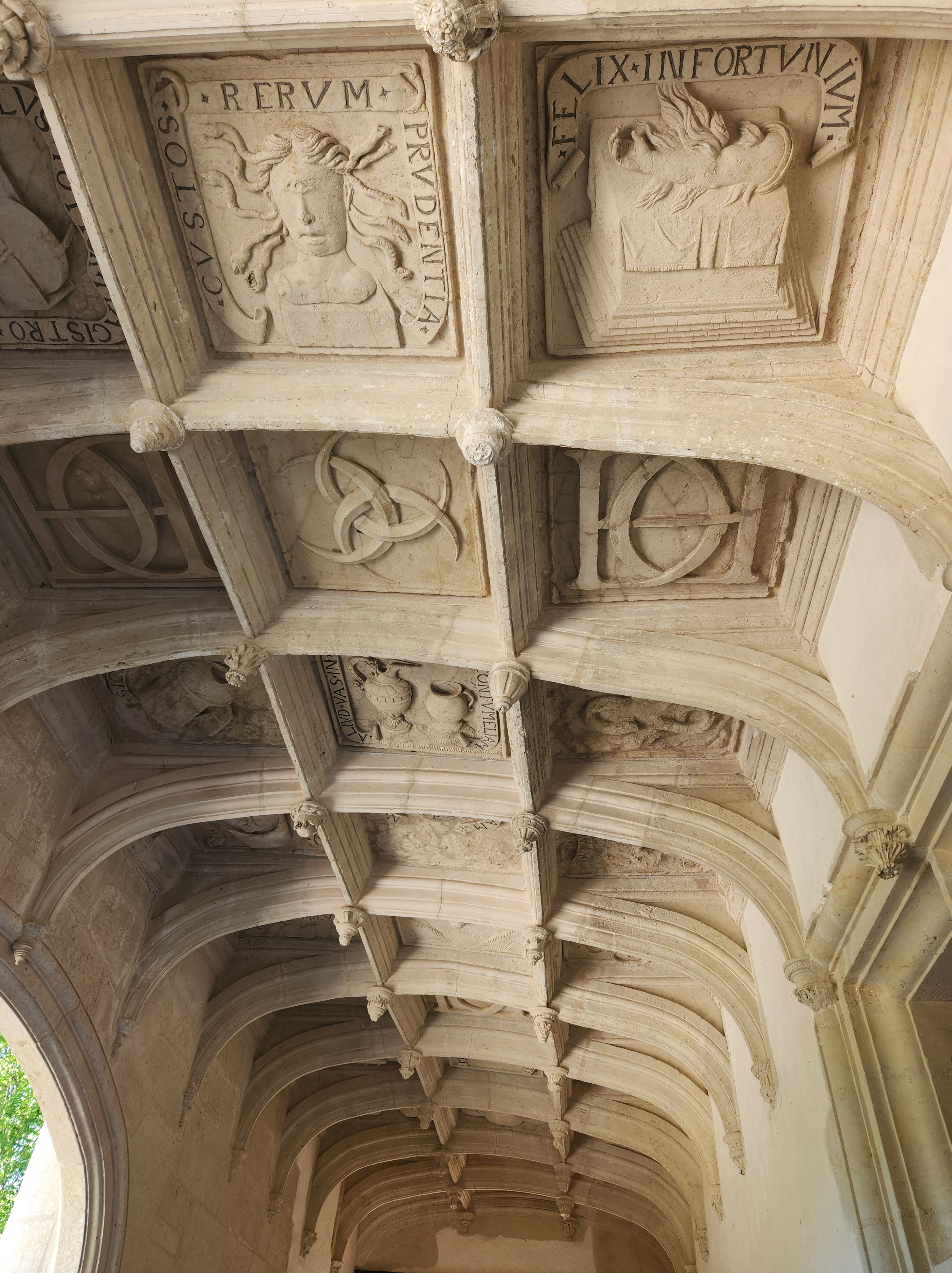
The current owners are Danièle-Anne Grunhertz and Alain Pfister, since 2017. They continue the work started by the Hédelins plus huge restoration work following a devastating fire in 2002.
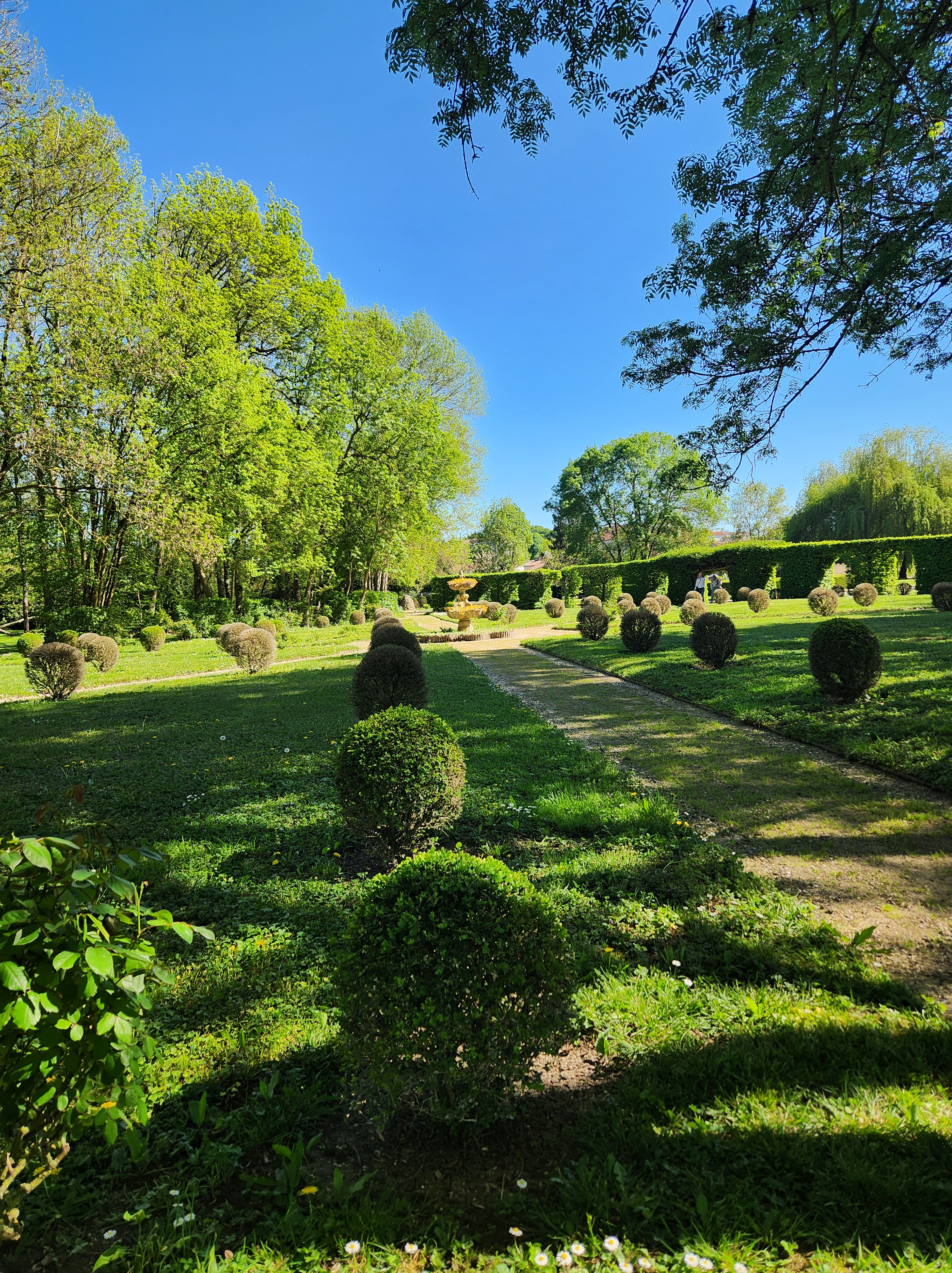
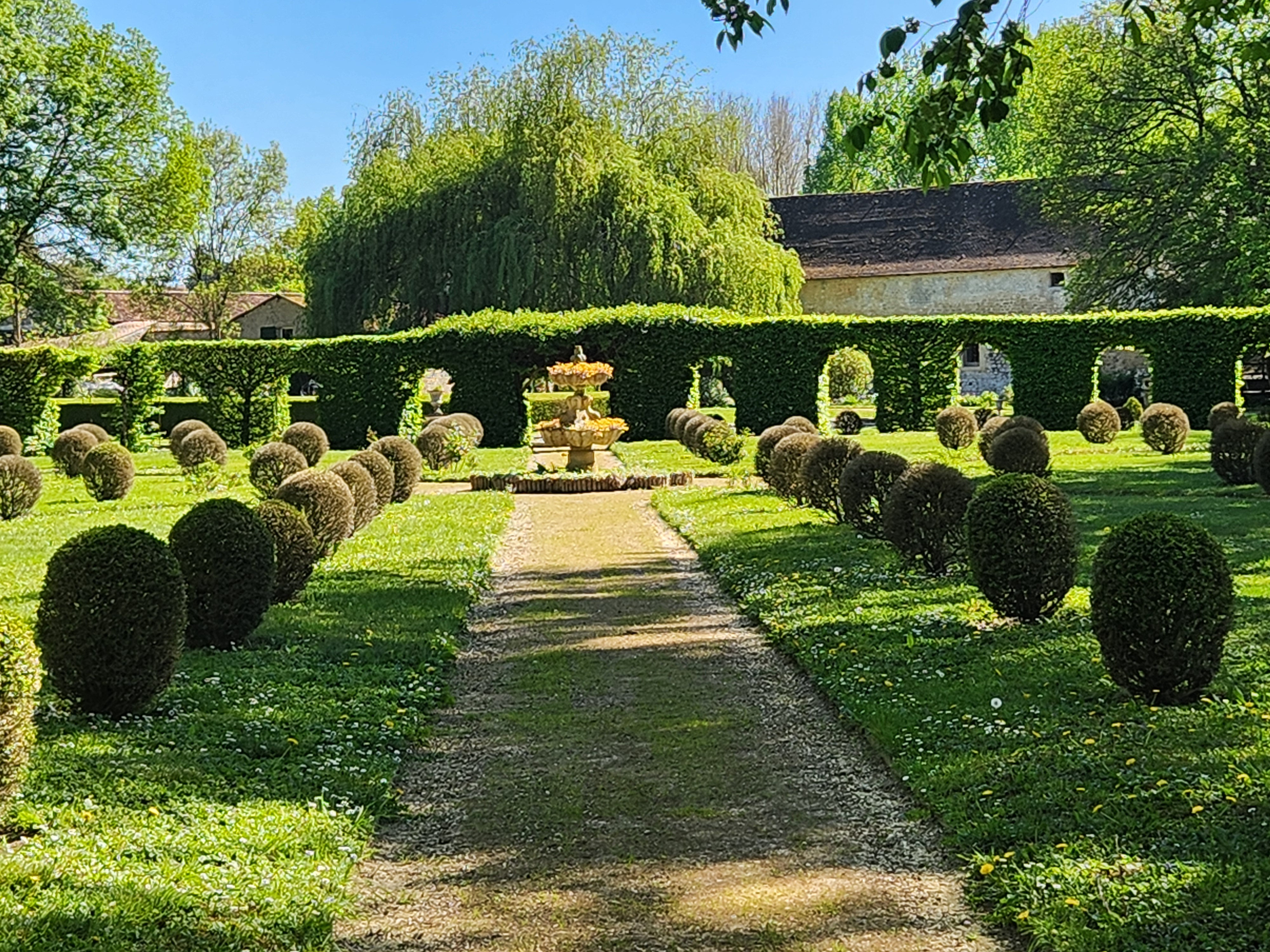
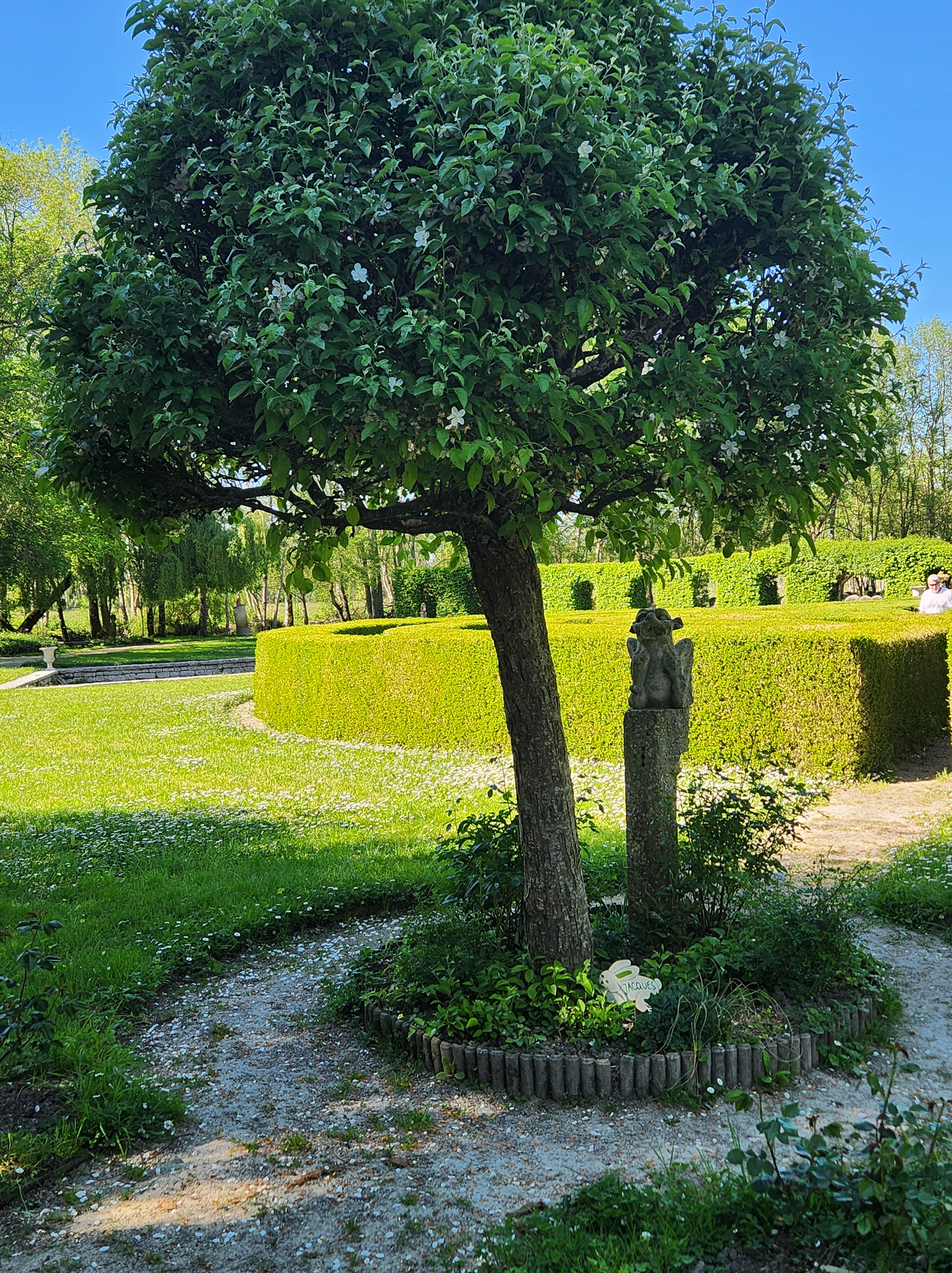
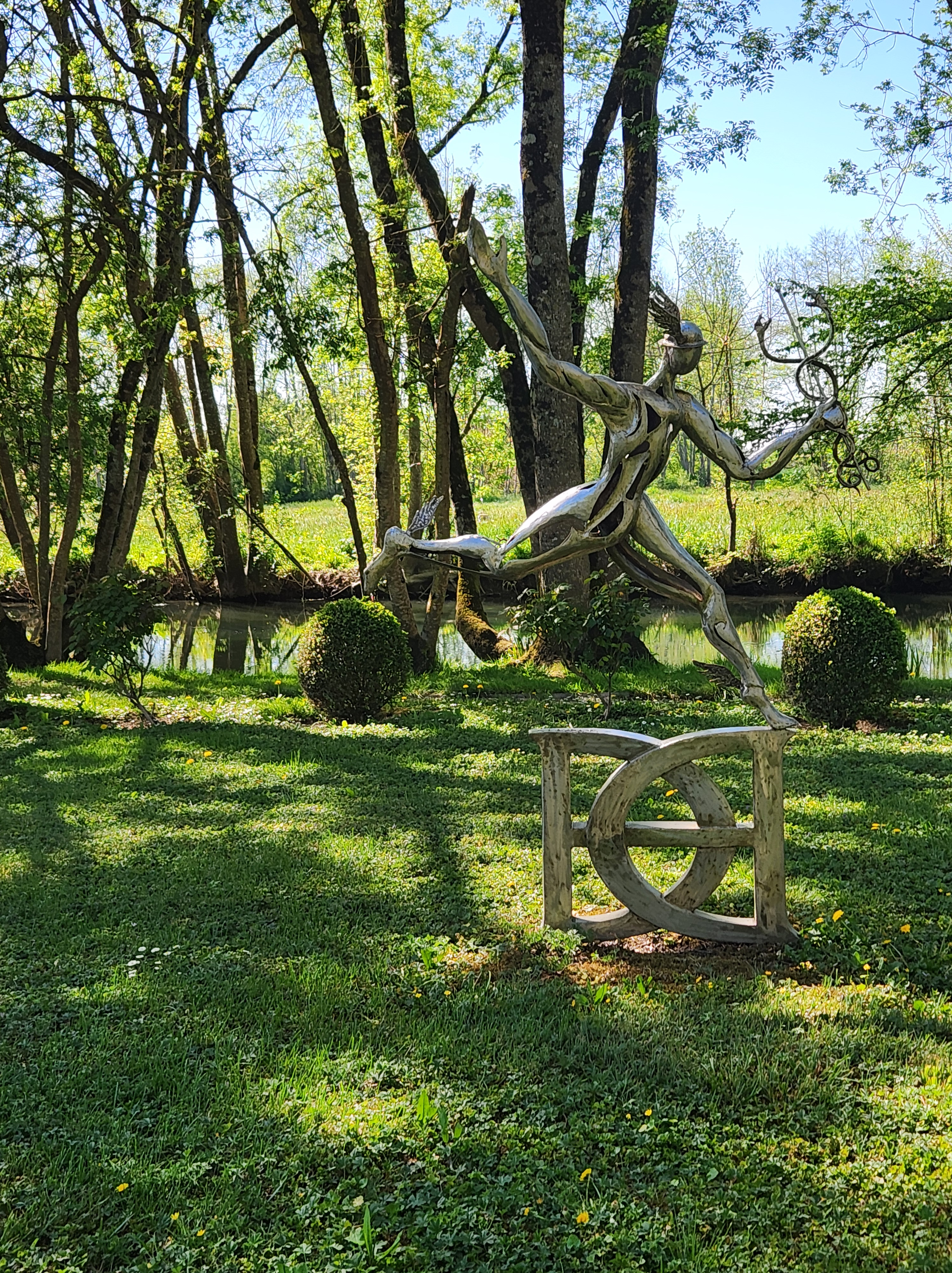
The Hédelins also created the labyrinth and the French-style flowerbeds, echoing the alchemical symbolism of the gallery. 
Where to next?

Monsieur La Quintinie celebrations

Every year, on the first weekend of October, the town of Chabanais celebrates La Quintinie.

Why? Well, here’s the history bit in brief!

Jean-Baptisite de La Quintinie was born in 1626 here in Chabanais, Charente. Initially, he went to Paris as a lawyer at the Parliament, as he was known for his exceptional writing skills. The president of the general accounting office requested that La Quintinie teach his son whilst on a trip to Italy. During the trip La Quintinie was impressed with the Italian gardens and became fascinated with horticulture. On their return from Italy, La Quintinie decided to give up his legal career and started studying and practicing in the gardens at an hotel. He visited England twice and King James II offered him a job managing his gardens, but La Quintinie declined preferring to be in France.

La Quintinie’s excellent reputation as a soil expert and gardener saw him work for many dignitaries. Then in 1661, Louis XIV gave him a job in the vegetable garden at Versailles. In 1670 the King created the role of ‘director of the royal fruit and vegetable gardens’ for La Quintinie who went on to design the ‘potager du roi’, the King’s vegetable garden between 1678 and 1683. This was a nine-hectare area. The objective being to provide fresh produce for the royal court and also becoming a horticultural experimental garden to cultivate out of season fruits and vegetables. When La Quintinie died in 1688 at Versailles, Louis XIV said to his wife ‘madame, we have suffered a great loss that we can never repair’.

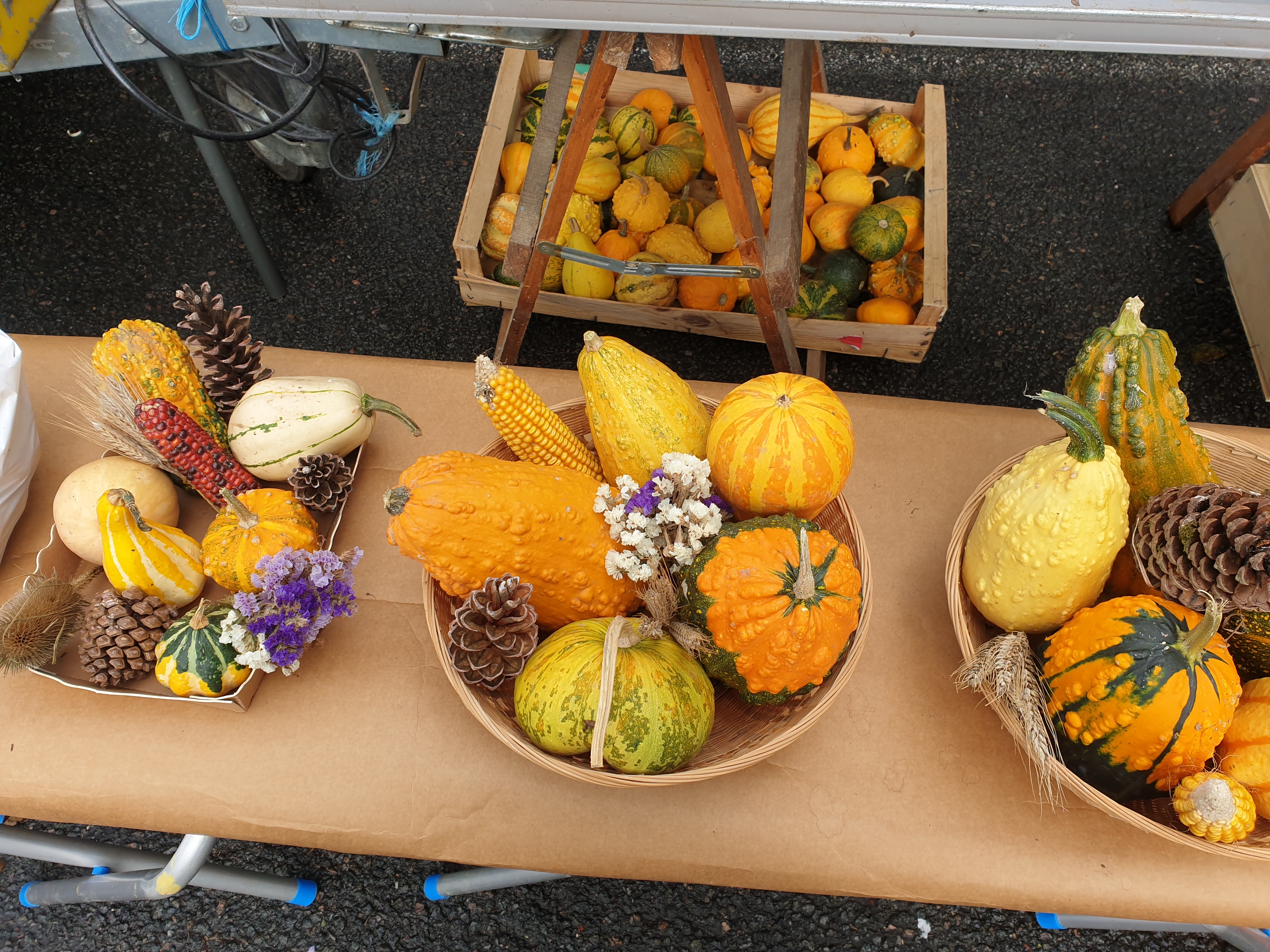
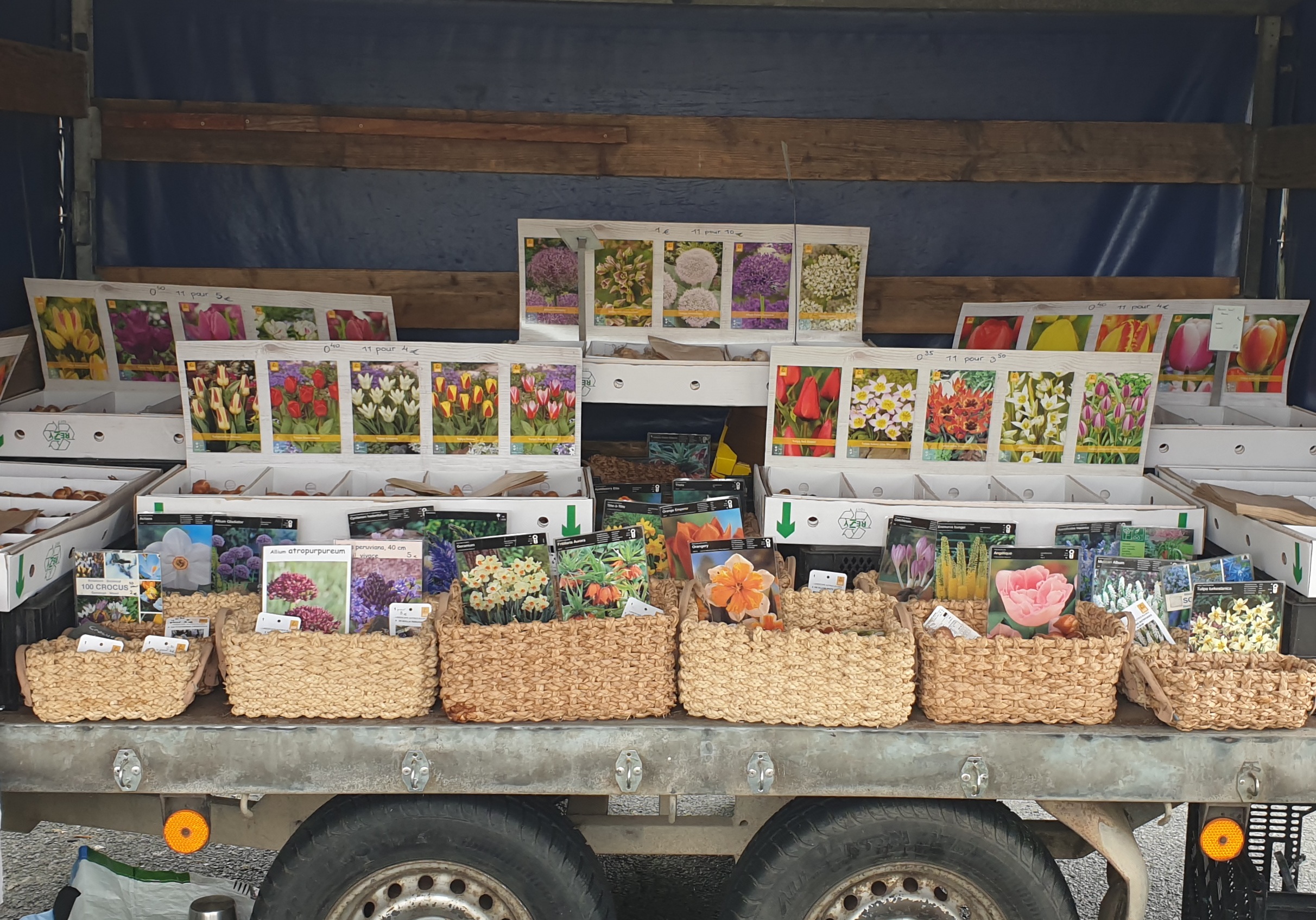
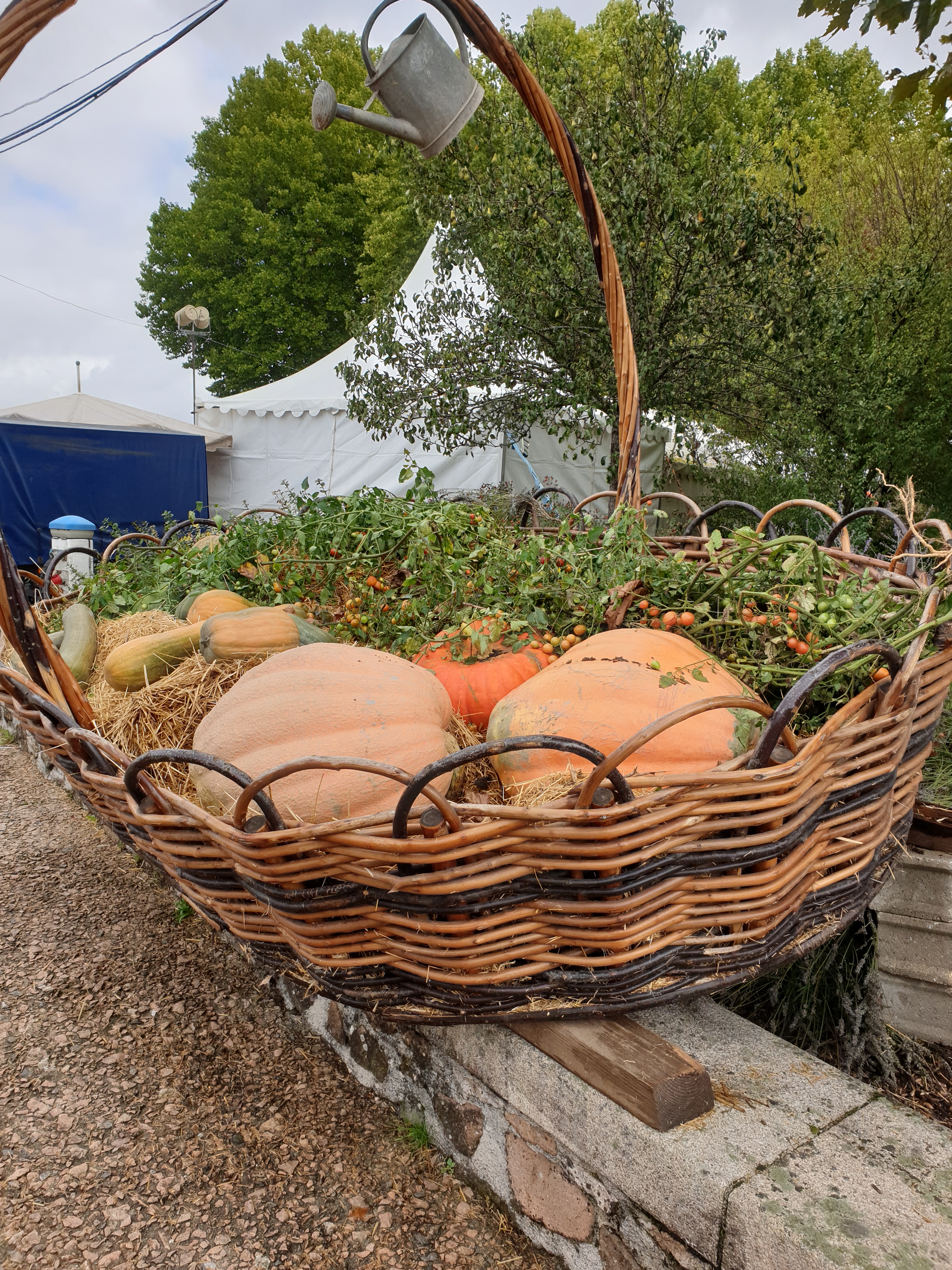
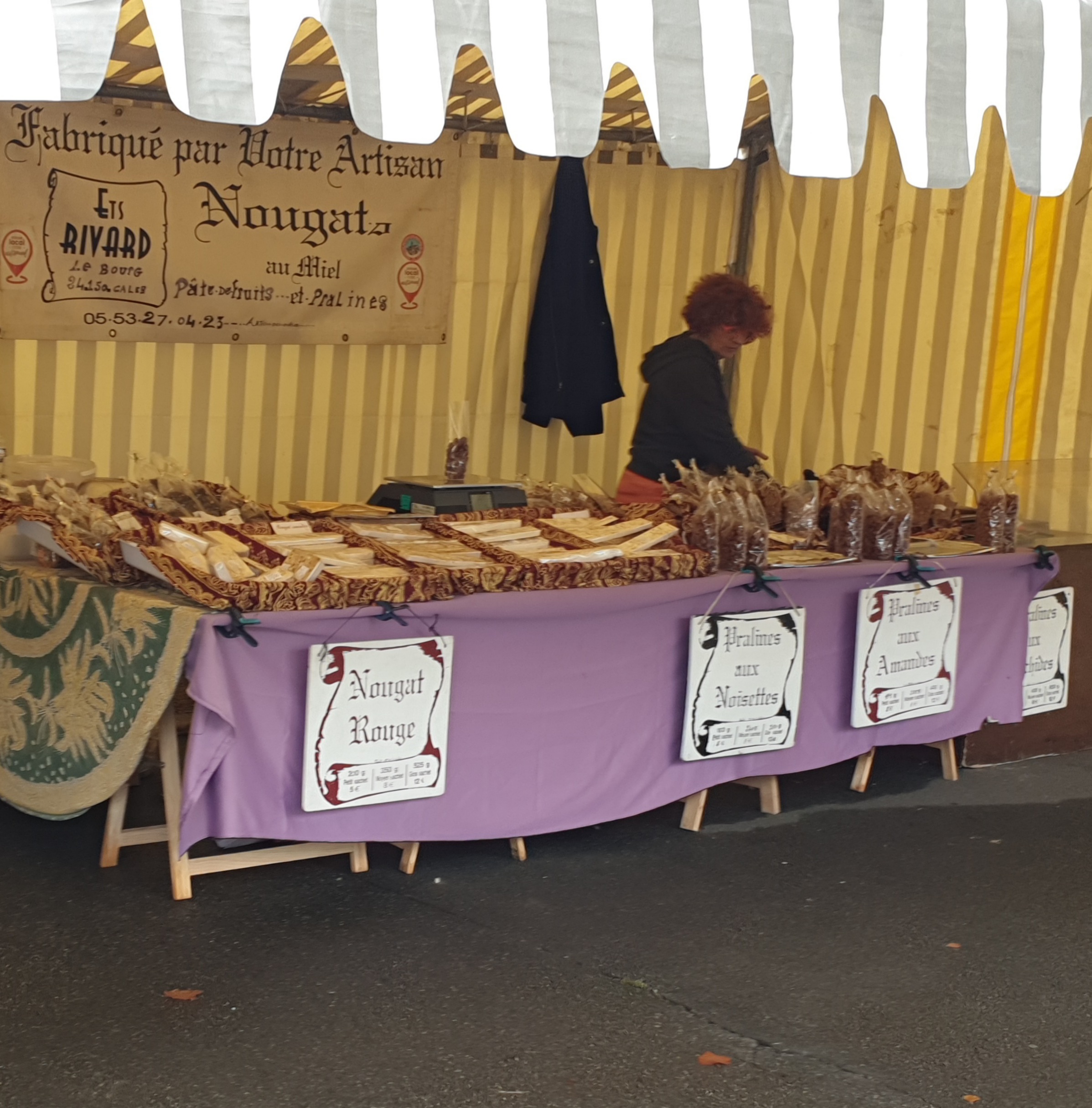
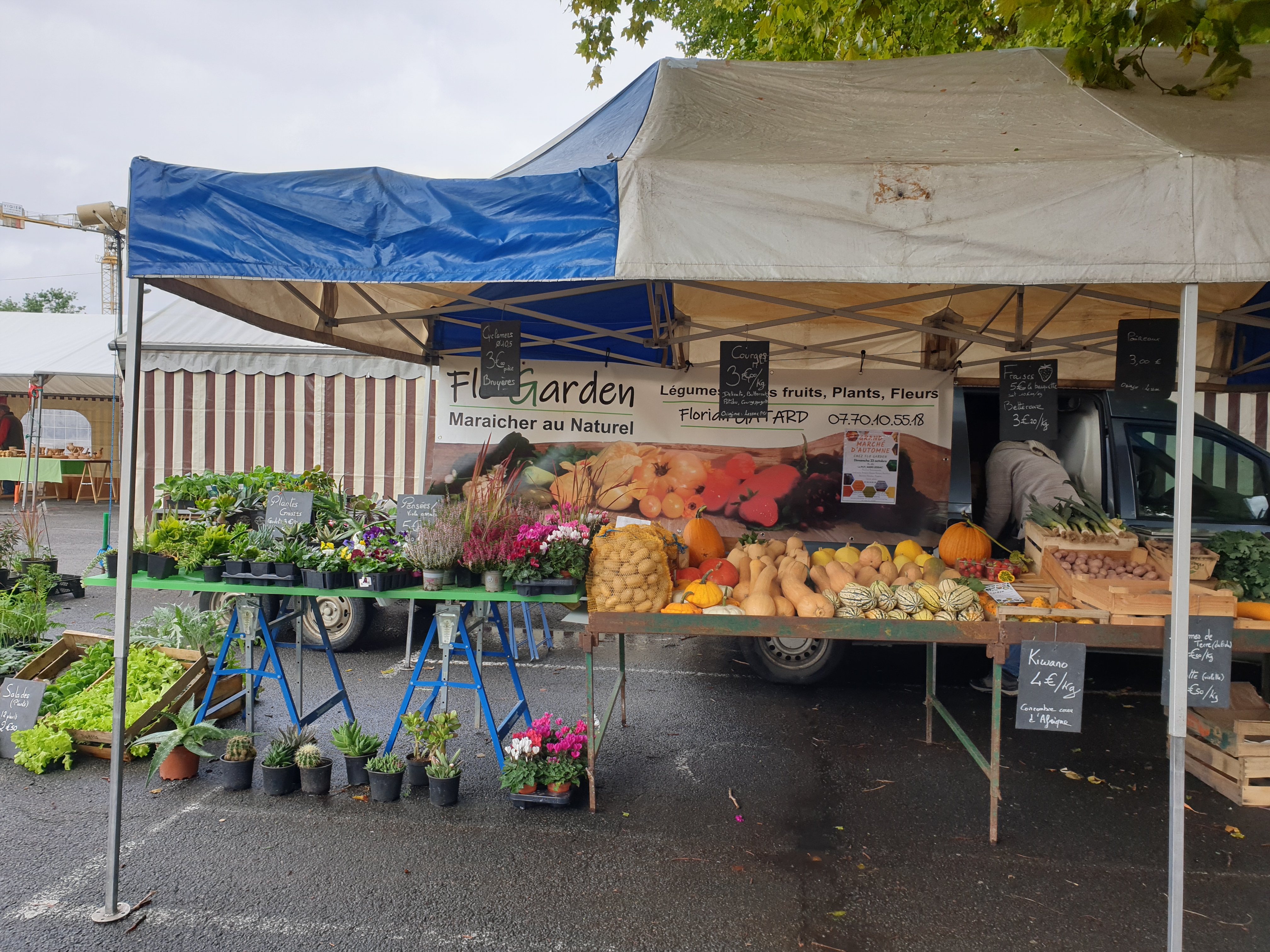
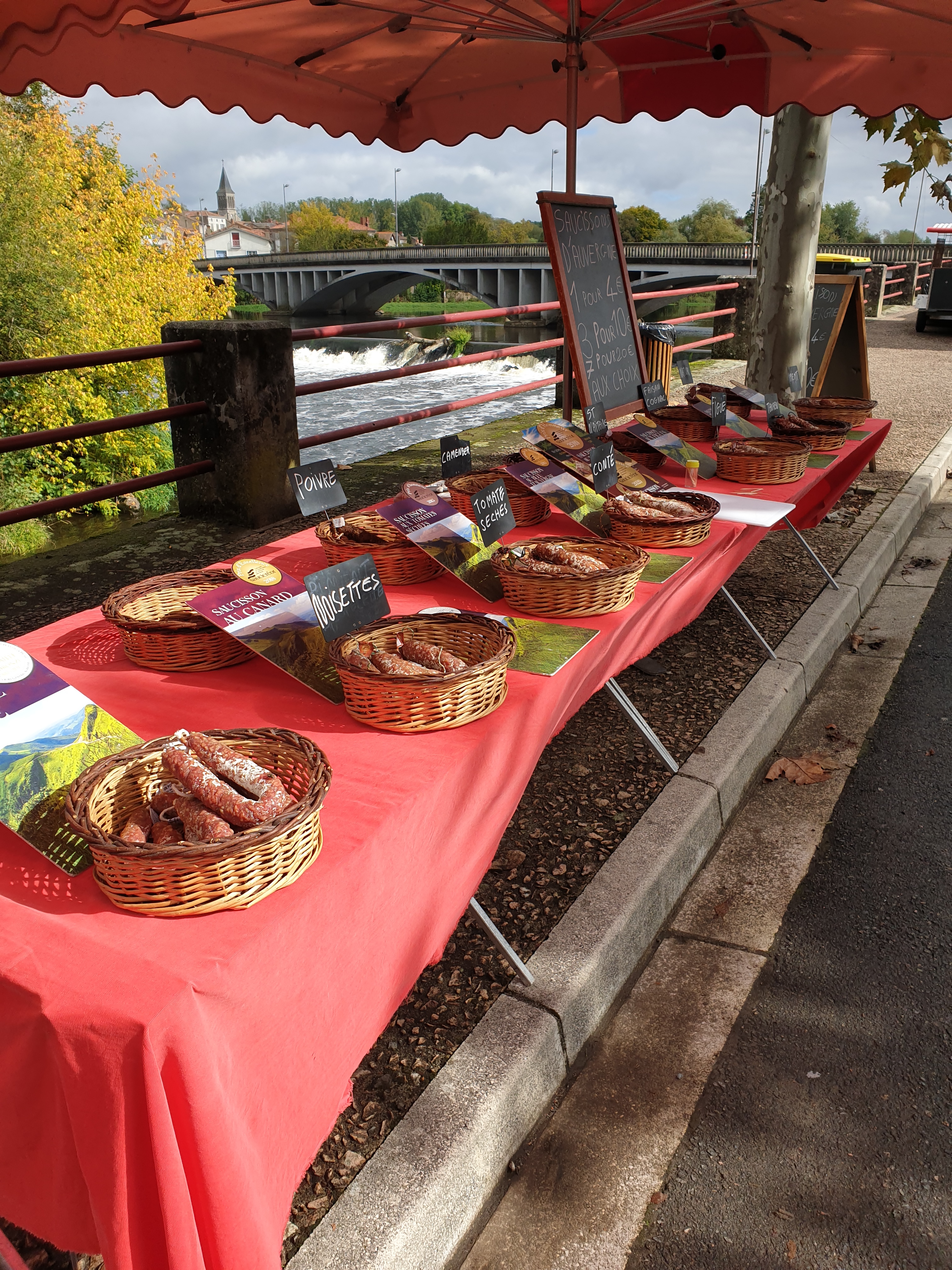
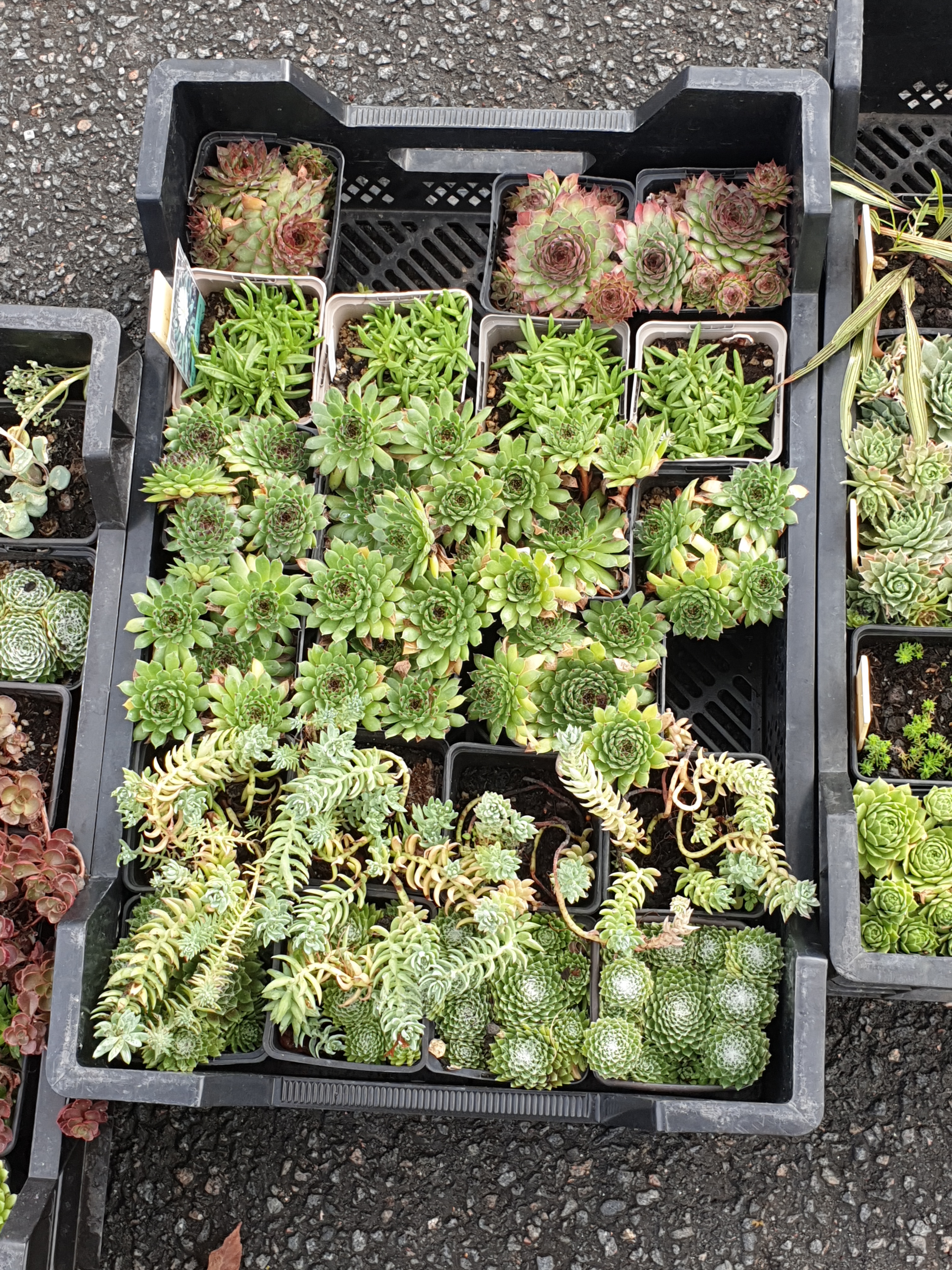
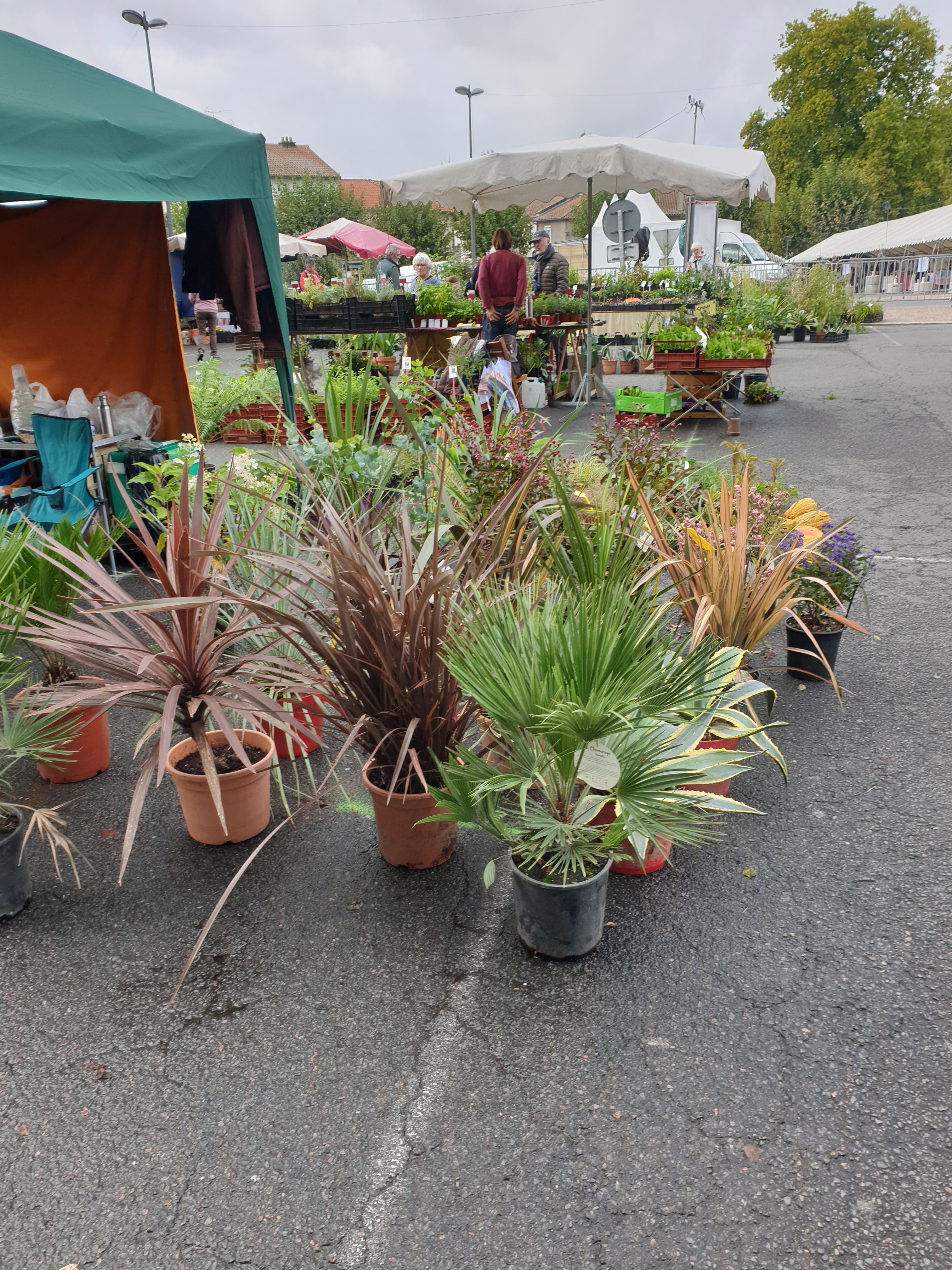
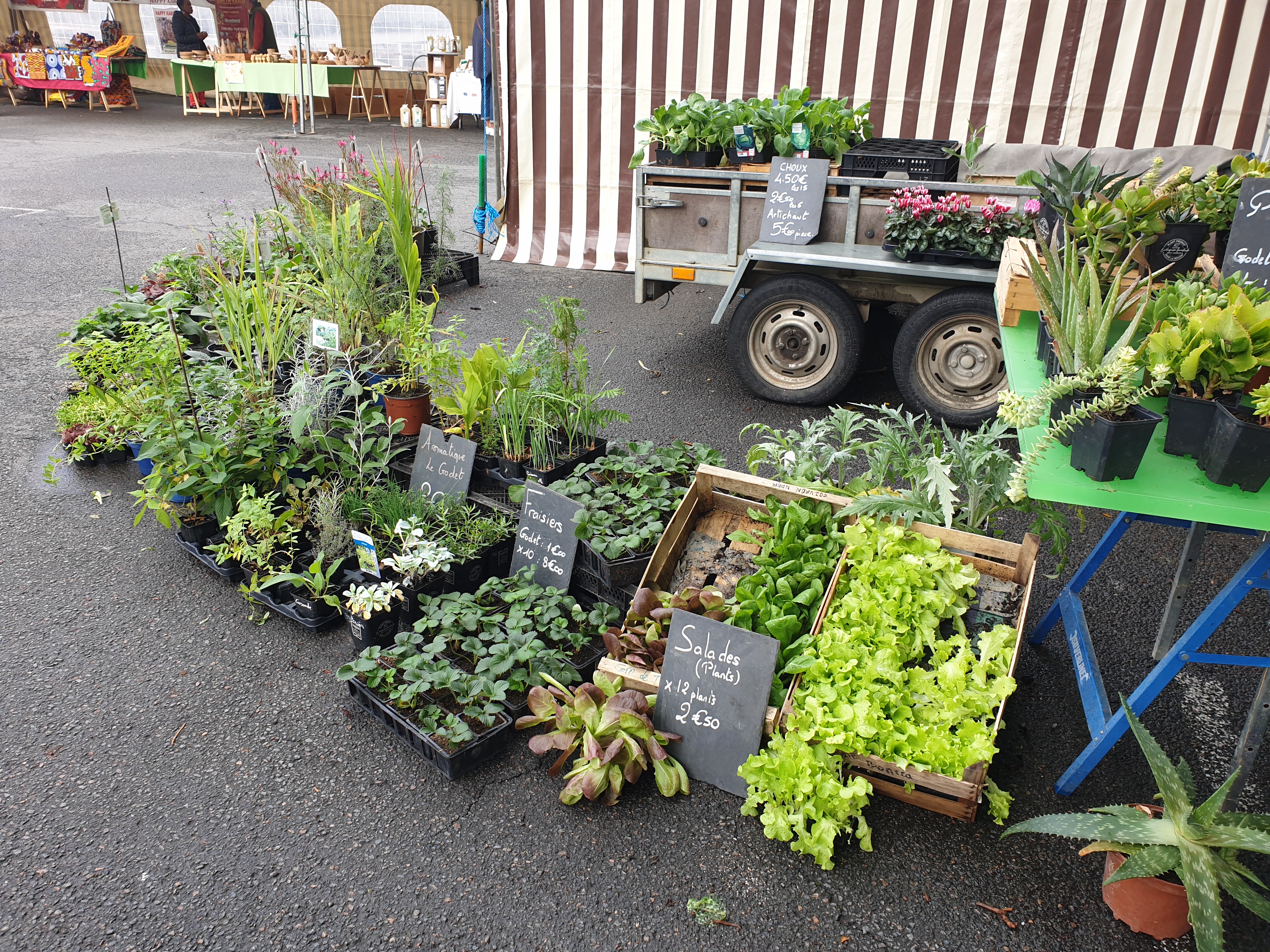
So here in Chabanais they are very proud of this history. Many exhibitors participate selling their local produce of fruits, vegetables plants and flowers over the weekend, plus their arts and crafts, wine, cheese, honey, nougat, fresh bread and freshly prepared crepes. Indoors, there is a selection of handmade jewellery, soft toys and more.

The theme for the celebrations this year is ‘l’eau au jardin’ and unfortunately Saturday saw continual heavy rain all day, so quite apt! However, Sunday was better and the market nice and busy.

The event was organised in association with the Friends of Quintinie who also ran gardening workshops on the two days.

I just love the charm of these local events. I was so tempted to buy a plant or two, but we are still about seven weeks away to moving into our house in Loubillé.

Angoulême Circuit des Remparts

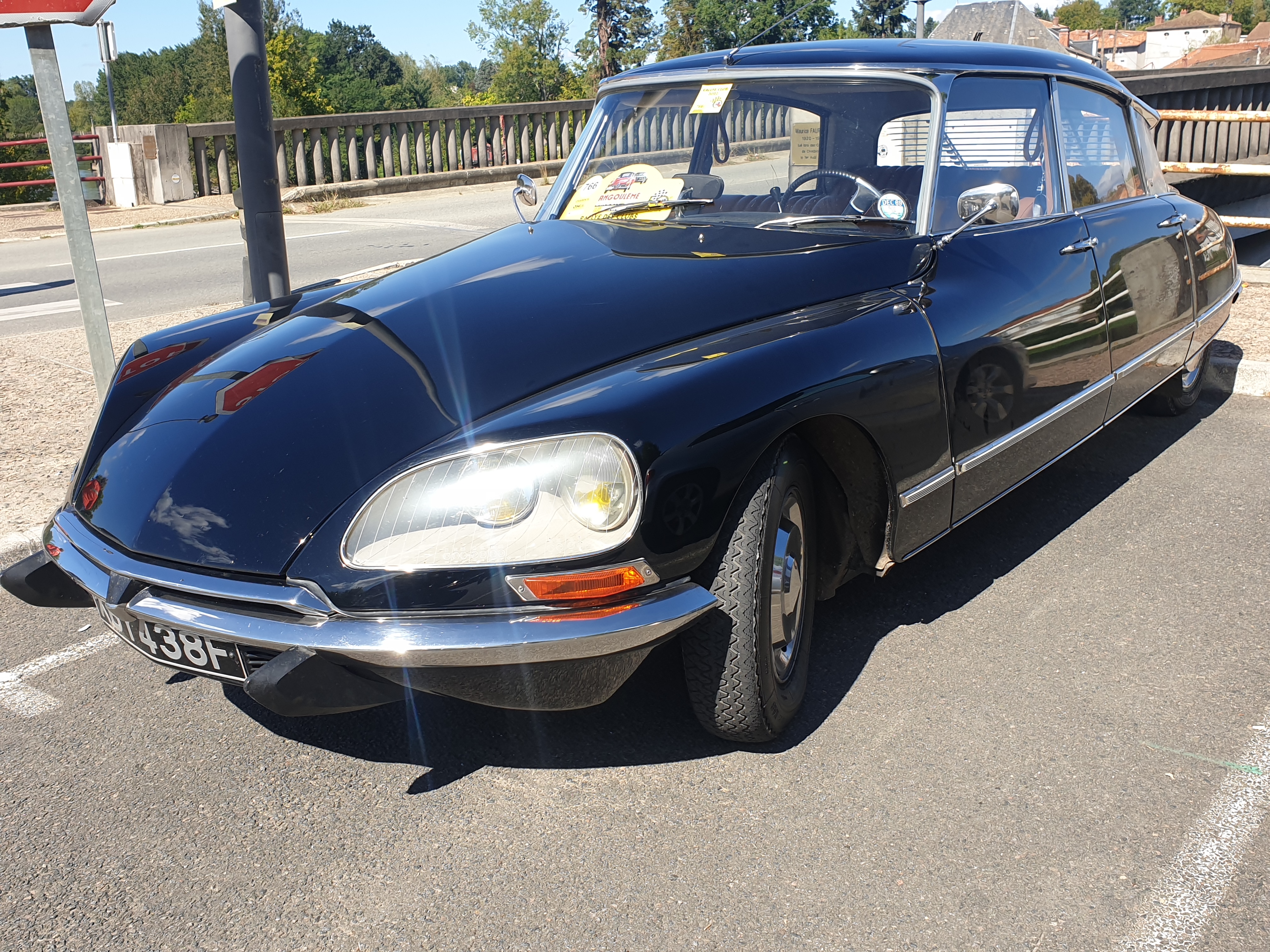
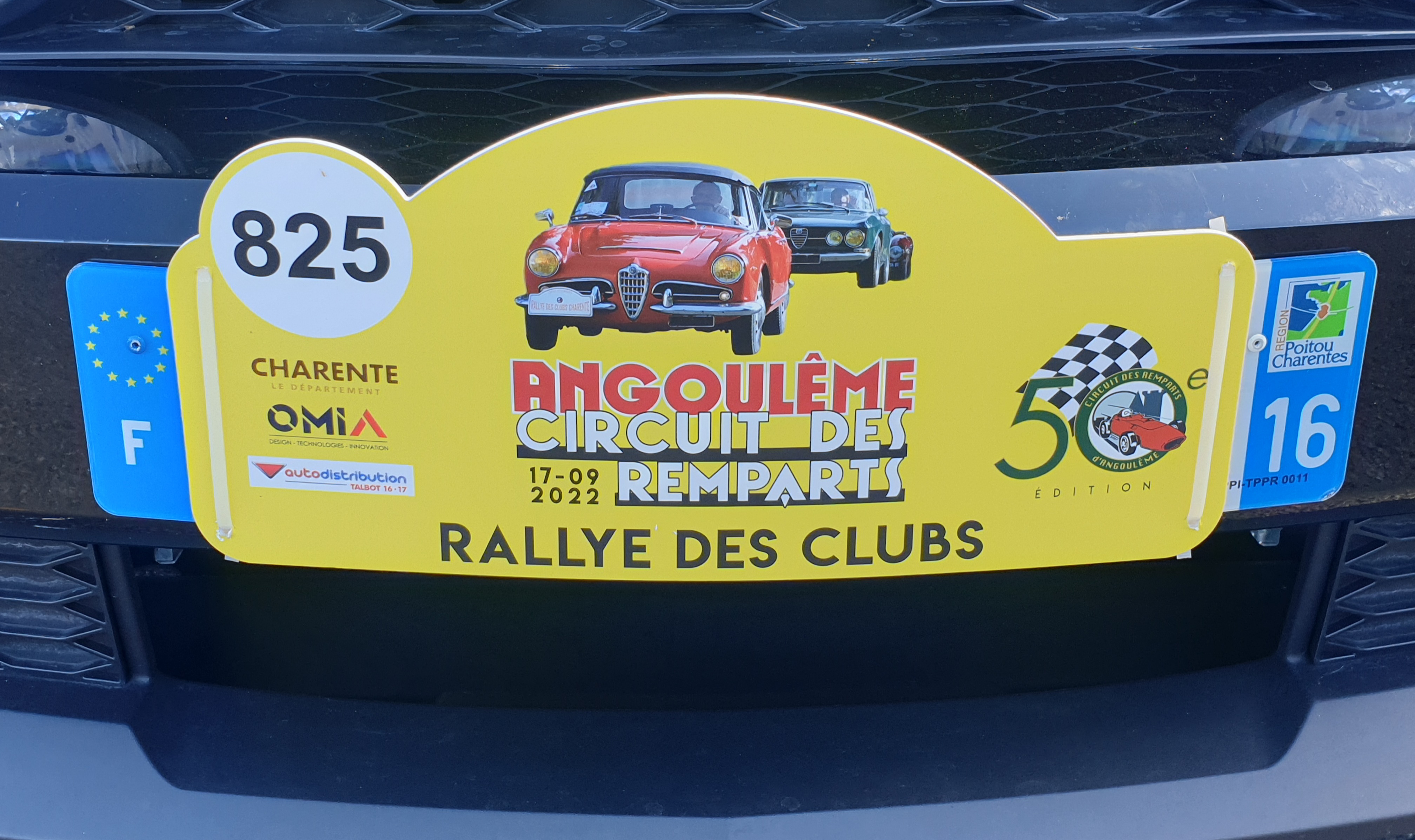
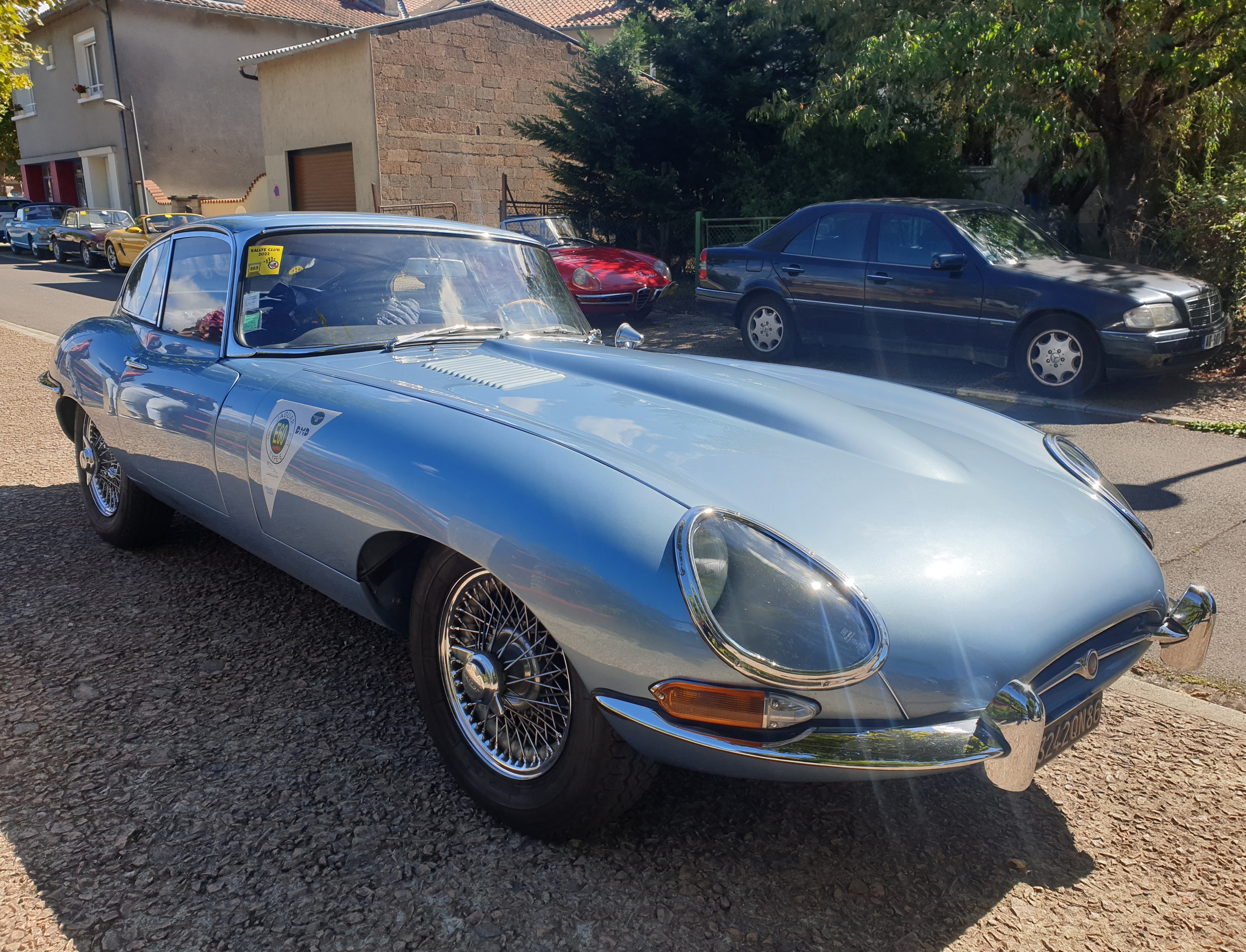
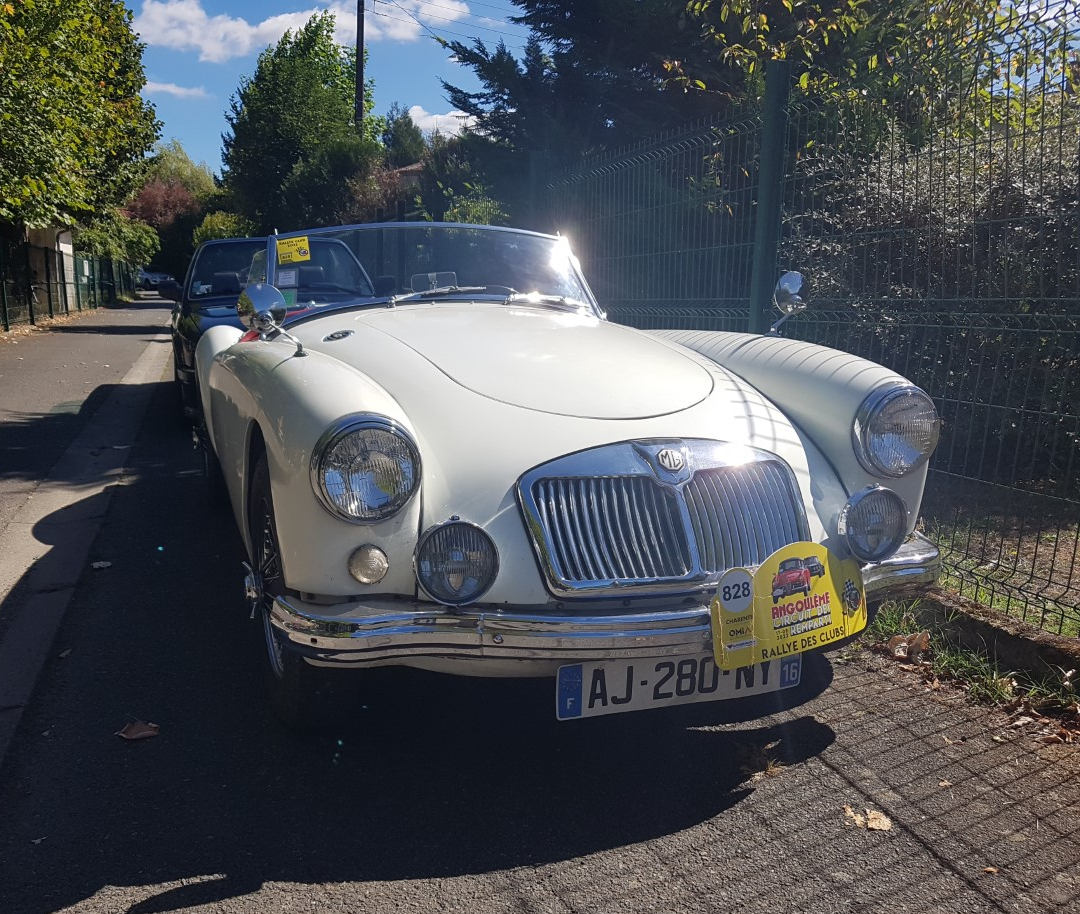
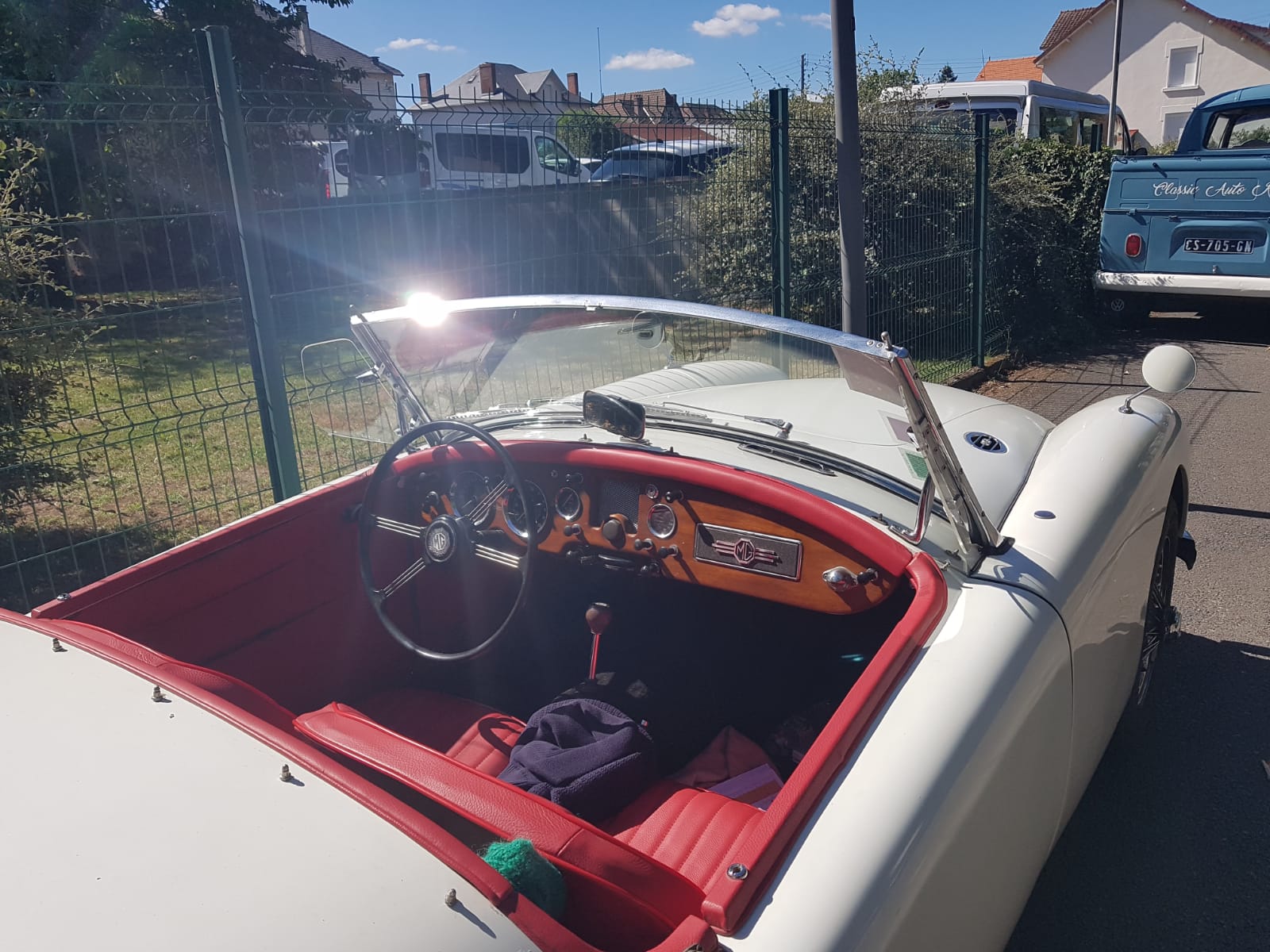
Last Saturday, Chabanais was busy and buzzing with competing cars from the Angoulême ‘Circuit des Ramparts’ having a lunchtime ‘pit stop’.

The Angoulême Circuit des Remparts weekend is an event where classic cars ‘race’ around the twisting roads of Angoulême. It is a key event for car enthusiasts!

The first race was held in 1939 and the circuit of 1,279 meters has not changed since. Relaunched in 1947 but abandoned in 1955, this race saw the greatest drivers of the time. Although the circuit is often referred to as the slowest in the world, this didn’t stop Juan Manuel Fangio leaving his mark in 1950 with three hours and twenty-four minutes for the 80 laps.

In 1983 Circuit des Ramparts was revived. Today, only three French city circuits are active, the others being Pau and Monaco. This year is special, as it is the 50th edition of Circuit des Ramparts.

So, it is historic but also a celebration with concours competitions. A beautiful road trip through the Charente countryside!

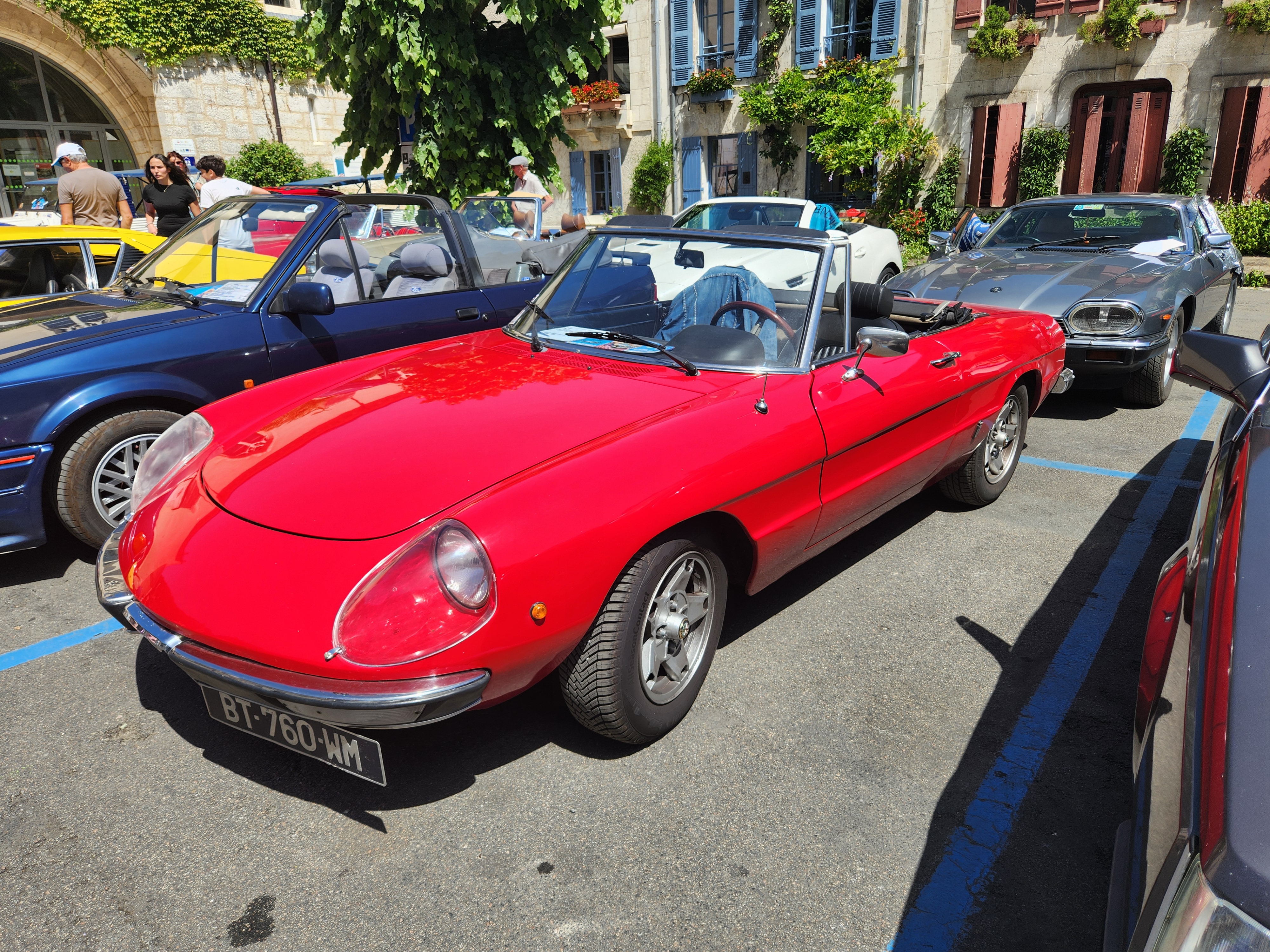
In the park, along the river, on side roads, all the cars looked so colourful and really great in the autumn sunshine and Steve was in his element. Seeing an Alfa Romeo Alfasud, the first car he owned!

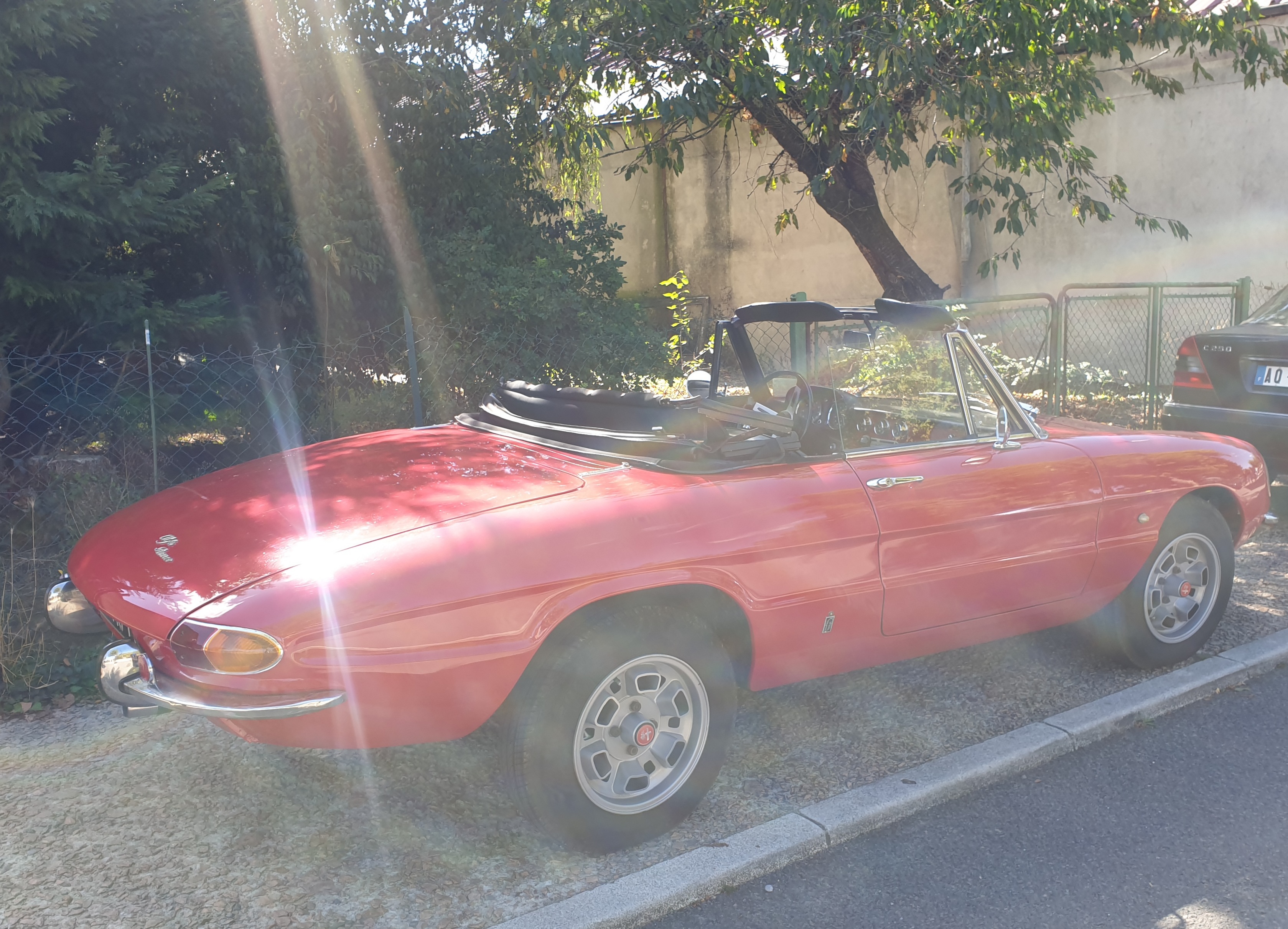
Then possibly his favourite car? Alfa Romeo Duetto Spider.

So, next year why not bring your classic car and come and tour the beautiful Charente region.

A Tale of Two Rivers

As the sun sets on the river Thames, we now find ourselves on a new dawn on the river Vienne. We’ve arrived in Chabanais!

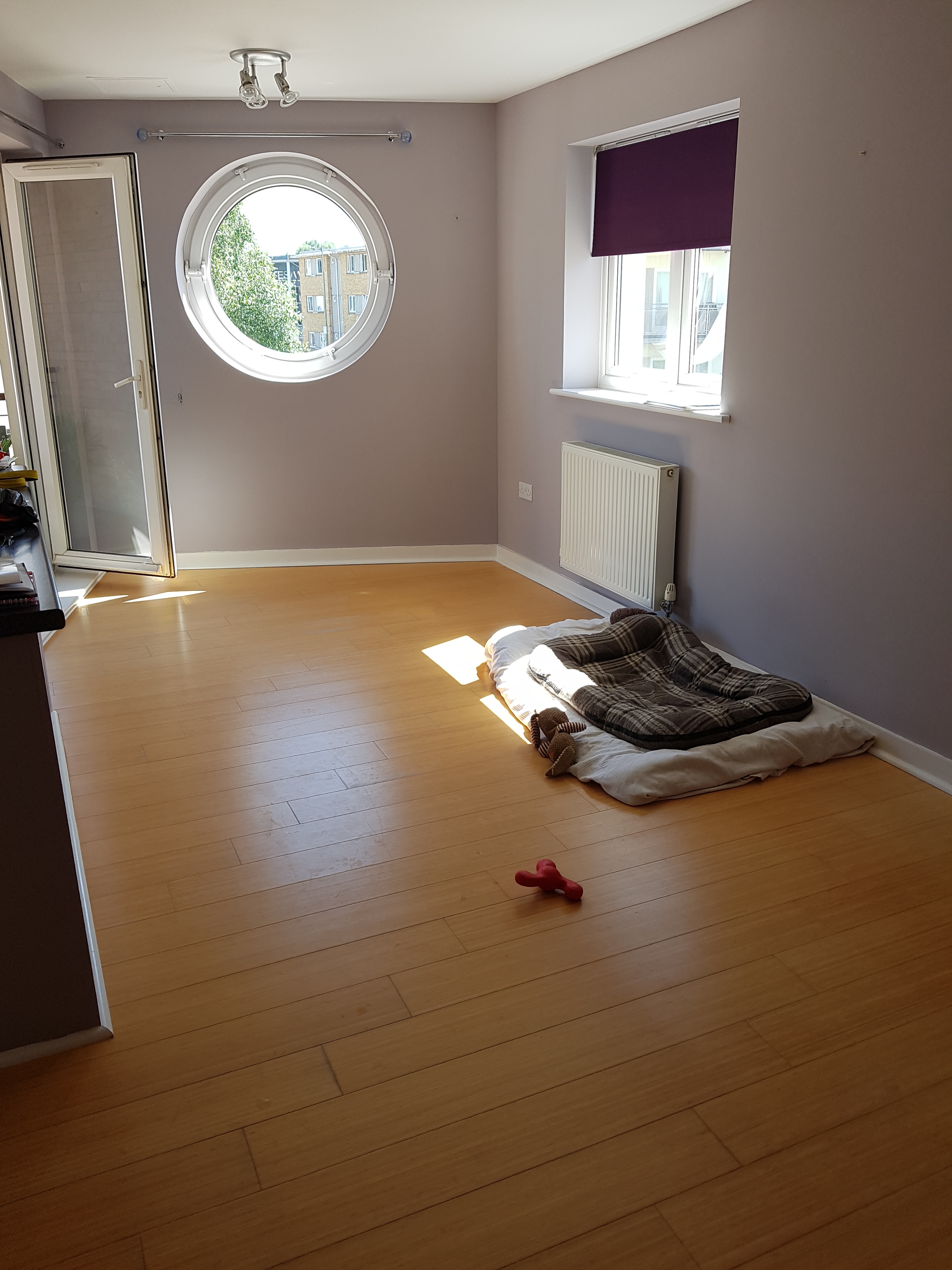
And now let us go back ten days when we still didn’t have our French visas, therefore we couldn’t book a definite day to travel and Charlie, our lovely dog was too ill to have his travel Pet Health certificate issued. The sale of our apartment was due to complete on 20th June which would mean we would soon be homeless.

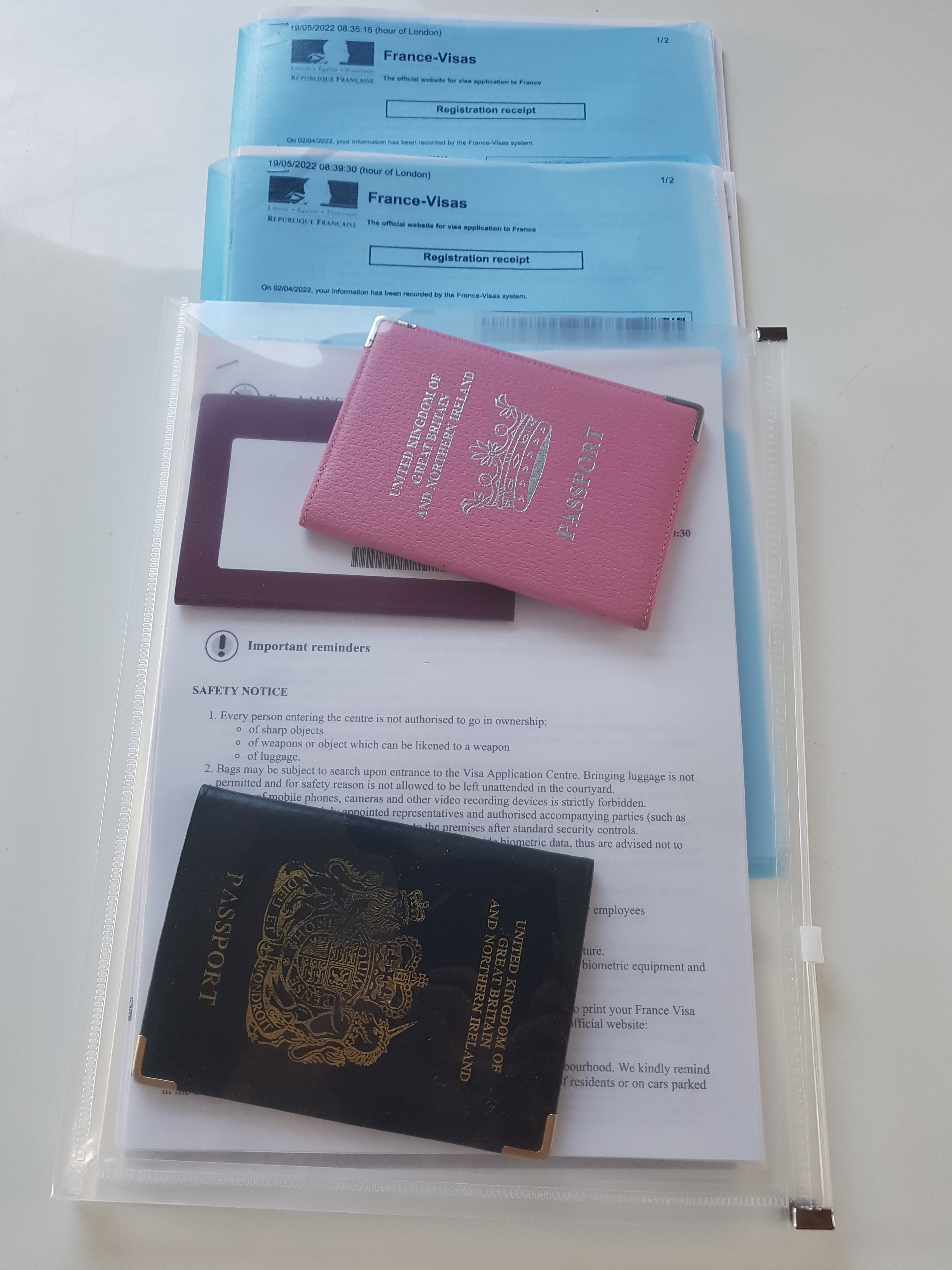
We set off for our long awaited visa appointment on 8th June, armed with reams of paper, enough to wallpaper our lounge! So much photocopying that our old printer almost died of exhaustion, so our neighbour took it off our hands. Our second printer was already packed! Our 10.30am visa appointment seemed to be shared with at least 50 other people, still it was a day out!

Meanwhile, back at our our apartment, the hot water pump had packed up and finding a plumber that could replace it within a few days was a challenge. While Steve organised a plumber and two new front tyres for our car, I was back and forth to the vets to to get blood and poo tests done for Charlie. His symptoms pointed to a nasty parasite, so the vet started treatment while still waiting on the results. Thank goodness Charlie got better and his certificate was issued on Tuesday 14th. The very day the removal company and the plumber descended on our home.

Later that day, we received the e mail from the visa centre saying our passports were back from the French Embassy and ready for collection. But no actual confirmation of the visas being approved. Even on the French Embassy website, there was no confirmation. We had to wait anxiously until 8.30am Wednesday 15th when I collected them and nervously opened the envelopes and looked inside the passports and we’d been approved! Bienvenue en France! Couldn’t quite believe it and I admit I shed a tear. When I arrived home, Steve dashed off to get a new front tyre fitted and yes, if you’re keeping up, I got a puncture in one of the brand new tyres on Tuesday night!

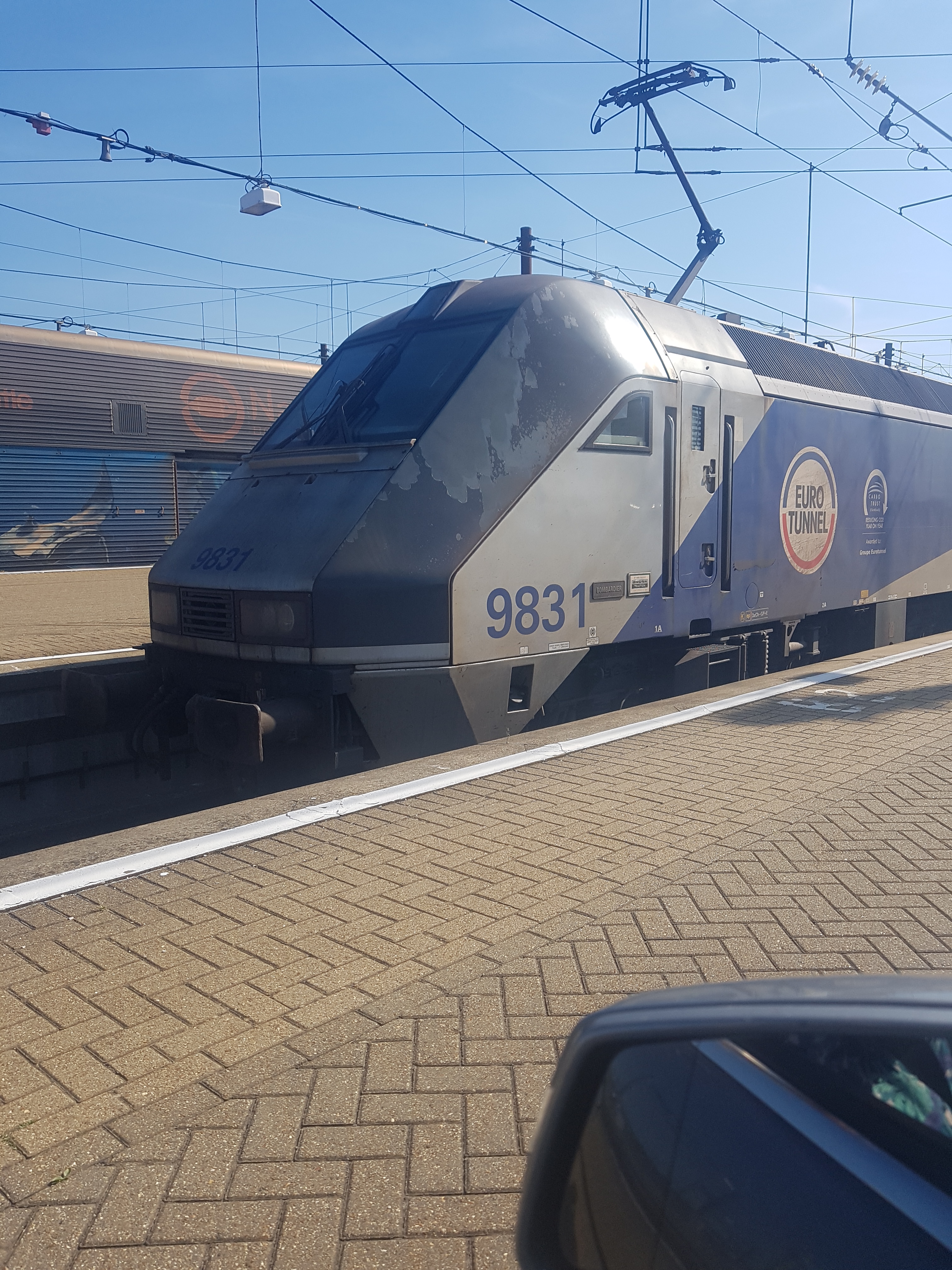
We were now booked on Eurotunnel 07.50 Thursday 16th with a nice 5am start! After such an exhausting week, with not much sleep, we decided to take up our friends Lucie and Tom’s kind offer to stay overnight at their place in France.

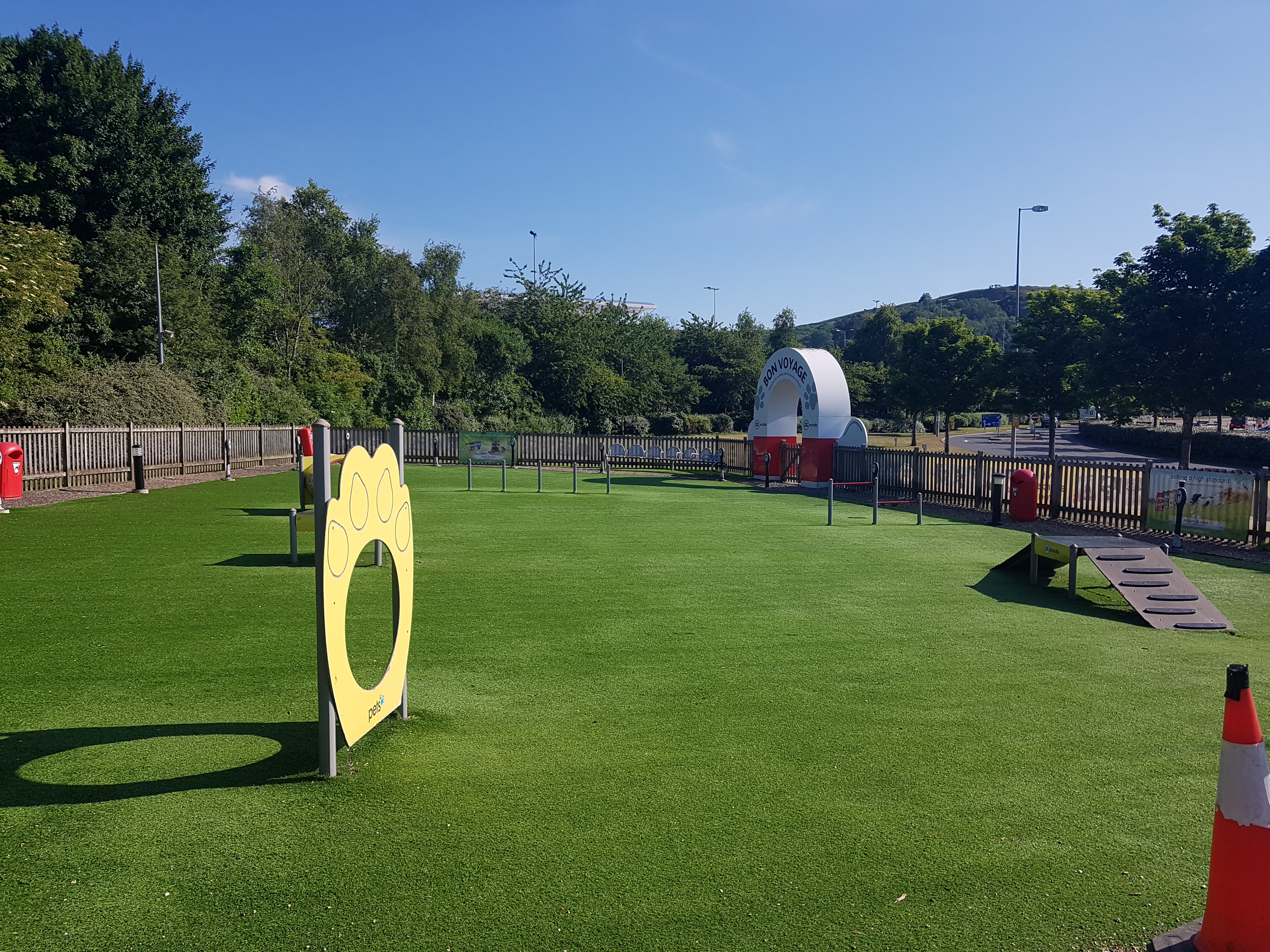
But there was still time for a little more stress on our way to Folkestone with an accident closing the M25 resulting in us missing the train, along with many other passengers. But the staff met us with a smile, no fuss and booked us on a later train. The friendliness, facilities and efficiency at the terminal were a very welcome surprise. Charlie was happy as he had longer to play on the agility course set up in the dog area! We drank a bucket of coffee!

Were these signs for us not to go? ….. were they heck, nothing was going to stop our “aventure français”.

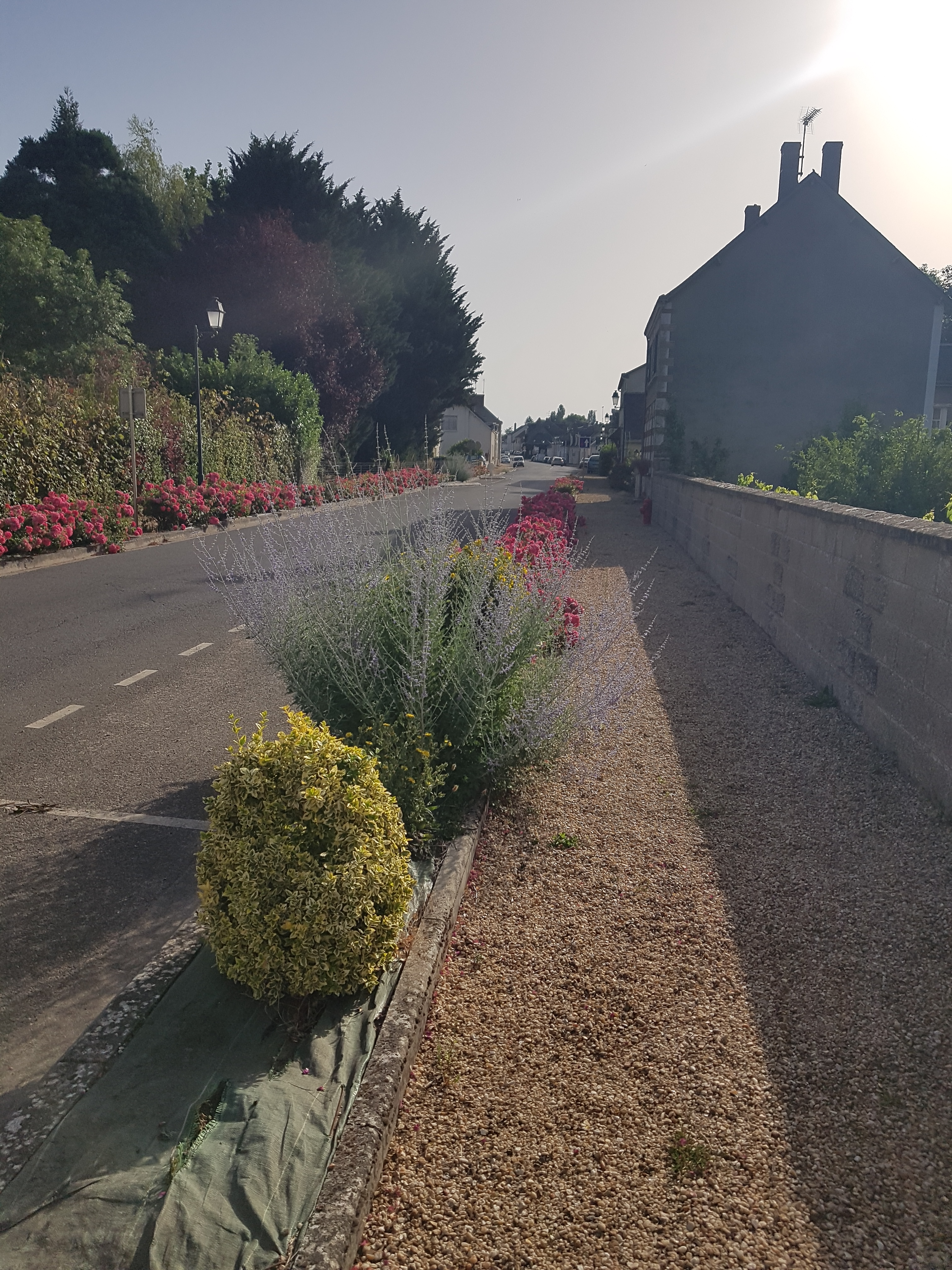
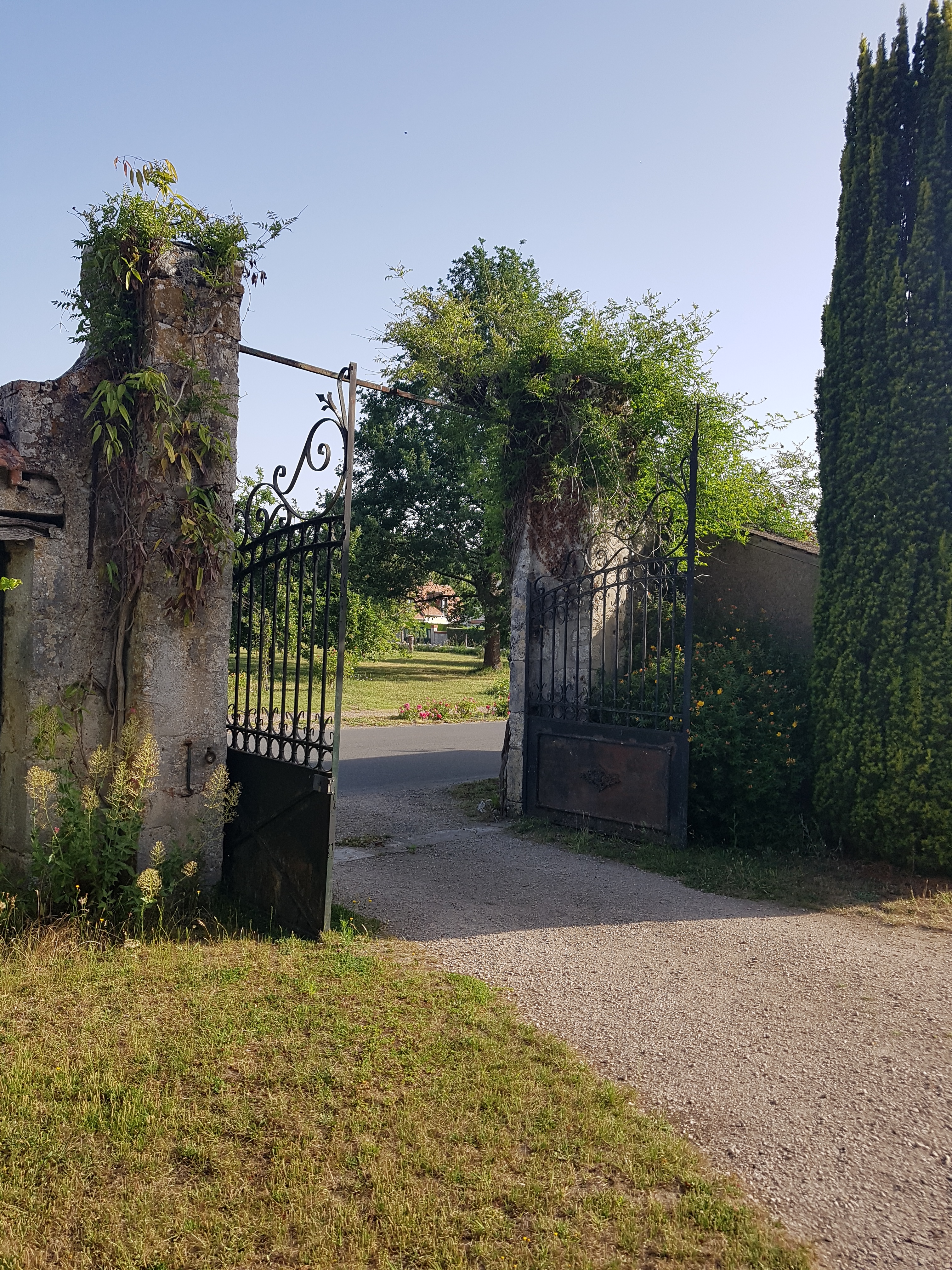
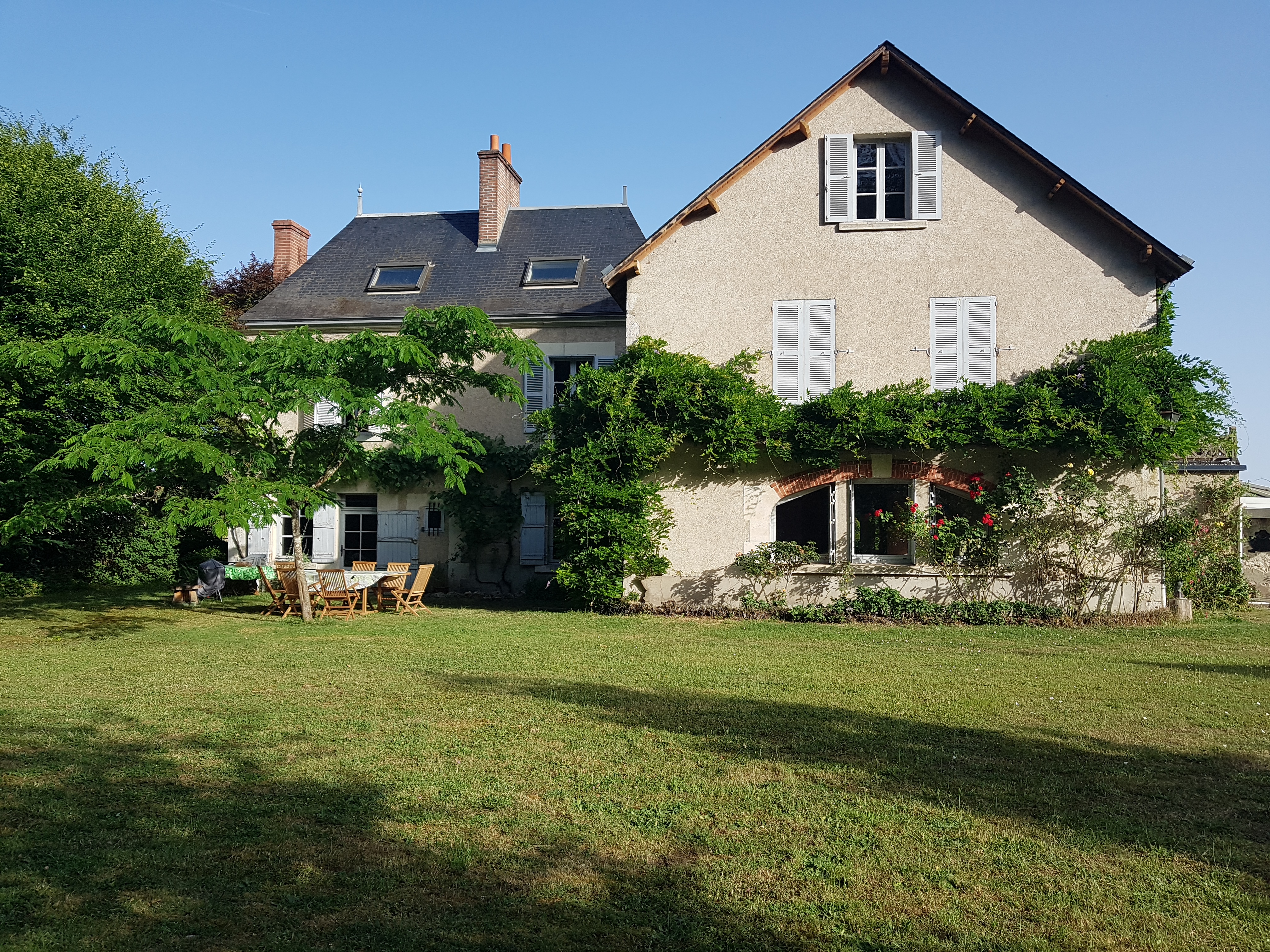
We arrived early evening in pretty Chitenay, (pronounced as you may think!) in Loir-et-Cher.

We were given a lovely French welcome and met Lucie and Tom’s young children for the first time, so did Charlie and he finally relaxed enough to receive a lot of fuss and cuddles from them! Lucie and Tom moved to their beautiful house in March. It will be their long term family renovation project, along with the gardens and woods. An idyllic location for their children to grow up in.

And potentially, only a few hours from where we may find our new home? Next morning, fresh croissants and coffee for breakfast and dear Lucie sent us on our way feeling refreshed for the first time in weeks.

Finally, I now feel we can get really excited as we are here. Our little rental house is right in the village centre and 2 minutes walk from the river, the local café and local shops.

Now the house hunting begins!